
Elevation: the Influence and Legacy of Television's Marquee Moon
Click below on the streaming service of your choice to listen to the playlist as your read along.


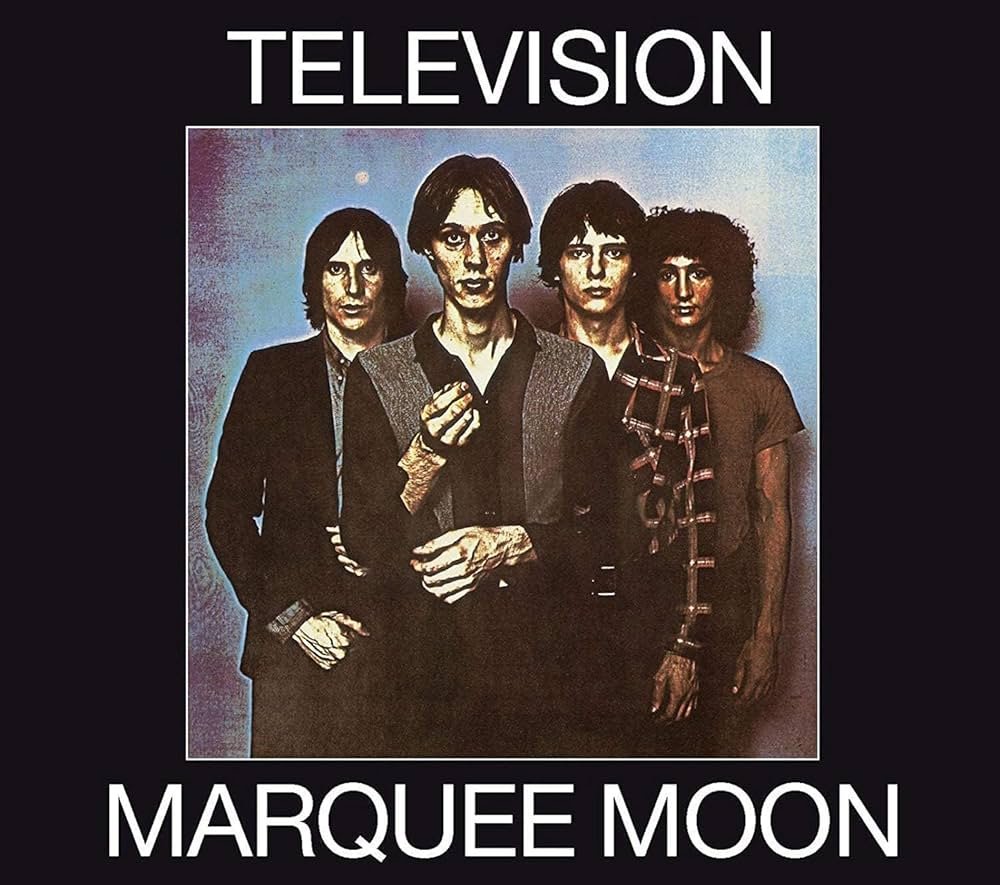
Among the many great songs and albums of the late 1970s that formed the foundation for modern rock, a few warrant additional distinction for their quality and influence. While the band, Television, eventually released three albums over fifteen years, what cemented their legacy as an important and influential act was their first LP, Marquee Moon. This profile focuses on that album and why it was such a landmark release.
Playlist: Marquee Moon
See No Evil
Venus
Friction
Marquee Moon
Elevation
Guiding Light
Prove It
Torn Curtain
Tom Miller was born in Denville, New Jersey but grew up in Wilmington, Delaware. He took an early interest in music, learning piano and sax, which led to a lean into jazz. He eventually also took up the guitar. In the mid-1960s, he attended the nearby private prep school, Sanford, in Hockessin, Delaware, where he was reportedly a good student.
At Sanford, Tom also met Richard Meyers. I don’t know if Richard was the classic bad influence, but he only attended the school for one year before running away… with Miller. They ended up in Alabama where they were arrested for vandalism and arson. I don’t know what the outcome was from that brush with the law, but both separately ended up in New York City to pursue careers in poetry. Neither returned to their schooling.
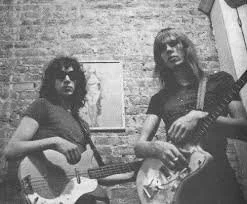
Richard Hell and Tom Verlaine in 1972
Myers had a brief stint in Sante Fe, New Mexico, where he worked with poet David Giannini publishing a magazine, Genesis: Grasp. He eventually also published books under the imprint, Dot Books. These were the vehicles for his early poetry. In 1972, he was back in New York City and reconnected with Miller. They decided to form a band, Neon Boys. The duo adopted stage names, with Myers becoming Richard Hell, a moniker he said described his personal condition. Miller became Tom Verlaine, in tribute to French poet, Paul Verlaine, though he said it was mostly because he liked the name. With Verlaine on guitar and Hell on bass, they were joined by Billy Ficca on drums, who had been a childhood friend of Tom’s. Consistent with their adventurous, rebellious spirit, their music pushed the conventions of contemporary rock music, experimenting with edgier sounds. Neon Boys never released any music, though later a recording of a single, “That’s All I Know (Right Now)”, was issued. The single also featured an early version of, “Love Comes in Spurts”, which was later a notable track for Richard Hell. His song, “Blank Generation”, was also part of the Neon Boys live set.
Richard Lloyd was born in Pittsburgh but attended high school in New York City. He learned guitar from Jimi Hendrix in the 1960s through his relationship to Velvert Turner. After some time in Boston and then travelling around, he made his way back to New York driven by an interest in the emerging rock sounds of the Mercer Arts Center, where the likes of the New York Dolls and Suicide were playing. He became roommates with Terry Ork, who he met at the club, Max’s Kansas City. Ork worked in Andy Warhol’s Factory making silk screen prints. Ork brought Lloyd to listen to Neon Boys, with both taking an interest in their sound.
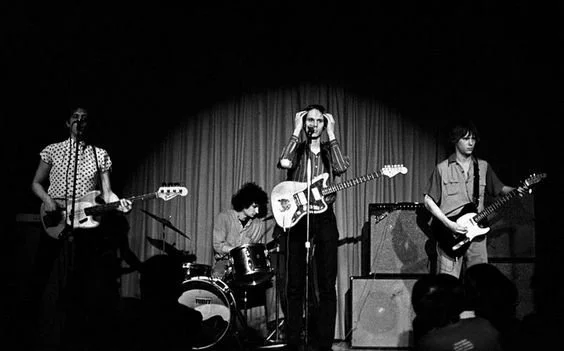
Television in 1975 (L to R): Richard Hell (bass), Billy Ficca (drums), Tom Verlaine (guitar & vocals), and Richard Lloyd (guitar)
Lloyd joined the band as a second guitarist in 1973 and Ork became their manager. They changed their name to Television, intended by Hell as a pun on ‘tell a vision’, and played their first gig in early ’74. Terry got them into the Bowery club, CBGBs, where they reportedly helped build the stage. Television became part of an emerging batch of bands playing at CBGBs and Max’s Kansas City that included The Ramones, Patti Smith, Blondie, and Talking Heads. Drawing interest from labels, they recorded demos with Brian Eno but ultimately held off signing as they didn’t like the recordings or the nature of the offered record deals. Eno, at the height of his early solo explorations in electronics and sound effects, shifted the band’s sound away from their guitar-focused sonics, which Verlaine found dissatisfactory.
While the band’s rock sound was taking shape around the writing of Verlaine and Hell, friction was rising between the earnest approach of Verlaine, Lloyd, and Ficca, versus Hell who was leaning into the look, behaviour, and sound that would come to be known as punk. Hell’s unbound stage antics and rougher approach to playing was diverging from the increasingly refined playing of the rest of the band. This led to Hell leaving in 1975, taking his songs with him and forming the band, The Heartbreakers, with Johnny Thunders and Jerry Nolan from the New York Dolls. He then went on to form Richard Hell and the Voidoids. His look and clothing also shaped the London punk scene after Malcolm McLaren, who had spent time in New York while briefly managing the New York Dolls, introduced Hell’s style to his fashion and business partner, designer Vivienne Westwood.
Hell was replaced on bass by New York City native, Fred Smith, who had been playing with Blondie. Still eschewing offers from record labels in the interest of maintaining their creative independence, Television issued their first single, “Little Johnny Jewel”, in 1975 on Ork Records, a label set-up by their manager. The track was a loose arrangement mixing jazz and rock, featuring a sharp, repeating guitar line, a feature that would become a prominent aspect of the band’s sound.
In August 1976, the band signed with Elektra Records, who promised Verlaine he could produce the album provided they used experienced, professional recording engineers and mixers. The band chose Andy Johns as engineer, who had worked with The Rolling Stones, and recording was done in September 1976. Having refined a catalogue of songs over their three years of playing together, they had a few ready to go, but instead chose to write and record new tunes to fill out the track listing. They only recorded the eight songs planned for the LP along with a few others.
Marquee Moon, was released on February 8, 1977, adding to the momentous year’s tremendously influential output. The US didn’t embrace Television, but the UK sent the LP and its two singles to the top forty. Critics acclaimed the album, (a big reason for the UK success) and it became immensely influential on the music that followed. Like their CBGB peers, the music was rock based, not quite punk, but distinctly modern and varied to what had come before, eventually becoming highly influential to the post-punk world in the ensuring years.
The album was filled with smartly written songs with catchy hooks and impeccable performances by the band. What set it apart was the interplay of the two lead guitars, frequent uses of repeating riffs, and Verlaine’s sharply pitched, often anguished, vocals with idiosyncratic phrasing. The band’s performance was raw, almost live sounding, and while at times could be chaotic and noisy, was undoubtedly calculated, precise, intricate, and excellently played.
The opener, “See No Evil”, as well as “Friction” and “Prove It”, followed a loose pop structure, being medium length tracks built on a repeating hook. “Venus”, “Elevation”, “Guiding Light”, and “Torn Curtain” were slower in tempo, building tension with angular turns and piercing guitars, Verlaine’s taught voice, and extended lengths to give the songs time to build, breathe, and provide greater instrumental dexterity, including solos.
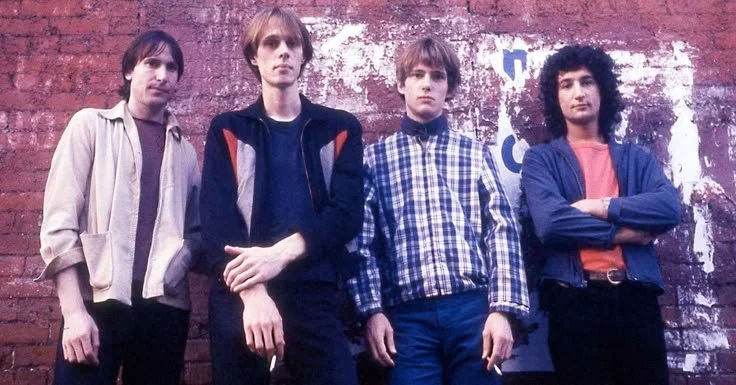
Television in 1977 (L to R): Fred Smith, Tom Verlaine, Richard Lloyd, and Billy Ficca
That leaves the title track, sitting in the fourth slot and concluding the first side, it was the band’s crowning achievement. At ten-and-a-half minutes, it was an epic exploration of the their sound and remains one of the defining songs of the post punk pantheon. The repeated riff and descending pre-chorus were the signature elements and indelibly mesmerizing. Coming so early in the modern rock era, “Marquee Moon” provided an ambitious, if not intimidating, example for others to follow. It was also indicative of the key difference of Television to their peers. Punks eschewed such long and virtuosic compositions, making “Marquee Moon” akin to the reviled prog rock style. But while it featured an extended jam and solos, there was nothing overly prog about the tune, instead being a mix of rough garage rock, experimental art rock, and delivered with a punk edge. The wonderful extended guitar interlude was the piece de resistance, losing the listener in a cacophony of intricate sound before bringing it all back into the song’s pocket.
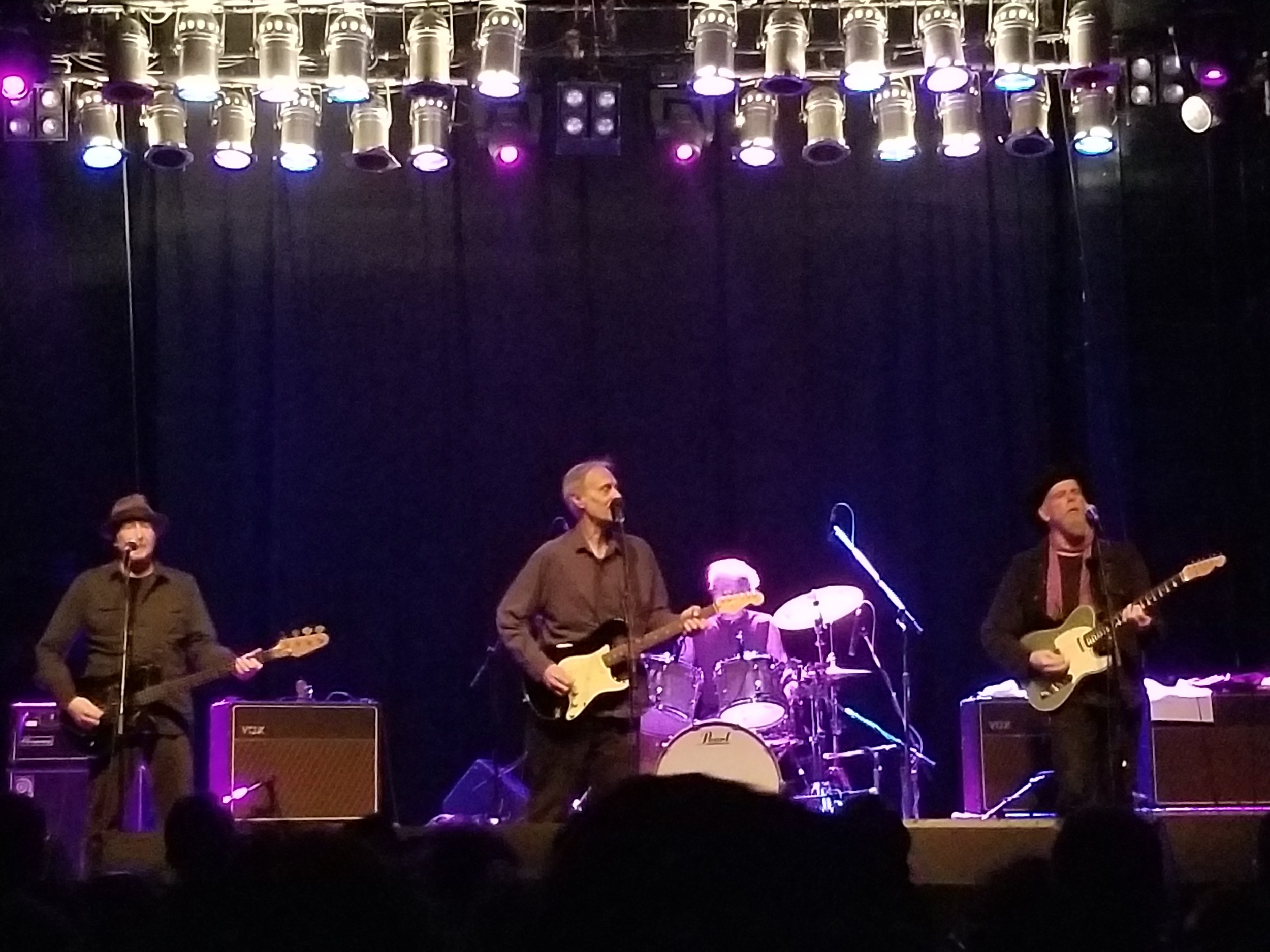
My picture of the band’s show in 2019 (L to R): Smith, Verlaine, Ficca, and Jimmy Rip
Television released a follow-up album, Adventure, in 1978. It was critically lauded again but didn’t break through to the charts. The band then broke up, with Verlaine and Lloyd pursuing solo careers and Ficca joining the band, The Waitresses. There was a reformation in the 1990s, leading to a third LP in 1992. The band then did occasional tours over the next twenty-five years, though Lloyd left in 2007 and was replaced by Jimmy Rip. I was fortunate to see them twice during that time, in 2014 and 2019. It was fantastic to hear their many iconic songs live, with heavy emphasis on the Marquee Moon LP. Verlaine passed away at age seventy-three in 2023 due to prostate cancer, ending the band’s career. Fred Smith also passed recently in February 2026, at age seventy-seven.
The angular turns, smart songwriting with a punk edge, raw but intricate guitar playing, repeated lines and rhythms, all of these aspects become common elements of the post-punk era. Marquee Moon became beloved by artists, critics, and eventually a legion of fans. The album entrenched the importance of Television to the modern rock era, even if their prime tenure was brief.