
Electrical Language: A Retrospective on the Origins and Rise of Synth Modern Rock
Click below on the streaming service of your choice to listen to the playlist as you read along.


There were many aspects of modern rock that separated it from classic rock. Indeed, those elements are the threads that tie many of the profiles on Ceremony together. One significant differentiator was the role of electronic instruments. Modern rock was not the only genre to adopt those innovations but certainly made significant use of them in creating new sounds, to the extent that entire sub-genres were formed around them. Electricity was well-established in rock music through the amplification, recording, and effects on guitars, bass, piano, and organ, but the use of synthesizers, sequencers, drum machines, and other purely electronic devices designed to make music really started to move things stylistically into new and particularly modern directions.
One of the first profiles published at Ceremony was the retrospective on the birth of new wave music. To define new wave, I noted, “there is a significant or total use of electronics, keyboards, and synthesizers, though not as a rule since there are many new wave songs with no keyboards.” No doubt, electronics were a major part in the shift in sound for much of new wave, and eventually into mainstream pop also. Synth-pop, as it would often be referred, was a defining aspect of early 1980s music.
This playlist and profile will trace the origins and rise of what I will generally refer to as synth or electronic music, even though the actual devices will vary extensively in the performances. We will track the most notable uses of these instruments from their first arrival until the cusp of their explosion of use in the 1980s. We will also trace the evolution of the sounds and compositions as electronics shifted from the fringes – both artistically and commercially – into the heart of the music world.
1. “Dr Who” \ Ron Grainer & Delia Derbyshire (1963) – When the sci-fi show, Dr Who, debuted on BBC in November 1963, UK audiences were introduced to one of the earliest pieces of popular electronic music ever produced. The show’s theme song became so popular it was released as a single in 1964. Based on an electronic score by Australian, Ron Grainer, it was worked over by Delia Derbyshire in the BBC Radiophonic Workshop. Without the benefit of synthesizers or multi-track recording, she spliced together tape, varying the speeds and adding noises manipulated by oscillators – the source of the track’s prominent melodic line – to reach the final result. This quilting of sounds via tape was a method known as musique concrète, which had been in use for decades ever since taped music could be utilized.
Dr Who and its theme have gone through many iterations over the decades, sustaining incredible appeal to multiple generations. Many of the artists on this playlist would have grown-up listening to that music, and many cite is as an inspiration, if not direct influence, on their music.
TECH SPOTLIGHT: RCA
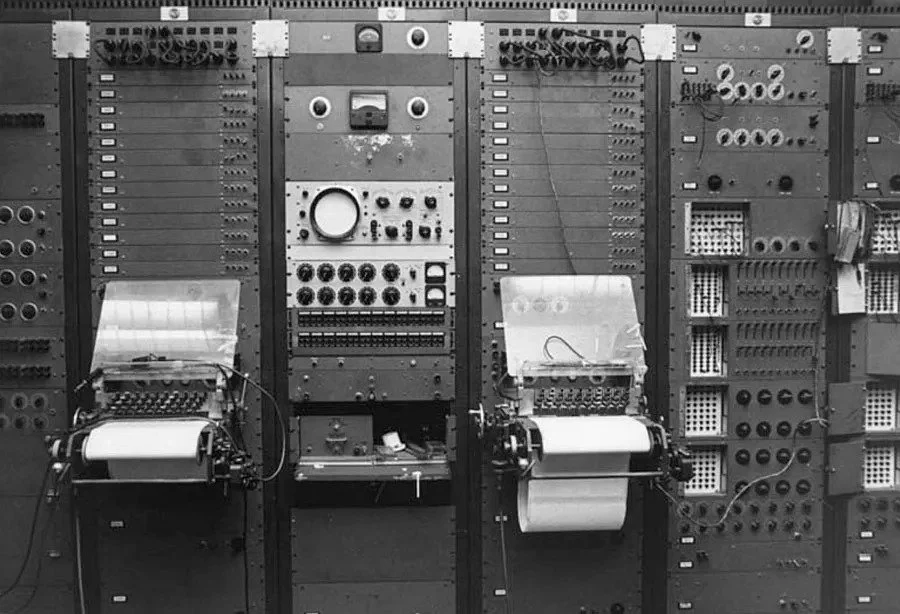
The Radio Corporation of America existed from 1919 to 1987. It was formed by General Electric in order to patriate a British company during WWI. Most know RCA as a manufacturer of audio-visual equipment (radios, phonographs, records, televisions) and a broadcaster (it was an early owner of the NBC network). While its role in the technology for this playlist is limited, their RCA Laboratories, founded in 1941, produced many devices that helped develop sound recording, amplification, and manipulation that led to other tech featured in this playlist. RCA also got into computing in the early ‘60s, lending its hand to the role it also played. This is a picture of their Synthesizer I from 1951.
2. “Jazz Images, a Worksong and Blues” \ Herbert Deutsch (Aug 1964) – Electronic keyboards had been in use and evolving since the early twentieth century, no different than how electricity was changing many other facets of daily life during that time. Hammond and RCA were companies that had developed different iterations of analog synthesizers starting in the 1930s that allowed a player to use a keyboard to activate sounds via amps and vacuum tubes. These were large contraptions, usually filling a room. In 1963, the mellotron was introduced, a keyboard instrument that could activate various sounds played on tape. They were notoriously hard to keep in tune and functioning consistently. Regardless, some of the most groundbreaking sounds of 1960s rock arrived via these primitive devices.
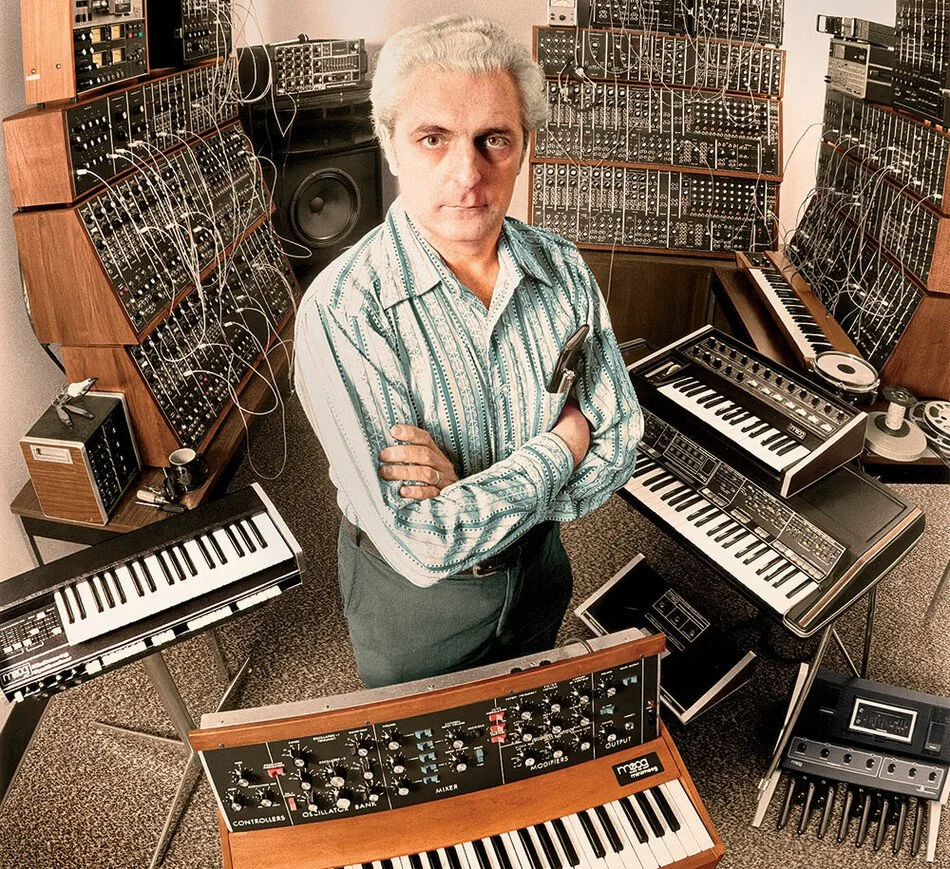
TECH SPOTLIGHT: MOOG
Robert Moog founded his company, R. A. Moog Co. with his father in Asheville, North Carolina in 1953, selling theremins. Moog developed modular synthesizers starting in 1964, leading to the invention of the portable Minimoog in 1970. It was the first synthesizer available for retail, making it accessible, and affordable, unlike ever before.
Struggling financially, the company was sold to a rival in 1971, muSonics, which renamed the company to Moog Music. It was during this time that a global chain of Moog stores was opened. It was sold to Norlin Industries in 1973. These changes highlighted the realities of selling an expensive, niche product into an increasingly competitive manufacturing market. By 1975, ARP had assumed a large portion of the industry’s sales. Robert Moog left Norlin in 1977. In 1987, Moog Music was shut down.
Robert Moog reclaimed ownership of the Moog brand, resuming production to fill a nostalgic demand for the original moog sound. Robert passed away in 2005 and the company has continued on as a public entity, with the employees retaining almost half of the company’s shares.
Raymond Scott was a composer, band leader, and pianist from New York. During his career he developed the use of electronics in the performance and recording of music. He founded Manhattan Research Inc. in 1946 to research and develop electronic audio devices. Robert (Bob) Moog, a fellow New Yorker, founded R.A. Moog Co in 1953, which designed and sold theremins. They met in 1956, with Bob purchasing one of his own theremins from Raymond. He rewired it to be controlled by a keyboard and named the new device the Clavivox. Bob continued to evolve his theremin designs while attending Cornell University in the early ‘60s. He then opened his first store in 1963.
At Cornell, Moog also worked with composer, Herb Deutsch (who helped design the keyboards), with the goal to create a synthesizer that was more affordable, and crucially, portable. In 1964, he created the Moog modular synthesizer and wrote a paper, Voltage-Controlled Music Modules, which outlined his approach of utilizing the voltage-controlled oscillator to control pitch using electricity. This was considered the birth of the modern analog synthesizer, which he debuted at the Audio Engineering Society convention in New York the same year. Deutsch was one of the first to fully explore the capabilities of the Moog synthesizer. Some of his compositions became available much later on, such as this early recording which mixed piano, Moog, taped effects, and blues.
3. “Daily Nightly” \ The Monkees (Nov 6, 1967) – You may be as surprised as I was to learn The Monkees, known more for their TV program than their music, arguably recorded the first rock song to feature a Moog synthesizer. Included on their fourth LP, Pisces, Aquarius, Capricorn & Jones Ltd, the Moog was played by Micky Dolenz, who owned it. Not prominent in the track, it was used to add, “spacey UFO noises,” as noted by Dolenz.
At the same 1964 convention in which Bob Moog presented his paper, he met Wendy Carlos (known at the time as Walter). She was attending Columbia University and was a pioneer in orchestral electronic music. Like Herbert Deutsch, she began collaborating with Moog, receiving prototypes and providing ongoing feedback on the design and development of the Moog synth, in particular the keyboard and controls. She recorded many experimental compositions after graduating Columbia in ’65, evolving her ability to perform more conventional arrangements with the technology. Her partner, Rachel Elkind, was a contributor to the process, helping produce the music.
This led to Carlos’ album, Switched-On Bach, released in October 1968. It was an entirely electronic performance of ten pieces by the composer, Johann Sebestian Bach, an approach designed to highlight the technology’s capabilities by using familiar music rather than new compositions. It was a surprise success, reaching the US top ten, winning the 1970 Grammy award for best classical album, and topping the Classical Albums chart for three years. The album was a landmark event, putting the synthesizer and its sound into popular consciousness.
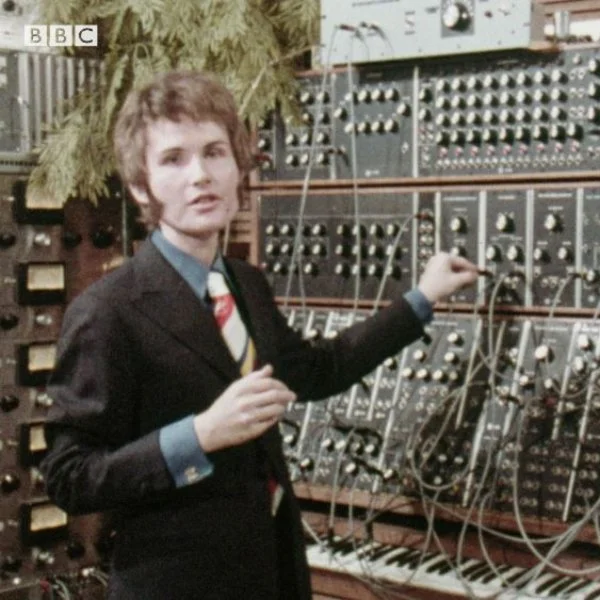
Wendy Carlos demonstrates a Moog on the BBC in 1970
The infamous Stanley Kubrik film, A Clockwork Orange, released in December 1971, was based on the 1962 novel by Anthony Burgess. The shocking, futuristic plot and the main character’s predilection for Beethoven made Wendy Carlos the natural choice to create the music. While the soundtrack included several orchestral performances of classical works, the original score was by Carlos and featured her electronic takes on a few Beethoven pieces, and of course the “William Tell Overture”, from Rossini. “The album was also famous for being the first to prominently feature a vocoder, which synthesized vocals.
Though both her major works were based on classical music, it is hard to underestimate the influence Wendy Carlos and her albums had on future musicians across several genres, prompting adoption of synths and electronic instrumentation. She provided the blueprint for what was possible.
Carlos is a staunch opponent to the digitalization of music, decrying the MP3 format and the business model of modern streaming services. With much of her original work out of print, it is unfortunately now very difficult to access her music. (I originally had a track from A Clockwork Orange on this playlist, but it was ‘greyed out’ on Spotify just before I went to publish this post.)
4. “Love Without Sound” \ White Noise (1969) – Our BBC “Dr Who” composer, Delia Derbyshire, was also playing electronic music in an act with Brian Hodgson, called Unit Delta Plus. An American, David Vorhous, a bass player trained in classical music but also with education in physics and electrical engineering, attended a lecture by Delia in 1968, prompting him to join her and Hodgson. They called their new line-up, White Noise.
The trio’s first album was released in 1969. An Electric Storm was not successful given its electronic experimentalism. However, it went on to influence many later artists and retroactively be considered a landmark recording in electronic music. This was one of the early uses of the EMS VCS3.
5. “Because” \ The Beatles (Sep 26, 1969) – Is it any surprise that The Beatles were one of the first to utilize a synthesizer? The band deployed a Moog on their penultimate album (though actually the last to be recorded), Abbey Road, with it played on differing tracks by McCartney (“Maxwell’s Silver Hammer”), Lennon (“I Want You (She’s So Heavy)”), and Harrison (“Here Comes the Sun”).
“Because” set-up the legendary eight-song medley that comprised most of the album’s second side. The track was written by John Lennon and inspired by Beethoven’s, Moonlight Sonata. Played by George Harrison, the Moog played off the electric harpsichord (played by George Martin) that was the main sonic signature of the song, mirroring Lennon’s guitar. It provided an almost horn-like quality to the song and also some effects over the closing thirty seconds. Almost slight in its use and similar to a usual keyboard part, it nevertheless gave the song a different sonic palette to the rest of the LP.
After The Beatles broke up in 1970 and the foursome started their solo work, only Paul McCartney notably leveraged synthesizers through their early work. A Moog is referenced on his album, Red Rose Speedway (1973), but was not obvious in the recordings. However, on the next LP, Band on the Run (1973), a synth was prominent in the title track’s slower, opening section. Like most other artists, electronics would become normal across all four’s recordings by the 1980s.
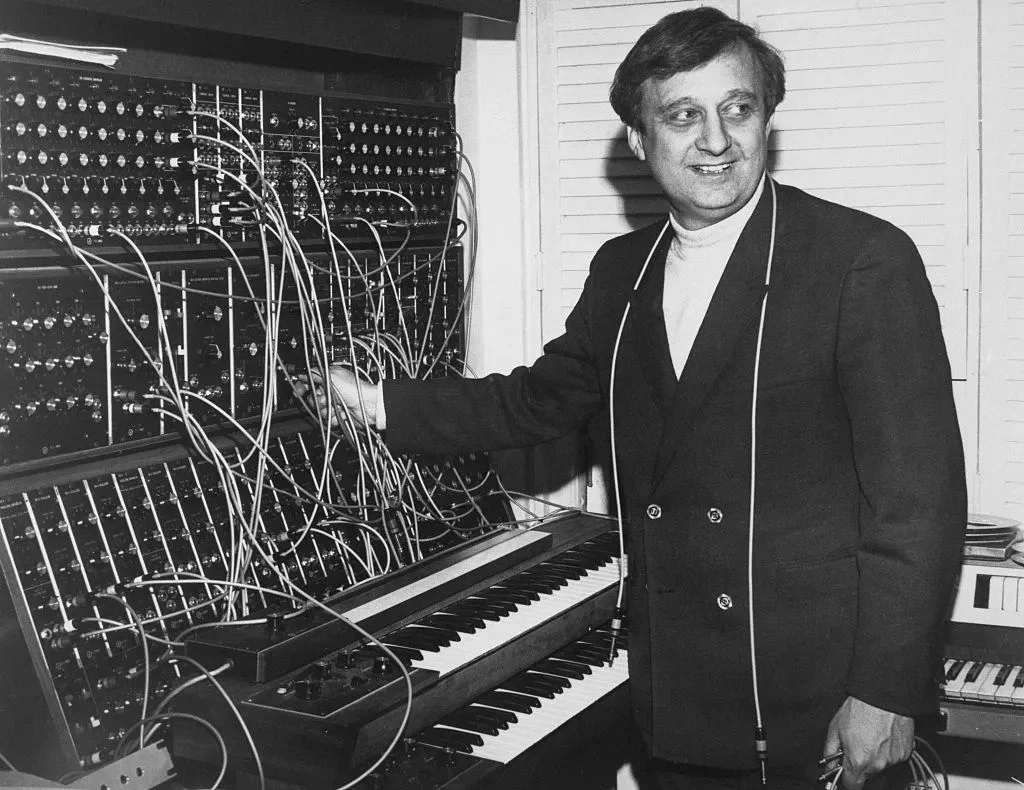
Gershon Kingsley, who passed away at age 97 in 2019
6. "Popcorn" \ Gershon Kingsley (1969) – Götz Gustav Ksinski was born in Bochum, Weimar Republic. He left in 1938 to escape the Nazis and spent the time through to the end of WWII at a Kibbutz in the Palestinian Mandate before moving to the US, at which time he changed his name to Gershon Kingsley. He became a composer, studying at the Los Angeles Conservatory of Music.
Moving to New York, he started exploring electronic music. He was in a duo with French composer, Jean-Jacques Perrey, collaborated with composer, John Cage, and founded the First Moog Quartet. Much of his work focused on film, TV, and commercials, and his compositions were both experimental and pop styled. In 1969, he released the album, Music to Moog By, which covered several pop and classical works but also included an original composition, “Popcorn”. It was titled to combine ‘pop’ music and ‘corn,’ as in kitsch. He re-recorded it in 1972 with the First Moog Quartet for album in which it was the title track.
Stan Free, a keyboard player, had an instrumental band called Hot Butter that also recorded, “Popcorn”, in 1972. Their version caught on, becoming a surprising top ten hit around the world, one of the first synth-based tracks to do so. While catchy and toe-tapping, like Switched-On Bach, its novelty was the key to its success.
7. "Lucky Man" \ Emerson, Lake & Palmer (Nov 20, 1970) – English supergroup Emerson, Lake, and Palmer was formed in 1970. Keith Emerson had been in the band, The Nice, in the ‘60s and was a notable player on piano and organ. He started playing a Moog with The Nice in 1969 after hearing Switched-On Bach. He paid £4,000 for it and had it shipped to London. Dubbed the ‘monster Moog,’ he was one of the first artists to tour with one, requiring four roadies to move it. As an early adopter, Emerson worked with Moog to develop the instrument, often being given access to prototypes to test.
ELP’s self-titled, debut LP was released in late 1970. The closing track, “Lucky Man”, was by guitarist, Greg Lake, but the song was given over to Emerson and the Moog for the final third, becoming one of the first rock tracks to prominently feature a synthesizer solo.
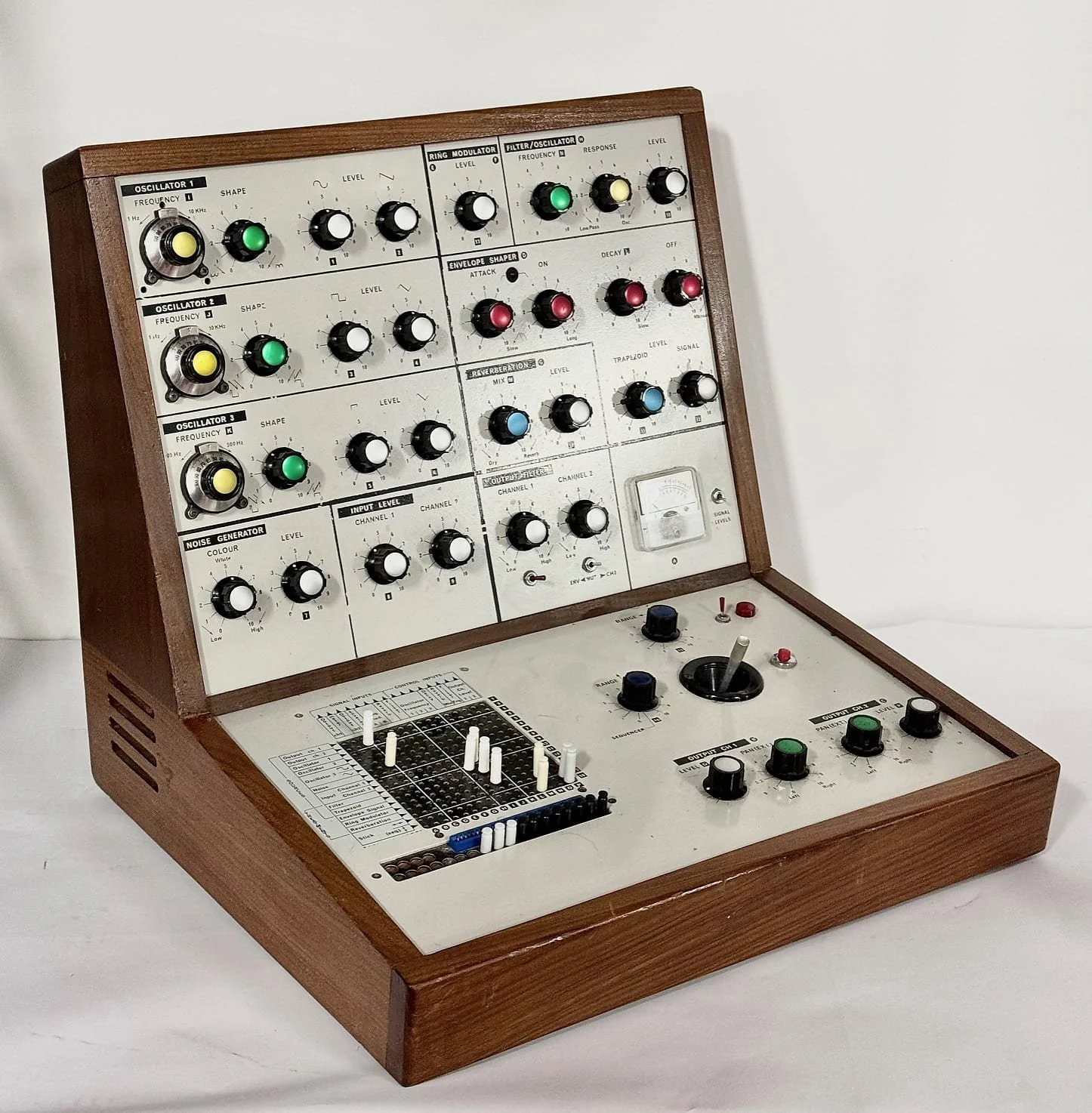
TECH SPOTLIGHT: EMS
Electronic Music Studios was created in London in 1969 and was the producer of the EMS VCS3 (voltage controlled studio #3), the synth frequently referenced in this profile, especially in the early ‘70s. It was also sometimes labelled The Putney (VCS 3). It was the first portable analog synthesizer, making it more useful both in studio and for performances, a landmark advance in the technology.
EMS also issued the Synthi 100 in 1971 to compete with Moog in the modular synthesizer category. Portable versions followed via the line of Synthi models. The company continues today, now based in Cornwall, England.
Lake joined ELP after being in the band, King Crimson. He played in that band’s first two albums, including their epic debut, In the Court of the Crimson King (1969). Primarily the project of guitarist, Robert Fripp, King Crimson released its third album, Lizard, in December, just a week after ELP’s album. Known for his guitar and tape effects known as Frippertronics, Fripp and the band started using a VCS3 on the album. Though not prominent in their sound, synths continued to infiltrate their way into rock, with the prog bands leading the way.
8. "Won't Get Fooled Again" \ The Who (Jun 25, 1971) – This is one of the most famous songs, and certainly one of the earliest, to prominently feature synthesizer. “Won’t Get Fooled Again” was a sensational track, released by The Who as a single in the summer of ’71. It was from their fifth album, Who’s Next, released that August. Pete Townshend was experimenting with the synthesizer and it appeared throughout the album. Working with producer, Glyn Johns, the track’s prominent feature was a Lowry home organ that utilized a rhythm feature to get an arpeggiated sound, which was then fed into an EMS VCS3 mounted onto the organ to program it to the final result. Check out this video of Townshend discussing the process. Synth was similarly used on the album’s other huge track, “Baba O’Riley.”
Of note, a couple months after The Who album, English prog rock act, Yes, released its fourth LP, Fragile. Mostly known for its trio of classics, “Roundabout”, “Long Distance Runaround”, and “Heart of the Sunrise”, it is one of the best-known and celebrated albums of the classic rock canon. Rick Wakeman had just joined the band, replacing Tony Kaye who had been fired specifically because he would not move away from piano and organ to use synthesizers. Rick was classically trained and capable across many types of keyboards, including the Moog and mellotron, which were used on Fragile and many Yes albums thereafter.
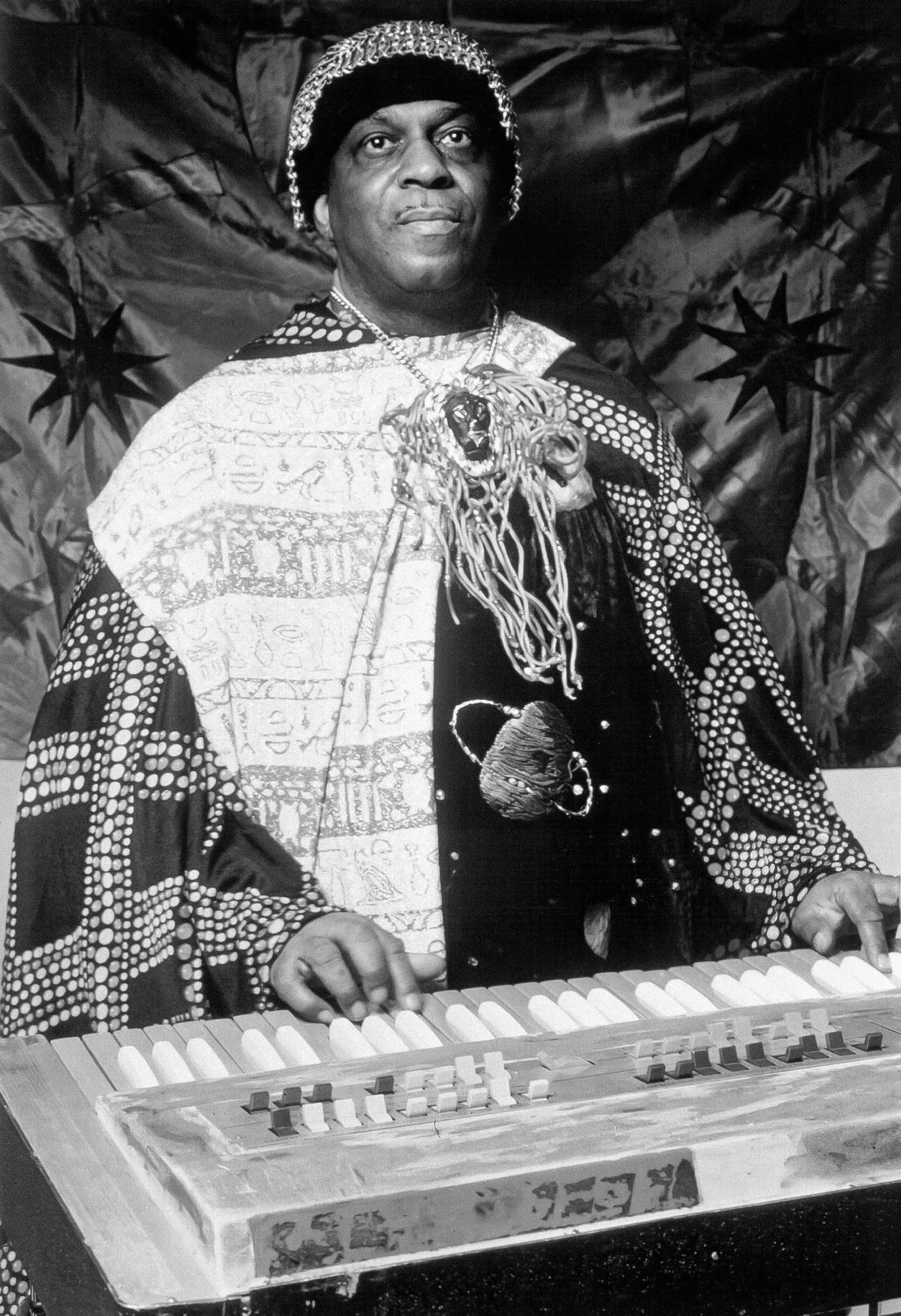
Sun Ra
9. “Journey to the Stars” \ Sun Ra and his Intergalactic Infinity Arkestra (1971) – Hailing from Birmingham, Alabama, Herman Blount adopted the name, Le Sony’r Ra, and as an artist was known as Sun Ra. He cut his teeth in the Chicago jazz scene of the 1940s and believed he was an alien on a peace mission, and thus the name change. He led his own band, The Arkestra, starting in the 1950s, putting it through various iterations for his recordings. His improvisational ‘free’ jazz compositions were not commercially successful but widely regarded as pioneering and influential. The volume of his recorded work was prolific.
It was not surprising, then, that he was an early adopter of electronics. He was one of the first to introduce the sounds to jazz. The 1971 album, My Brother the Wind, Vol II: The Wind Speaks, credited to Sun Ra and his Intergalactic Infinity Arkestra, continued his space themes, but this time married them to electronics on five tracks, done purely with synthesizers and sound effects. “Journey to the Stars” was one of those tracks.
10. “Evil” \ Stevie Wonder (Mar 3, 1972) – In 1972, Stevie Wonder was already a leading piano and organ player with many huge R&B and blues hits under his belt. He began integrating electronics into his music as the technology entered the popular consciousness. The change in sound marked the start of his ‘classic period,’ generally regarded by critics as his musical peak. His fourteenth album and the first of this period was, Music of My Mind, released in March 1972. It was the first in which he used a synthesizer, employing it on four tracks. “Evil” was the LP’s closing track and the one in which the synth was most evident.
Wonder followed the LP with Talking Book later that year. It included “Superstition” and “You Are the Sunshine of My Life”, both #1 hits in the US. Inner Visions arrived in 1973 with, “Higher Ground”, another top ten hit. These albums broadened Wonder’s musical palette with the use of electronics as he delivered many more hit albums and singles in the 1970s. In the 1980s, his synth hits, “I Just Called to Say I Love You” (1984) and “Part Time Lover” (1985), helped define the pinnacle of the ‘80s keyboard pop sound.
11. “Quasar” \ Herbie Hancock (May 1972) – Born in Chicago, Herbie Hancock was another legendary performer in jazz and blues who shifted into electronics. He released his first solo recording in 1962, Takin’ Off, for the iconic Blue Note Records. In addition to the several more influential jazz albums issued over the decade he also played in the Miles Davis Quintet from ’63 to ’68. His jazz sound entered millions of living rooms in 1969 when he provided the music for Bill Cosby’s prime-time, live-animated hybrid special, Hey, Hey, Hey, It’s Fat Albert. It became a weekly animated series in 1972, entrenching Hancock’s theme for a generation of kids (including myself).
The Fat Albert Rotunda (1969) was the start of an experimental jazz period for Hancock, which saw the advent of electronics with the Mwandishi LP in 1971. Hancock utilized the more common, Fender Rhodes electric piano on the album. It was followed by, Crossings, in 1972, which utilized a synthesizer for the first time. Most of the tracks on these albums ran over ten or twenty minutes, so the somewhat briefer, “Quasar”, provides us a chance to sample his use of synths during this period. Hancock himself focused on piano, Rhodes piano, and mellotron. Patrick Gleeson played a Moog.
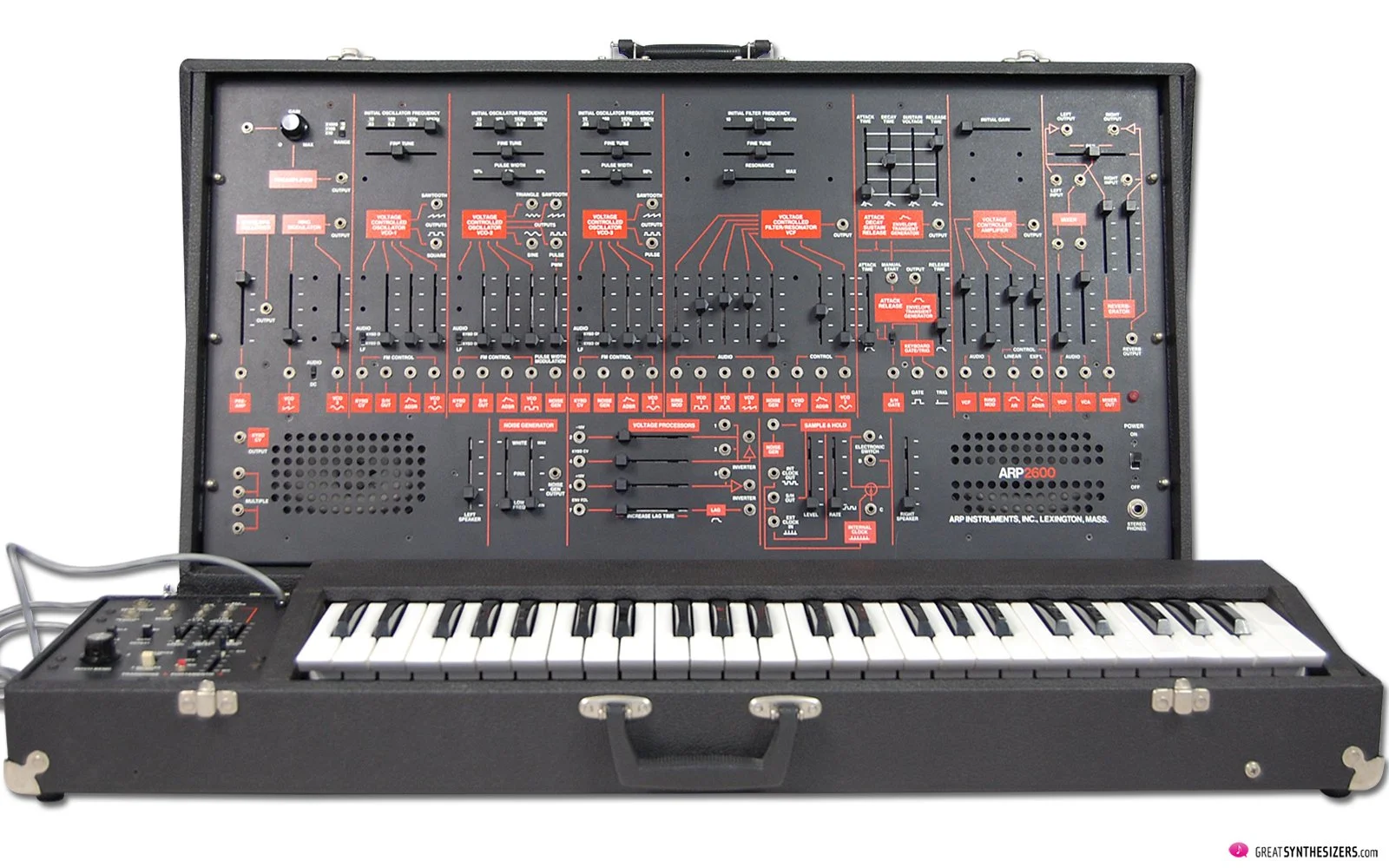
TECH SPOTLIGHT: ARP
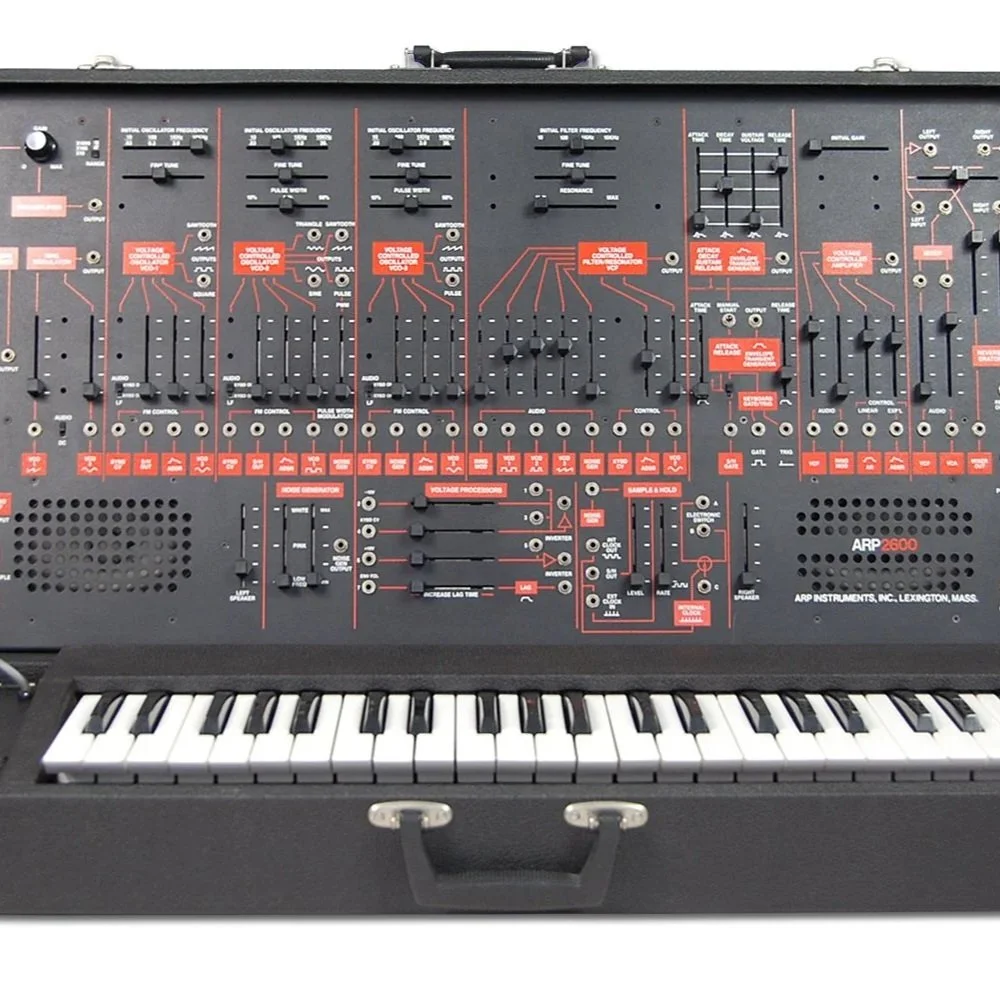
Alan Robert Pearlman (ARP) founded the company in 1969 in Lexington, MA, a distant suburb of Boston. Pearlman studied engineering at Worcester Polytechnic Institute and saw the potential interest in electronic instruments. His co-founder was David Friend, a fellow graduate. The first product was the ARP 2500 in 1970 and then the portable 2600 in ’71 (pictured). The Odyssey arrived in ’72 and became a primary competitor to the Minimoog. ARP went bankrupt in 1981 after a failed investment in a guitar synth, the Avatar. However, KORG revived the brand in 2015, issuing a new version of the Odyssey in a collaboration with David Friend.
Hancock’s career has continued unabated, having released more than forty albums along with soundtracks and live albums. In 1983, he continued to break ground with his Future Shock album, featuring the track, “Rockit”, which fused scratching, hip hop beats, and electronics.
12. “Silver Machine” \ Hawkwind (Jun 9, 1972) – Another of the era’s prog rock bands that started to utilize synths was Hawkwind. Formed in London in 1969, their mix of psychedelic rock, hard rock, and space themes became an influential recipe for many future heavy metal bands. (Future Joy Division drummer, Stephen Morris, was also an ardent fan, showing how varied the influences of early ‘70s rock could be on modern rock artists.)
On the first album, Hawkwind (1970), the band employed electronics primarily through what was credited as an ‘audio generator’, which was an old range signal generator put through a ring modulator. This was provided by Michael ‘Dik Mik’ Davies. On the second LP, In Search of Space (1971), Davies left temporarily, so the band’s live sound engineer, Del Dettmar, stepped in to handle the electronics as well as a synthesizer.
In a show at The Roundhouse in London in February 1972, the band played, “Silver Machine,” a new song in which the live recording was issued as a single the following June. Well, almost, the poor live vocals from Robert Calvert were re-recorded in studio for the single release. The new vocals were done by the band’s new bassist, Ian ‘Lemmy’ Kilmister, future founder of the band Motörhead, named after a Hawkwind song written by him.
Dik Mik was back in the band when “Silver Machine” was performed, so the band had both he and Dettmar on stage, including a VCS3. Their effects and synths provided the spacey soundscape underpinning the song’s driving guitars and drums.
13. “Ladytron” \ Roxy Music (Jun 16, 1972) – There are few names as synonymous with electronic music than Brian Eno. The British Art School student started using a tape recorder as an instrument as far back as 1964, learning to mix sounds and music together. He also played drums and started playing in bands, always leaning to the experimental.
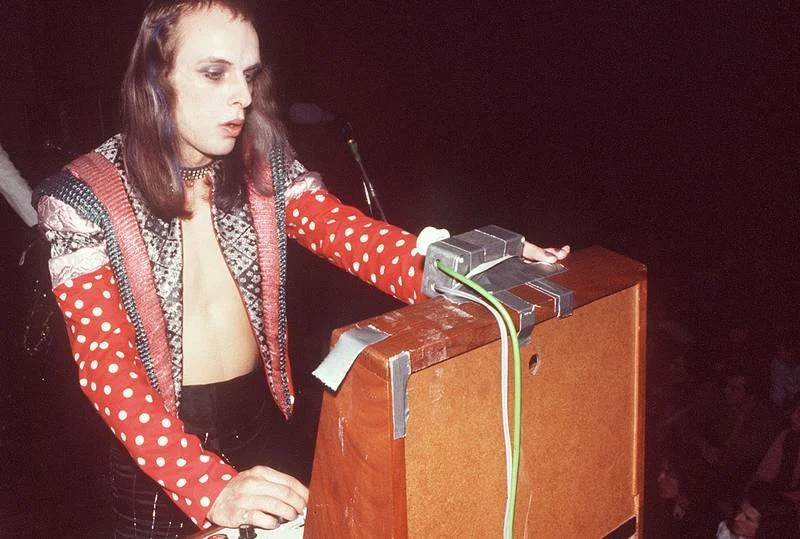
Brian Eno with Roxy Music in 1973
In late 1970, singer Bryan Ferry and bassist, Graham Simpson, were recruiting for a band and advertised for a keyboard player. Andy Mackay, a sax and oboe player, responded. He owned a VCS3 synth but preferred to stick to the woodwinds. Eno had been a university schoolmate, so Mackay suggested he join as a technical adviser. A quick study, Eno learned the VCS3 while also deploying his skill in creating soundscapes with tapes. He was eventually made a permanent member of the band, which was known as Roxy Music by the time they debuted with their self-titled album in 1972. By then they were a sextet along with Phil Manzanera on guitar and Paul Thompson on drums.
“Ladytron” was the second track on the first album and showed Eno’s influence, as Mackay’s oboe floated over the surreal sonic textures of Eno’s synths and effects. Eno stayed for the next LP, For Your Pleasure (1973), before going solo. These early albums and the band’s style made Roxy contributors to the burgeoning glam scene, particularly Eno who was prone to wearing make-up and feathered costumes. He pushed the band into the frontier of rock both visually and sonically.
Roxy Music released eight outstanding albums over the next ten years, becoming one of the leading acts in creating modern rock. Later albums such as Flesh and Blood (1980) and Avalon (1982) leaned into synths as a central part of the band’s sound.
14. "Tears" \ Georgio Moroder (1972) – Arguably, the individual most prominent to influence synth-pop was Italian composer and producer, Georgio Moroder. His career started performing dance and pop songs for clubs in Berlin. He had a hit in 1970 with the song, “Looky Looky”, the success of which allowed him to create Musicland Studios in Munich, Germany. He equipped it with synthesizers, paving the way for his solo work and collaborations with various artists that would shape the modern music world.
The first album Moroder made of his own with the new technology was his third LP, Son of My Father. The title track was covered and popularized by the glam band, Chicory Tip, also in 1972. Georgio’s album included, “Tears”, which closed the LP and was an excellent instrumental, displaying his ability to compose with the synthesizer. The synth seemed originally focused on mimicking strings, organ, and other orchestral sounds, and that was how most early adopters utilized it. Moroder showed it was possible to push the use to livelier and more pop-oriented styles, which opened the door for what was to come.
15."Bridge of Promises" \ Jean Michel Jarre (1972) – New age is a genre almost wholly built around the synthesizer, and their growth has been symbiotic. Jean Michel Jarre was a French composer, performer, and producer. Raised playing piano, violin, and guitar, he also painted. In the late ‘60s as he finished his college schooling, he began experimenting with sound effects, tape loops, and other electronic methods. He obtained synthesizers and began using them at home, leading to the recording of background music for ballet, theatre, TV, department stores, and commercials.
Jarre released his first solo LP in 1972, Deserted Palace. It was a variety of short tracks built on noises, loops, and synthesizers. “Bridge of Promises” is one of the only tracks to adopt a standard song structure. The instrumental revealed Jean Michel’s talent for composing synth music. He then issued a soundtrack for a 1973 French film, Les Granges Brûlées.
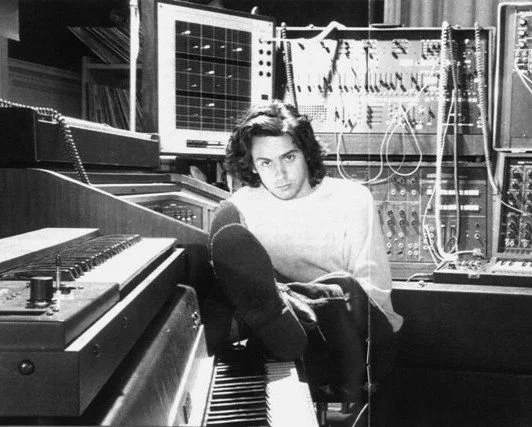
Jean Michel Jarre
His third LP, Oxygène, was recorded in his home using up to nine synths, organs, and computers, though principally his VCS3 and Synthi AKS synths, all captured into an 8-track recorder. Released in 1976, it was his breakthrough. Featuring six tracks all titled the same as the album, it was a masterwork of synth composition. Effortlessly blending the tracks together, the album was of a whole, working on repeated melodies and rhythms, like an electronic symphonic work. It was incredible production for one person, made at home, and opened a lot of eyes as to what was possible with this technology. The album reached #2 in the UK, #78 in the US, and #1 in France in addition to other top ten achievements around the world. Along with the ’78 follow-up, Equinoxe, Jarre did much to launch the new age genre as well as influence the nascent new wave scene in the UK.
Jarre has now issued twenty-two albums, with the most recent being in 2022. He is also known for his spectacular concerts, often in unconventional public spaces within cities (e.g. the Eiffel Tower, Paris la Défense, the Giza plateau by the Egyptian pyramids) leveraging impressive laser shows and visuals. Attendance for some shows have exceeded a million people since they were part of public celebrations or commemorations, resulting Jarre setting Guiness World Records for concerts on several occasions.
16. “On the Run” \ Pink Floyd (Mar 1, 1973) – London’s Pink Floyd was already a well-established psychedelic and experimental rock band by the early 1970s. All seven of their LPs were UK top tens, including a #1 with, Atom Heart Mother (1970). Obscured by Clouds (1972) was the first in which synthesizers were deployed, broadening from the prior use of piano, Hammond organ, and Farfisa organ.
Dark Side of the Moon, released in March ’73, was the band’s international breakthrough. There were many reasons this became one of the most enduring and biggest selling albums of all time, but certainly the innovative use of electronics set it apart and enhanced Pink Floyd’s lush compositions. The band utilized a VCS3 on two tracks and an Synthi A on two more tracks.
“On the Run” may be the next most famous use of synths in classic rock after, “Won’t Get Fooled Again”. The album featured seamless transitions between songs. Picking up from the closing note of the second track on side A, “Breathe (in the Air)”, “On the Run” launched into a sped up, eight-note sequence from the Synthi, mixed with various other sound effects from the synths. Perhaps it was the speed at 165 BPM, but the track seemed much shorter than its three-and-a-half-minute duration. It culminated in a guitar driven explosion that faded into the start of the fourth track, “Time”.
Synths continued to play a significant part in Pink Floyd’s sound, especially on the next two albums, Wish You Were Here (1975) and Animals (1977). The band was one of the biggest of the decade and helped bring the use of electronics into popular usage, especially in rock music.
17. “Non-Stop Home” \ Weather Report (Apr 27, 1973) – Weather Report was another early jazz act to utilize synths thanks to its founder, Joe Zawinul. Born in Vienna, Austria, he moved to Boston in 1959 to attend the Berklee College of Music. However, upon receiving an invite to join Canadian band leader, Maynard Ferguson, he quit school after only one week. After a stint with Dinah Washington, he joined the band of saxophonist, Julian ‘Cannonball’ Adderley, who had played on the seminal album by Miles Davis, Kind of Blue. Zawinul added his own landmark involvement with Davis when he played on Bitches Brew (1970).
In 1970, Zawinul formed Weather Report along with Wayne Shorter, the sax player from Miles Davis’ quintet. Inspired by Davis’ recent work, they were part of the movement that would become known as ‘jazz fusion.’ The synth was a frequent part of the genre, and Weather Report first turned to it on their second album, 1972’s I Sing the Body Electric. However, it wasn’t until the next LP in 1973, Sweetnighter, that synths appeared more prominently. The LP’s closing track, “Non-Stop Home”, gave the best example of the band’s use of electronics, mixing with drums and bass for a frenetic composition.
Weather Report would have an ever-changing line-up behind Zawinul and Shorter, often featuring prominent players. From Sweetnighter on they enjoyed ten straight top ten albums on the US jazz chart. In 1977, thanks to the single “Birdland”, which again prominently featured synths, they scored a US top forty album, Heavy Weather.
18. “Daybreaker” \ Electric Light Orchestra (Nov 1973) – Given it was right in their name and largely defined their brand, it was no surprise that ELO was an early adopter of the Moog. The band was formed by members of the band, The Move. Roy Wood and Jeff Lynne sought to blend orchestral strings into rock.
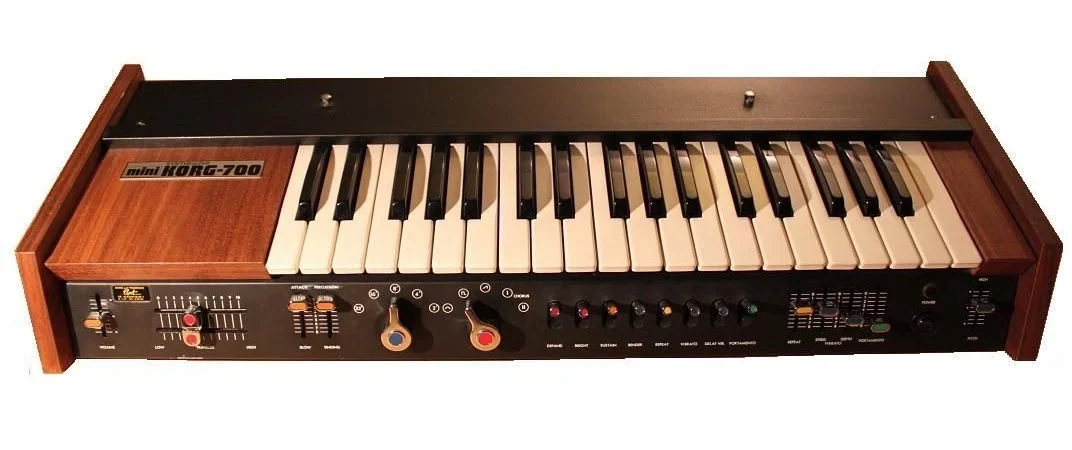
TECH SPOTLIGHT: KORG
Founded in Tokyo in 1962 by Tsutomu Kato and Tadashi Osanai, the company was originally called Keio Gijutsu Kenkyujo and then later, Keio Electronic Laboratories. The first product was in 1963 with the Disc Rotary Electric Auto Rhythm machine, dubbed ‘Donca Matic’ after the sound it made. In 1967, they shifted into keyboards with a programmable organ, which was the first product named KORG, as a combination of Keio and Organ. The first synthesizer was the miniKORG (pictured) in 1973.
Lynne used a Moog from the start. On the first two LPs, The Electric Light Orchestra (1971) and ELO 2 (1973), the synthesizer’s presence was slight and hard to identify within the mix of strings. However, for the third album, On the Third Day, released in November 1973, Wood was gone from the band and Richard Tandy joined, taking over keyboards. On the instrumental track, “Daybreaker”, the synth finally came to the fore, showing a shift that would assist the band in becoming one of the biggest acts of the decade. The following LP, 1974’s Eldorado, saw tracks like, “Can’t Get it Out of My Head”, employ a heavier synth presence that helped launch the band’s commercial success in North America, scoring its first US top ten.
Curiously, the band’s first two albums were top forty successes in the UK, but On the Third Day did not chart. Instead, it was their first LP in the US to get near the top forty. While their singles did well in the UK, ELO had better success in North America over the next two albums before finally reaching the top ten in both the UK and the US with the 1976 album, A New World Record. It featured the hits, “Livin’ Thing”, “Rockaria”, and “Telephone Line”. The following string of albums, Out of the Blue (1977), Discovery (1979), Xanadu (1980), and Time (1981), brought ELO immense success as they blended their electric use of strings and synths, along with disco beats and of course Lynne’s iconic vocal effects and harmonies, to huge success.
19. “Sidewalk Café” \ Todd Rundgren (Feb 1974) – An American, Todd Rundgren was an early adopter of electronics, infusing them into both his own music and the output he produced for others. Starting his career in the blues style band, Nazz, they released three albums from 1968 to 1971. Rundgren became noted for his experimentalism and proficiency in the studio, which created tension with the rest of the band such that he’d left by the time the last two albums were released. Before launching his solo career, he had stints working as a computer programmer and then in a recording studio.
Rundgren released a series of solo albums starting in 1970. His hit LP, Something/Anything (1972), featured the top ten single, “Hello It’s Me” (originally recorded and released with Nazz). The albums were rich recordings, consistent with contemporaries such as Carole King, who inspired his writing. In addition to the usual instrumentation, he increasingly used a VCS3 to insert backing sounds and effects, especially as he started to record the music all himself and use fewer contributing musicians.
The fifth album, simply titled, Todd, was released in February 1974. A double album, it was his most experimental yet, with several songs delving into electronic soundscapes. “Sidewalk Café” was one such track.
Rundgren was also making his mark as a producer, helming albums during this period by The Band, Badfinger, the New York Dolls, Grand Funk Railroad, Fanny, and Hall & Oates. He would go on in that capacity to play a part in the modern rock era, producing albums for The Tubes, Tom Robinson Band, Patti Smith, Psychedelic Furs, and XTC.
20."Here Come the Warm Jets" \ Brian Eno (Feb 08, 1974) – Upon parting with Roxy Music, Eno embarked on a solo career with the album, Here Come the Warm Jets, released in early 1974. The LP featured an impressive list of contributors, in particular guitarists who were adept at creating different sounds with their instrument: Robert Fripp (King Crimson), Phil Manzanera (Roxy Music) and Paul Rudolph (Pink Fairies). Chris Spedding also contributed on guitar but played straight-ahead rock pieces, which were then manipulated by Eno. The album had legendary engineer, Chris Thomas, also helping with the studio wizardry.
Largely a glam rock album not too dissimilar to Roxy Music, it was, however, highly processed by Eno such that the finished tracks differed greatly from the original recordings by the musicians. Admittedly, it was not a particularly synth-driven, or even an electronic sounding album, but Brian made extensive use of the VCS3 to process and manipulate the recordings of the various musicians. The title track closed the album. A mid-tempo, mostly instrumental tune that leveraged a fuzz sound Eno called, ‘warm jet guitar,’ which naturally inspired the name of the song and album.
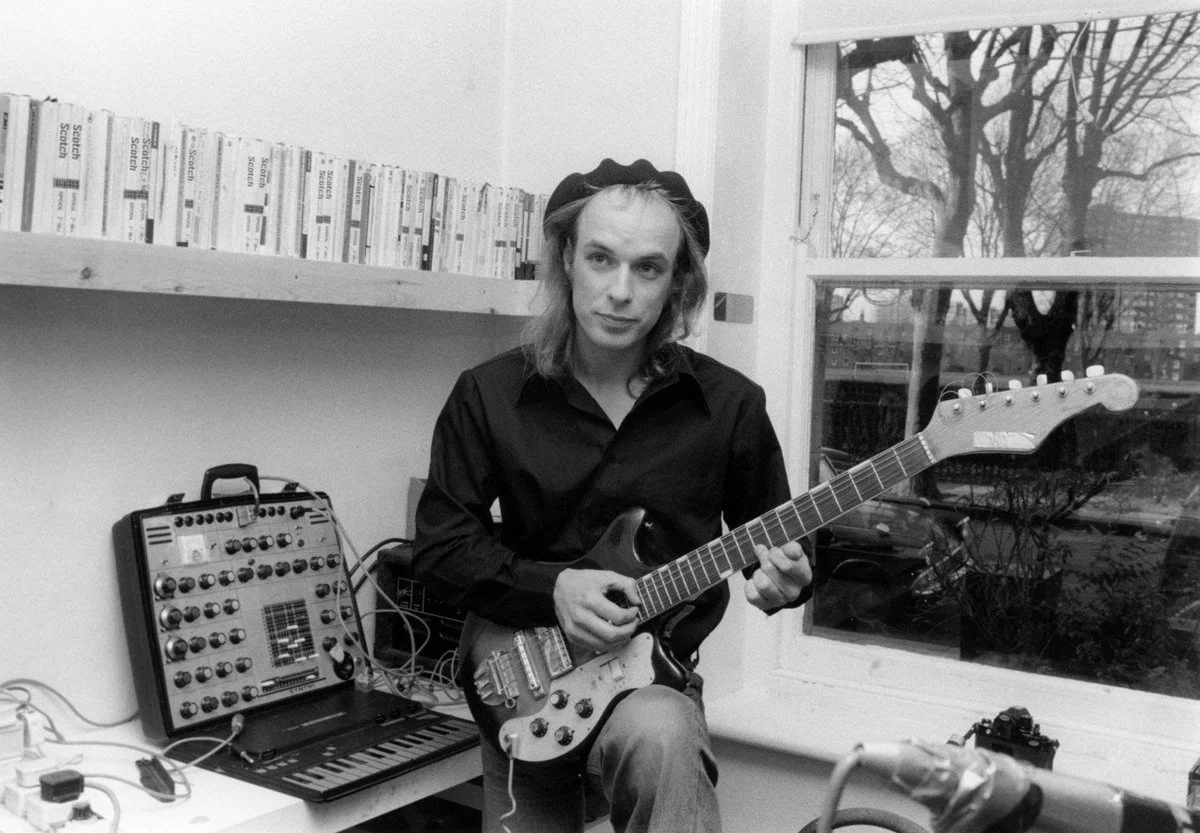
Eno in his home studio in 1974, with a guitar hooked up to his EMS VCS3
Though it only reached #26 in the UK album chart and didn’t make a dent in North America, it was critically well-regarded and is considered an important album in the development of modern rock. Eno’s manipulation of sound, use of repetition and drone, and extensive use of studio effects made it an important influence on artists looking for new styles.
Eno released another LP in late ’74, Taking Tiger Mountain (By Strategy). It remained anchored to the glam rock style of, Here Come the Warm Jets, but increased the level of quirk and experimentation in the compositions. It featured the fantastic, propulsive, “Third Uncle,” a track that would be championed by goth pioneers, Bauhaus, several years later.
The third album, Another Green World, arrived a year later. It continued Eno’s journey into more experimental and ambient compositions, with an increased focus on the electronics in his arsenal. It added another gem of a song with, “I’ll Come Running,” built around piano and intricate rhythms. Though the albums were critically lauded and continued to build Eno’s influence on modern music, the record buying crowd did not embrace them as much, with neither album charting.
Eno began releasing albums of electronic ambient music, starting in 1978 with, Music for Films. The format was developed further with, Ambient 1: Music for Airports, in 1979. He essentially created a whole new genre, particularly based on electronic composition. His influence was also extended through his production work, particularly with David Bowie, Talking Heads, and U2, making him one of the most impactful contributors to the broader music landscape of the next twenty years.
Notable London prog rock band, Genesis, is not included on this playlist but was also an important act to use synths within its music. The band’s keyboardist, Tony Banks, featured prominently in the band’s sound. The first four albums from 1969 to 1972 relied on piano, organs, and studio effects. Banks had experimented with the VCS3 but didn’t like it. The landmark 1973 LP, Selling England by the Pound, was the first to utilize a synth, the ARP Pro Soloist, in which solos were featured prominently in lengthy tracks, “Firth of Fifth” and “The Cinema Show”. The band also recruited Brian Eno to employ his effects on the next LP, The Lamb Lies Down on Broadway (1974). Genesis utilized synths extensively through their successful run of albums into the 1980s (particularly on the 1981 album, Abacab). Peter Gabriel, who left the band in 1975, also used synths in his solo work, though the sound of both acts generally remained anchored to standard rock instrumentation.
21."Autobahn" \ Kraftwerk (Nov 1, 1974) – Germany’s avant garde rock music of the late ‘60s and early ‘70s was extremely influential on the birth of modern rock. The German press used various terms for the scene such as Teutonic Rock and Überrock, while English media was apt to use, Deutsch-Rock. Krautrock was a pejorative term used by German media until the British press adopted it in the 1970s, with it becoming the most common term to capture the wave of West German bands that made their mark on the late ‘70s UK music scene.
CAN was formed in Cologne in 1968 and released their debut album, Monster Movie, in 1969. The first track, “Father Can’t Yell”, sounded like it used synths, but rather it was arpeggiated organs, not too unlike The Who’s work on Who’s Next. CAN employed synths on albums starting in 1972 but predominantly relied on effects on the guitars and the use of tapes to achieve their unusual mixes. What CAN did bring to the overall oeuvre was the psychedelic, experimental sounds and unstructured, hypnotizing drone tracks and motorik beats that would become a common approach to both German and then English artists over the coming decade.
Neu! was started in Düsseldorf in 1971 and issued their debut, self-titled album in 1972. Like CAN, they tended to use mixing board effects on the guitars and keyboards rather than synths. They employed greater use of tapes to integrate sound effects to enhance their droning, lengthy compositions of psych-rock.
Florian Schneider and Ralf Hütter were students together in the ‘60s and participated in the German experimental music and art scenes. Also out of Düsseldorf, they created Kraftwerk in 1970. The line-up fluctuated as different musicians participated in the recordings and shows, with only Schneider being the constant member. The first two albums, both self-titled, were released in ’70 and ’72, and like their Krautrock peers were experimental compositions with traditional instruments, heavily processed and manipulated by electronics. It wasn’t until 1973, when the band was reduced to just the founding duo and the release of the third album, Ralf and Florian, that the use of synthesizers came to the fore. The LP was comprised of various short, instrumental pieces that leveraged various sounds and repeated tones from the electronics.
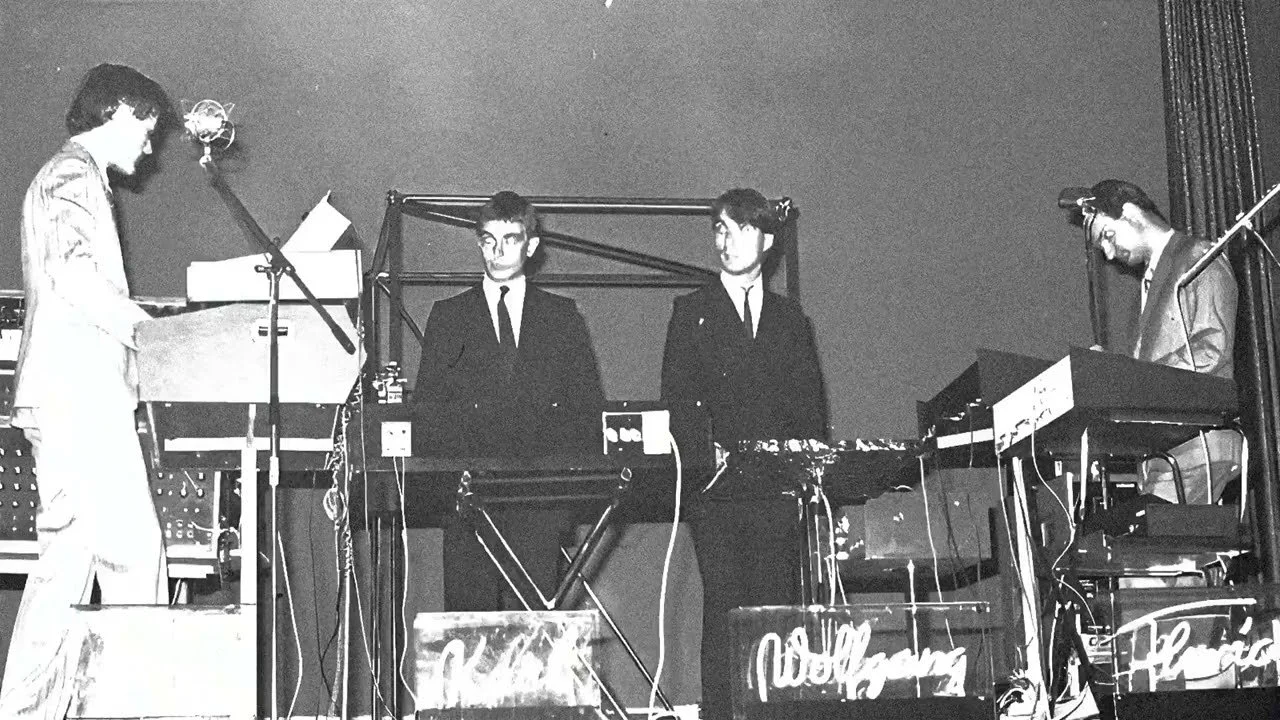
Kraftwerk, around 1974
The next LP, Autobahn, saw the duo expand to a quartet, adding Wolfgang Flür and Klaus Röder. It also featured a material shift in composition to electronics. Instead of being a solo act or having synths as part of a larger ensemble, their full band approach to electronics turned the music world upside down. Almost every artist (especially in modern rock) that picked up a synth after this cited Kraftwerk as an inspiration.
While this playlist leverages the single edit (released in Feb ’75), “Autobahn” on the album ran over twenty-two minutes. It was also Kraftwerk’s first song to feature vocals, though very limited and in German only. English speakers usually misinterpreted the line, “Wir fahr'n, fahr'n, fahr'n auf der Autobahn,” (“we drive drive drive on the highway) as “Fun Fun Fun on the Autobahn,” which also led to the misconception the song was a tribute to the Beach Boys. Intended to capture the feeling of driving on the highway, the purely electronic tune pleasantly drifted along with repeating lines and washes of synth chords and sound effects. There were quieter interludes between peppier sections, as if the song were moving through the countryside.
While the rest of the album was more ambient and moody, the infectious groove of, “Autobahn”, especially when edited to its single version, established the blueprint for synth-pop more than anything that had come before. It was other-worldly and electronic, yet warm and presented as a pop tune. It launched synth-pop into popularity, as the single reached the German top ten, the UK top twenty, and the US top forty. The album reached the top ten in all three regions.
Kraftwerk released five albums over the next eleven years, providing some of the most influential synth tunes of all time: “Radioactivity” (1976), “Trans-Europe Express” (1977), “The Robots” (1978), “The Model” (1978),” Pocket Calculator” (1981), “Computer Love” (1981), “Tour de France” (1983), and “Musique Non-Stop” (1986). Their shows, with the four members lined across the stage behind their keyboards, redefined the concert experience. Almost the entire 1980s synth-pop family tree grew out of Kraftwerk, only challenged in total influence by Georgio Moroder.
22. "Rubycon" \ Tangerine Dream (Mar 21, 1975) – We continue to roll through the giants of the early synth era. Another German act, Tangerine Dream was predominantly the project of Edgar Froese, starting in 1967. Not surprising for the era, its early work focused on psychedelic rock in the mold of The Beatles and especially early Pink Floyd. However, Froese was taken by the emerging electronic techniques and was using tape loops and synthesizers increasingly in the sound. He would become a champion of the sequencer. The psych-rock sound was increasingly infused with drone and ethereal synth-scapes. While some tracks followed typical rock song structures, much of the music was more ambient and experimental.
The fifth album, 1974’s Phaedra, leaned into the synthesizers. The title track was a seventeen-minute opus of synth experimentation, repetition, alien soundscapes, and pulsating rhythms. It was a mesmerizing journey that caught attention, especially with promotion after having joined Virgin Records. The album reached #15 in the UK chart, despite not having a single to play on the radio.
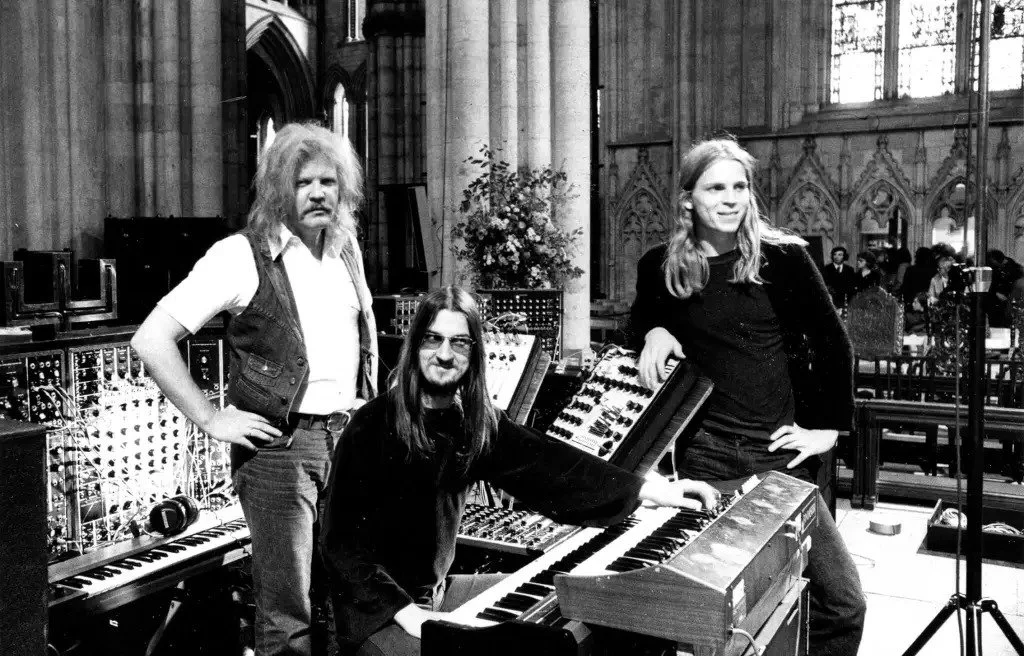
Tangerine Dream in 1975
The next album was Rubycon, released in 1975. It was again an album of long, meandering synth compositions, though this time excerpts, such as the title track, were created to aid in promotion. The album reached the top ten in the UK.
Tangerine Dream is best known for its work in film, having provided scores and songs for soundtracks to dozens of movies. Whenever a film needed a futuristic, haunting soundscape to back its narrative, Tangerine Dream was the go-to artist. Many would know their work on Sorcerer (1977), Thief (1981), Risky Business (1984), and Firestarter (1984). In many respects, Tangerine Dream’s synth sound was the soundtrack to the 1980s, with many a film emulating the sound. If you’re a fan of the recent Netflix series, Stranger Things, you will recognize Tangerine Dream’s influence on its score.
Edgar Froese was the one constant in Tangerine Dream until his death in 2015. The band continues today, sustaining his legacy. Their discography now numbers over one hundred albums, almost forty soundtracks, and twenty-five EPs. It is a staggering output for a band many have heard, but not many likely know. But they left their indelible mark on the world of electronic music.
23. “Bang-A-Boomerang \ ABBA (Apr 21, 1975) – A synth playlist for the 1970s cannot omit ABBA, one of the biggest acts of the decade and one in which synths were, if not primary, certainly an integral part of their sound.
Benny Andersson was the keyboardist, and on the debut album, Ring Ring (1973), piano and mellotron were the primary instruments. The act was also known by their names, Björn & Benny, Agnetha & Anni-Frid, not adapting the ABBA moniker until the second album, Waterloo (1974). Winning the Eurovision song contest with the title track, the album helped launch the band internationally, beginning their string of hit singles and albums. Benny started using a Moog on that album, but again piano and mellotron were the more dominant keyboard sounds as the band refined their pop sound and iconic harmonies.
It wasn’t until the third album, self-titled, that synthesizers started to become a more significant part of the sound. Benny also introduced a Clavinet, giving the band a funkier element. While the album’s hit songs were, “SOS” and “Mamma Mia”, synths were more evident on tracks such as, “Bang-A-Boomerang”, the instrumental, “Intermezzo No. 1”, and, “I’ve Been Waiting for You”. “Bang-A-Boomerang” was written for the duo, Svenne & Lotta, who had a hit in Sweden with it in the spring of ’75. ABBA utilized the same backing track for its version, also releasing it as a single in France and including it on their album that year.
24. “Space Intro”; 25. “Fly Like An Eagle” \ Steve Miller Band (May 15, 1976) – Steve Miller was born in Milwaukee and moved around the US while growing up. After a stint attending university in Denmark, he settled in Chicago and immersed himself in the city’s blues scene. This was followed by stints in New York and Austin before he eventually made his way to San Francisco, where he formed the Steve Miller Band in 1966.
By 1976, the band had released eight albums. While a few had cracked the top forty, it wasn’t until The Joker (1973) that they reached the top ten for albums and had a #1 single with the album’s title track. As a guitarist and blues man, Miller had mostly used traditional keyboards but was not averse to some experimental use of electronics and guitar effects.
It wasn’t until the album, Fly Like an Eagle, released in May 1976, that synths made a sudden and prominent appearance in this music. “Space Intro” was the lead track on the album and the intro to the title track, which was a #2 US single. Composed on an ARP Odyssey, the synth intro extended through “Fly Like an Eagle”, featuring prominently in the song’s outro. It was also on three other tracks on the album, particularly the track, “Wild Mountain Honey”.
Miller repeated this approach on the next LP, Book of Dreams (1977), with another synth opening track, “Threshold”, that led into the hit song, “Jet Airliner”. Synths continued to appear regularly in his music, most notably again on the album and song, “Abracadabra” (1982).
Seeing traditional rock acts like Steve Miller leverage electronics to great success contributed to the modernizing sound of classic rock. It was one thing for prog rock acts to lean into them, or more experimental bands like Roxy Music, but when Steve Miller and ABBA started topping the charts, the synth was suddenly less exotic to the ears of wider audiences.
26. “Darkness/Earth in Search of A Son” \ Jan Hammer (Jun 30, 1975) – In a path similar to Joe Zawinul of Weather Report, Jan Hammer was born and raised in Prague, Czechoslovakia, where he studied and developed his piano skills. After time in Munich, he moved to the USA to attend Berklee.
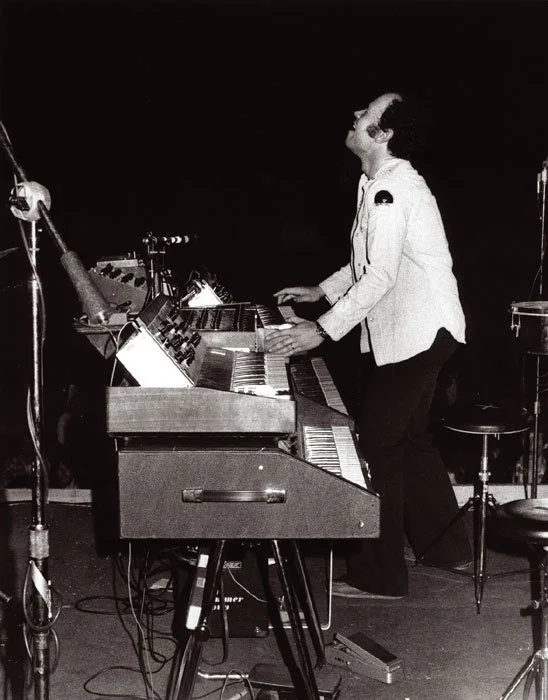
Jan Hammer
After, he toured with Sarah Vaughan before joining the notable jazz fusion act, Mahavishnu Orchestra. It was with them and the noted guitarist, John McLaughlin, that he developed his use of the Moog. As often using a Rhodes piano or organ, it wasn’t often the synth was prominent in the mix, but there were moments such as the track, “Celestial Terrestrial Commuters”, from the 1973 album, Birds of Fire. Jan was an important contributor to the band’s mix of funk, rock, and jazz.
After three albums with Mahavishnu and collaboration albums with many others, including McLaughlin and Carlos Santana in 1973 for the LP, Love Devotion Surrender, Hammer went solo with the 1975 album, The First Seven Days. “Darkness/Earth in Search of A Son” was the opening track and considered a notable entry in the history of synth use within jazz fusion. It hadn’t been often that synth was the lead instrument, and it opened many to the possibilities of its use in jazz – not to mention its similarities to rock and new age at the time.
Hammer also collaborated with the eminent guitarist, Jeff Beck, playing on his Wired LP (1976), and Jeff Beck with the Jan Hammer Group Live (1977). In the 1980s, he again played with Beck on the LP, Flash (1985), but made a name for himself when his theme music for the TV show, Miami Vice (1984), became a #1 US hit in 1985. There were few tracks (or TV shows) as quintessentially ‘80s as, “Miami Vice”.
27. “Dream Weaver” \ Gary Wright (July 1975) – The significance of this song cannot be underestimated, though it’s possible not many are aware of its importance. Certainly, “Dream Weaver” was a hugely successful single, reaching #2 in the US (though oddly did not chart in the UK) and entrenching itself as one of the most popular and enduring hits of the ‘70s, but consistent with the entire album, it was also arguably the first major hit to be entirely composed on keyboards. Only the drums were not done on electronics, played by renowned session player, Jim Keltner. Canadian, David Foster, also played a Fender Rhodes electric piano.
Gary Wright was a singer and keyboardist. Born and raised in the US, he started his career in England after moving there on the invitation of Chris Blackwell of Island Records. He played in the band Spooky Tooth, which released several albums from 1968 to 1974 and had released two solo albums, also to limited success. He also worked as a noted session player for a variety of artists, not the least of which was ex-Beatle, George Harrison. Wright first played on the epic triple album, All Things Must Pass, and continued on Harrison’s subsequent LPs.
In 1975, Wright returned to the US and recorded his third solo LP, this time deciding to eschew a band and record it on his own, creating all the music on keyboards, except drums, though a drum machine was part of his repertoire. The album, The Dream Weaver, was released in July, but the title track wasn’t released until December. Interest in the song and album grew, eventually delivering both to their top ten US positions.
Wright’s traditional, rock ballad feel was consistent to the music of the mid-70’s, and though there were spacey sound effects, the keyboards largely mimicked strings, bass, and organ to obscure the fact that the song was produced without such instruments. Even the lack of a guitar, as unusual as it was for the time, did not immediately jump out.
Along with the album’s other #2 hit, the funky, “Love is Alive”, the album helped launch the wave of soft rock (later controversially dubbed, yacht rock) that dominated charts over the latter half of the decade, in which synths would become a standard component. Artists, such as Steely Dan, Christoper Cross, Gerry Rafferty, Eagles, Doobie Brothers and others all introduced synths into their crossover brand of prog, jazz, R&B and light rock.
28. "In Quest of the Unusual" \ Cabaret Voltaire (1975) – While Brits and Americans were increasingly utilizing synths, as we have seen, it was mainland Europe that was leading the charge into pure electronic music. However, bubbling up was an underground movement in the UK, which as usual would become the primary locale for a burgeoning modern rock genre. However, before many artists got to synth-pop, avant garde acts such as Cabaret Voltaire were laying the foundation.
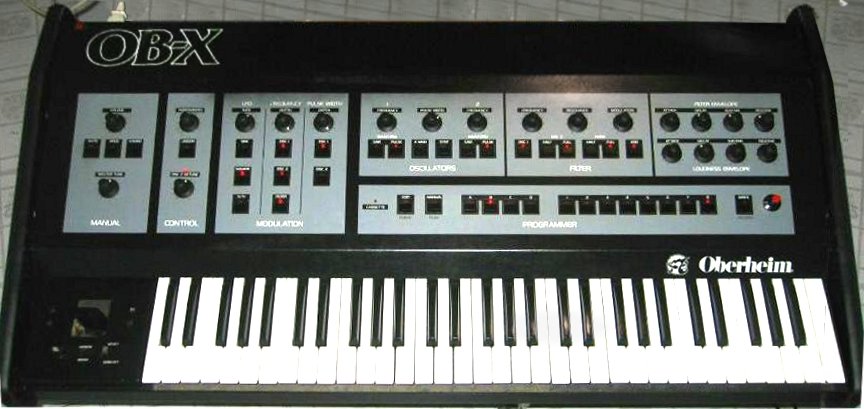
TECH SPOTLIGHT: OBERHEIM ELECTRONICS
Tom Oberheim was a physicist and an audio and electronics engineer who designed synthesizers, sequencers, drum machines, and effects processors. Hailing from Kansas, he moved to Los Angeles in 1956, studying at UCLA. He was friendly with various musicians during this time, leading to the creation of amplifiers and a ring modulator, which mixed frequencies to adjust sound. Inspired by feedback from the likes of Jan Hammer and Herbie Hancock, he created Oberheim Electronics in 1969.
Building off his ring modulator, he next moved to a phase shifter, then moved into synths by becoming ARP’s dealer for the LA area. This allowed him to learn the technology and start developing his own, notably creating the first two-note, polyphony synth in 1973 and the first digital music sequencer. Next was the Synth Expander Module in 1974, which allowed a user to combine live playing with recorded tracks. He also created a combined system that linked synths, sequencers, and drum machines, the concept that led to the creation of MIDI.
Oberheim Electronics was purchased by the Gibson Guitar Company in 1985, with Oberheim departing and creating Marion Systems, while also consulting for Roland and Akai. Now approaching ninety years-old, he continues to produce synths, consult, and in 2022 re-introduced Oberheim Electronics.
Pictured: The OB-X, Oberheim’s first synth
Sheffield is a city nestled in the northern manufacturing heartland of England, east of Manchester and south of Leeds. It was a critical city during the industrial revolution, being where first crucible steel and then stainless steel were invented. They were both critical to the production of household items such as plates, bowls, and cutlery. Like many other industrial cities, the depression and then the war, in which the city was blitzed due to its munitions manufacturing importance, left the city in a reduced state. Council estates were erected in the 1950s and ‘60s to house the city’s low-income and struggling population. The overall economic malaise in Britain, which gave rise to the Conservative austerity under Margaret Thatcher, affected the city as it did the rest of the country. Sheffield fared better than others, such as its industrial neighbour, Manchester, but still incurred demise in the early ‘80s.
It was in this environment that Cabaret Voltaire arose, as much as an arts collective as a musical group. They named themselves after the Swiss nightclub that was the home to the Dada art movement. Founded in 1916, Dadaists sought to protest war, cultural conformity, and nationalism. They employed ‘anti-art’ methods of nonsense and ridicule to advance their ideas. The nightclub was created by the movement’s founders, Hugo Ball and Emmy Hennings, to host performances and manifestos to promote their cause.
It was from the Dadaist ideas and activities that Chris Watson first started experimenting with tape loops and homemade oscillators to manipulate sound and create performance art. Joining with Richard Kirk, they were inspired by Brian Eno’s work to make music without instruments. The sounds and bleak, industrial visuals of A Clockwork Orange also gave vision. They eventually incorporated instruments, with Kirk playing a clarinet fed through effects, Watson similarly playing an organ, and Stephen Mallinder joined to provide vocals and bass. They did not yet have a synthesizer, with just the oscillator to employ effects. In 1973, they formed Cabaret Voltaire and began recording their experimentations in Watson’s attic.
Their first performance was in 1975, playing to a group of students that resulted in a fight, with Kirk using his clarinet as a weapon. Mallinder fell off the stage and injured his back. Yes, the early performances were chaotic and noisy, featuring stunts, multimedia, and the use of various household objects and spoken word recordings to generate sound. While they got into some clubs and university rooms, it was usually only once since they would alienate most of the audience and certainly the venue’s management. They also appeared in non-performance settings such as public toilets, on the streets, or from a van.
“In Quest of the Unusual” is taken from a compilation album released in 1980, simply titled, 1974-1976, that provided some of those early recordings from Watson’s attic. Therefore, it is not clear when this was recorded so I’ve tagged it for 1975. The track was included in a cassette the group distributed to friends in 1976. Regardless the exact date of recording, it revealed the kind of noise and ‘music’ the band was producing early in their career. If you find this track hard to listen to and evocative in a troubling manner, that was likely the intent. Yet, Cabaret Voltaire provided their own piece to the puzzle for the many that were figuring out how to create new music with the emerging technologies.
Cabaret Voltaire wouldn’t release their first singles and album until 1979. Eventually molding their chaos into more structured sounds, they would help establish the modern industrial music genre. Building an audience in the UK, they achieved several top ten hits on the UK indie chart and eventually minor hits on the UK singles chart. Their 1984 LP, Micro-Phonies, was a notable release that included the fantastic track, “Sensoria”. They were the classic case of being highly influential without ever being commercially successful. The band is still going, having released its most recent LP in 2021.
29. “Pulstar” \ Vangelis (Sep 1976) – New age artist, Vangelis, was born in Greece as Evangelos Papathanassiou. Interested in music from a young age, he formed his first band, The Forminx, in the early ‘60s while still in college. The band was short-lived, as he moved on to composing and studio work, scoring several Greek films through the 1960s. Next came a move to Paris and the formation of the psych-rock band, Aphrodite’s Child. At this point, he was playing piano and organ as the band released three albums from 1968 to 1972 and had a hit single in 1968, “Rain and Tears”. They split up in 1971 while Vangelis also continued film work, providing scores and soundtracks to a few French films.
In 1972, Vangelis released his first solo album, Fais que ton rêve soit plus long que la nuit (make your dream last longer than the night), which was composed using sound collages of music, field recordings, news reports, and clips of the 1968 student protests in France, which were the inspiration for the album. The follow-up, Earth (1973), used organ and a Clavioline, an analog electric keyboard invented in France in 1947 and manufactured by Selmer. Like a synth, it could manipulate sound.
Among his film work, he did the music for a 1970 documentary, L’Apocalypse des Animaux, which was also released in 1973. This LP also heard his first foray into synths and electronics, which caught the ear of Jon Anderson from Yes. This led to Anderson participating in the 1975 album, Heaven and Hell, which was essentially two long classical styled pieces built mostly on synths, making it Vangelis’ first full lean into the new age paradigm. It reached the UK top forty, bringing Vangelis to English audiences for the first time.
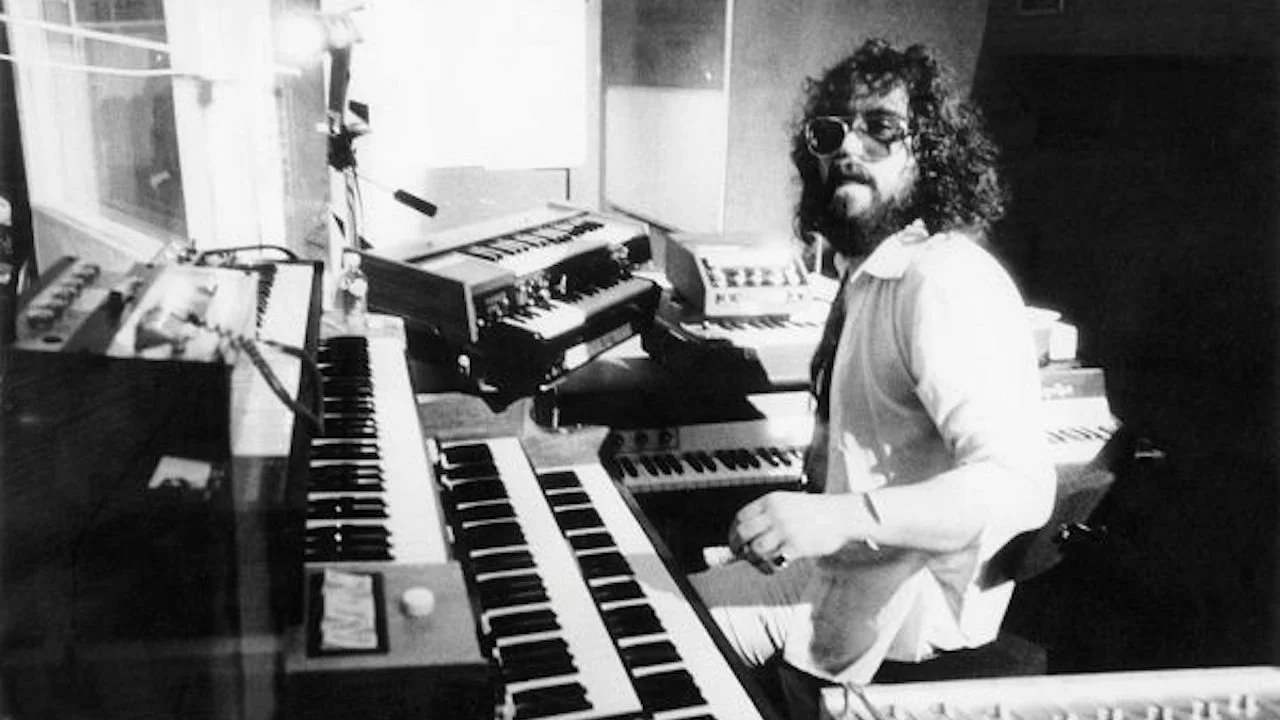
Vangelis
Vangelis also moved to London in 1975. In 1976, he released the album, Albedo 0.39, the next in his exploration of synth music and further establishing himself as a new age pioneer. “Pulstar” was the opening track on the album, showing his dramatic and layered synth composition style.
He would further collaborate with Jon Anderson, releasing four albums as Jon and Vangelis between 1980 and 1981. Two albums, Short Stories (1980) and The Friends of Mr. Cairo (1981), reached the UK top ten. The title track of the latter became a #1 hit in Canada.
In the 1980s, filmmakers were overtly turning to electronic artists for their scores and songs, seeking the futuristic and contemporary stylistic elements that matched their plots and characters. As previously noted, Tangerine Dream became prominent in this regard, and Vangelis was the other artist to gain attention in that regard.
A movie about two English runners competing in the 1920s along with a religious and social subplot was an unlikely premise for a highly successful, Oscar winning film. In 1981, Chariots of Fire, as a period piece, was also an unlikely candidate to use an all-electronic score. But that’s the thing about art, nothing ventured, nothing gained. The final surprise in this enterprise? Vangelis’ score’s “Main Titles” section becoming a hit single, reaching the UK top twenty and becoming one of the most notable and iconic synth tracks of the era. Further, the soundtrack also went to #1 in the US and top ten in the UK and Canada. Overall, the film served to bring new age and synth compositions to a wide audience, appealing to both classical and pop fans alike.
Vangelis went on to score other notable films, such as Blade Runner (1982), and released over twenty albums and soundtracks. He passed away in Paris in 2022 after ongoing health issues, dying from heart failure while being treated for COVID.
30. “Lenore” \ Chick Corea (1976) – Another alumna of Miles Davis and a player on the album, Bitches Brew (1970), and also a contributor to the jazz fusion era, Chick Corea was from the Boston suburb of Chelsea. Like many of that period, he expanded from piano into electronics in the early ‘70s with his band, Return to Forever. Though he was of Italian heritage, the band explored Hispanic influences as part of their sound.
In 1976, he released his fourteenth album, The Leprechaun, which included the song, “Lenore”. It was one of the more prominent uses of synths in his work and was a good example of the sounds and styles employed in jazz at the time.
This is the last we’ll explore a jazz contribution in this playlist. Needless to say, the genre continued to explore that sound, becoming prominent in the 1980s with the advent of smooth jazz (a debated genre among jazz aficionados), pioneered by keyboardists such as Bob James.
31. “Walking in the Rain” \ Flash and the Pan (1976) – Many of the songs and artists on this playlist charted well in Australia, suggesting there was a receptive audience to both modern rock and synth-pop in the land down under. However, while always enjoying a healthy music scene and producing many quality international acts, we will only feature two Australian acts on this playlist. It appeared most of the Aussie rock and modern rock artists tended to rely mostly on usual instrumentation.
The Easybeats were a band that had enjoyed international success with the 1966 hit, “Friday on My Mind”. The band was derived from recent immigrants to Australia, to the extent that the band members met at a migrant hostel. The band’s songwriters and guitarists were Harry Vanda, from the Netherlands, and George Young, from Scotland. When The Easybeats ended in late 1969, Vanda and Young teamed up, first moving to the UK. They recorded under several names without getting established and returned to Australia in 1973. In 1975, they produced the debut LP by AC/DC, a band that included George’s younger brothers, Malcolm and Angus (and much later, another brother, Stevie).
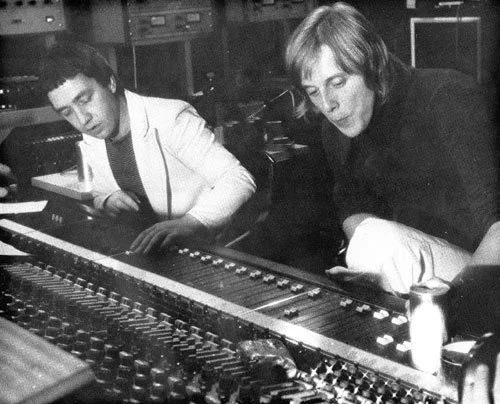
Flash and the Pan: George Young and Harry Vanda
Vanda and Young were writing and producing for several acts in the early disco mode but had a song that didn’t fit. They decided to record it themselves. Figuring it would be a one off, they cheekily chose the name, Flash and the Pan, as a play on ‘flash in the pan.’ In 1976, the duo released the single, “Hey, St. Peter”, a synth infused pop-rock single that reached the top ten in Australia as well as in the Netherlands and Belgium when it was released internationally in ’77.
While that song would have been a suitable choice for this playlist, the B-side, “Walking in the Rain”, was an intriguing, moody track of synths and bass with spoken vocals that channeled a proto-new wave vibe. This was an early sign of how the synthesizer could change rock music over the coming years. A surefire sign this was a song and sound of intrigue? It was selected for Grace Jones’ 1981 album of cover songs, Nightclubbing, and released as a single.
Vanda and Young’s next success was via fellow Aussie, John Paul Young, who had hits written and produced by the duo including the 1977 international disco track, “Love Is in the Air”. They also continued producing AC/DC, helming the band’s first six releases, though their run stopped short of the band’s international breakthrough.
It wasn’t until 1978 that they released the self-titled, debut album for Flash and the Pan. It had a top ten single in Australia, “Down Among the Dead Men”. It also included, “Hey, St. Peter”, which when released in the US reached the singles chart, but not highly. As a studio project, Vanda and Young did not do live performances or tour to promote the album.
The 1980 album, Lights in the Night, reached #1 in Sweden but had no charting singles. 1982’s Headlines was the third LP, which was a top twenty hit in Sweden and almost a top forty album in Canada. Flash and the Pan seemed more popular outside their country. The 1982 single, “Waiting for A Train”, reached the UK top ten. It was a fun little synth-pop tune, once again with minimalist vocals and exuded the cool charm of early ‘80s new wave.
32. "Warszawa" \ David Bowie (Jan 14, 1977) – David Bowie was riding high after the run of successes he’d had since his Ziggy Stardust days and recent work as the Thin White Duke. He was also high on cocaine, having fallen into a deep addiction after moving from New York to Los Angeles in 1975. Bowie and Brian Eno had known each other since 1973, both being leading figures in the glam movement. Bowie was a fan of Eno’s solo work, raising his interest in electronic music, which he’d experimented a little on his 1976 album, Station to Station. The pair met in 1976 and expressed an interest in working together.
Bowie decided to flee the drug climate of LA. He decamped to a recording studio in Hérouville, France along with ex-Stooges frontman, Iggy Pop (nee James Osterberg), who was similarly set back with addiction. The pair recorded Pop’s solo album, The Idiot, in the late summer of 1976. They then moved to West Berlin to mix the LP at Hansa Studios. They chose this locale to steer clear of the UK and US, but also in order to wade into the influential Krautrock scene. The pair were joined by Bowie’s producer, Tony Visconti.
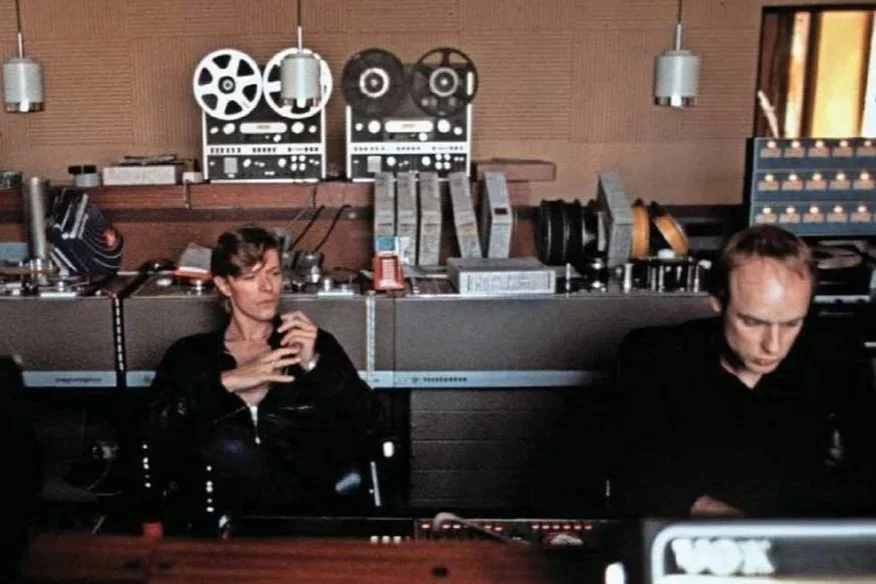
David Bowie and Brian Eno in Hansa Studio, for the Heroes album recording
Bowie had started working on an album in France, with a sound consistent to Pop’s album. Bowie’s band played on both LPs. It was also finished in Berlin, joined by Eno who brought his contingent of synthesizers and production techniques into the mix. The result was the LP, Low, released in January 1977 and the first of Bowie’s ‘Berlin trilogy,’ that would go on to include the albums, Heroes and Lodger.
Low marked a significant change in style and sound for Bowie. The first side hewed closer to his ‘70s rock sound and the styles of Iggy’s, The Idiot. Side two was an exploration in electronics and ambience, spread across four almost entirely instrumental tracks. Eno received a writing credit for the opening track, “Warszawa”, given his contributions to the song’s synth moodiness and eerie touches.
There could not have been a more respected and influential artist than David Bowie to imprint this new style on the many fledgling artists working in the new genre. Having Eno in the mix added to the allure. The album reached #2 in the UK and fell just short of the top ten in the US. It was quite the achievement for an album featuring so many avant garde compositions, though was helped by the UK top ten single, “Sound and Vision”. In Manchester, a new punk band was starting out, calling themselves, Warsaw, after this track. They soon after changed their name to Joy Division.
33. “Magic Fly” \ Space (Apr 1977) – Founded in 1977 by Dider ‘Ecama’ Marouani, Space was a French band built entirely with synthesizers. The original formation was a quartet that included Madeline Bell on vocals. We’re getting to this before, “I Feel Love”, which we’ll visit a few songs on, but the spirit of disco was strong with Space. It just lacked the natural bass and drums that marked most of that genre. Electronics had a strong association with space and sci-fi from the start – see “Dr Who” – and this band continued that theme, helping create a short-lived association with disco. Space performed in spacesuit costumes, further enhancing the association.
The debut album, Magic Fly, reached #1 in France and #1 in the UK. The instrumental title track was also a hit, reaching #2 in the UK singles chart. It appeared the door was swinging wide to electronic music, at least in the UK and Europe. Space released more albums and toured well into the ‘80s but never repeated the initial success.
34. “Fool’s Overture” \ Supertramp (Apr 8, 1977) – While Supertramp, via their keyboardist, Rick Davies, had started using synthesizers on their fourth album, Crisis? What Crisis? (1975), it wasn’t until the follow-up, Even in the Quietest Moments, in 1977 that synths moved into the spotlight. With a sound that was always keyboard heavy, the London prog act relied more on piano, organ, and clavinet through their career, even well into the synth era.
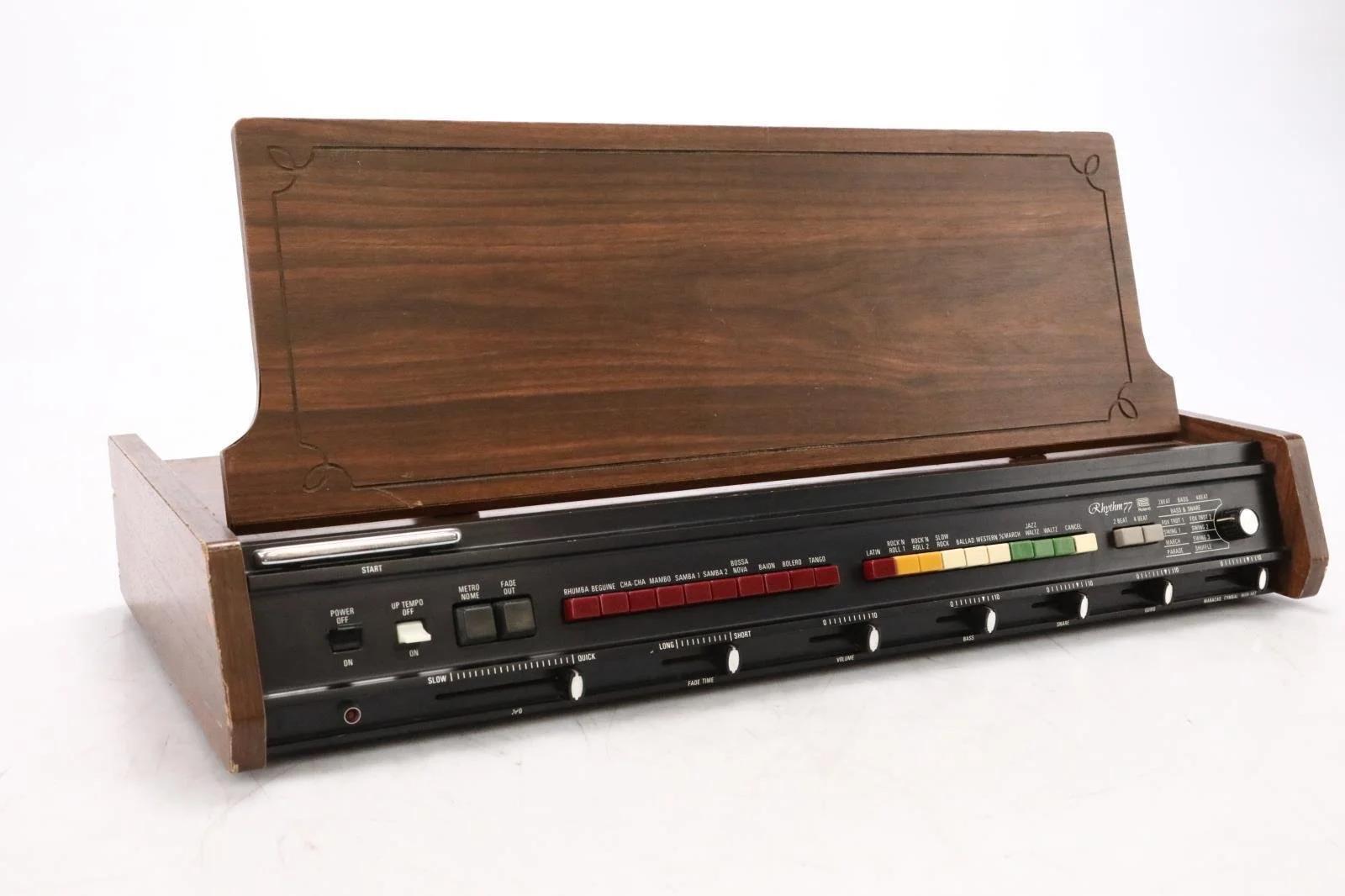
TECH SPOTLIGHT: ROLAND
Ikutaro Kakehashi founded Roland in 1972 in Osaka, Japan. He did this after resigning from Ace Electronic Industries, a manufacturer of electronic music devices, after it was taken over by a chemical industrial company. Roland Corporation’s goal was to manufacture for amateurs. The first product was a drum machine, the TR-77 (pictured), a device for which Roland would become synonymous as it issued various versions over the years, culminating in the Roland TR-808 in 1980, the beat generator that would enervate thousands of dance floors over the ensuing years. It also produced its first synth in 1973, expanding their offering over the rest of the decade. The line of ‘Jupiter’ synths in the 1980s would gain prominent usage
“Fool’s Overture” was one example though, when the electronics were made to shine, providing a symphonic and beat driven synth sound to drive the epic song’s most climactic moments. In Canada, the synth instrumental from the song was iconic as the late ‘70s theme music for the investigative news show, W5.
While Supertramp was successful at that point, and this LP was a top twenty hit in the UK and US, it wouldn’t be until the next LP, Breakfast in America (1979), that they would break through to the top of the charts.
35. "I Feel Love" \ Donna Summer (Jul 2, 1977) – By the summer of ’77, Georgio Moroder had released four more albums since Son of My Father, continuing to develop his disco styled music, all with a heavy reliance on electronics. His studio, Musicland, had become a go-to location for recording, covering an array of artists that included T. Rex, Deep Purple, Scorpions, The Rolling Stones, The Sweet, and ELO.
Donna Summer (her name was actually Sommer, but a misspelling on her first LP entrenched the adjusted spelling) was an American who had settled in Munich after a stint in the 1968 German adaption of the musical, Hair. Working as a model and backing singer in Germany, she was taken up by Moroder and his studio assistant, Peter Bellotte, a transplanted Brit. The duo wrote and produced music for her, helping build her career which, by 1977, was up to four albums. The trio had enjoyed success with the 1975 hit, “Love to Love You Baby”, and she was on her way to gaining the reputation as the ‘Queen of Disco.’ Indeed, disco, its club culture and associated fashion, drugs, and sex aspects were in full swing by 1977.
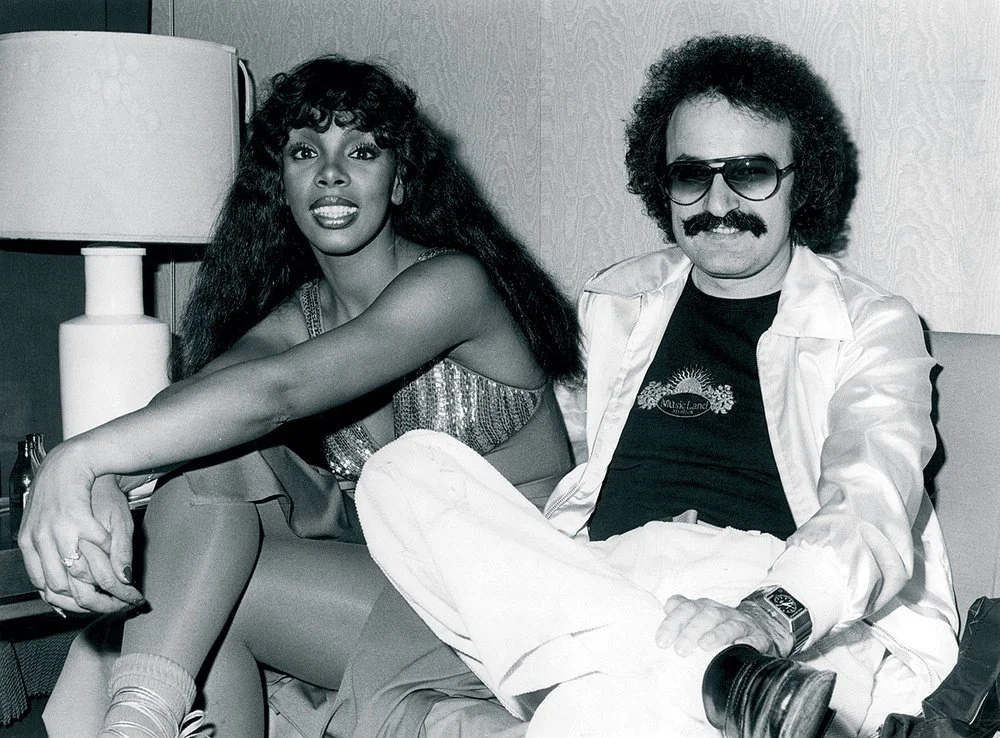
Donna Summer and Georgio Moroder
The next project for Summer was a concept album, I Remember Yesterday, released in July. The songs were intended to reflect on different eras of music, starting from the 1940s and working up to the final track, which was to represent the future. For that track, Moroder unleashed his full bag of tricks from his Moog, creating “I Feel Love”. The track became a disco sensation, Summer’s signature song, and almost single-handedly launched the synth-pop genre. It reached #1 in the UK and across much of Europe as well as Australia, and hit the top ten in the US, Canada, and many other countries.
The song’s influence on modern rock was evident when ‘80s synth stalwarts Bronski Beat and Marc Almond covered it in 1984, and in 2015, the New Order song, “Plastic,” was built on its rhythm. Though many who were inspired by it were not disco fans, they were enraptured by Moroder’s synth sound and ability to craft such compelling rhythms and melodies on the technology. Moroder and Kraftwerk are the two most cited instigators of ‘80s synth-pop artists.
36. "Ghost Rider" \ Suicide (Dec 28, 1977) – In 1976, punk arrived and created the schism that would separate classic rock from modern rock. In the US, ground zero for that change was New York, centred on a group of bands playing in the clubs, CBGBs and Max’s Kansas City. The synthesizer was a decidedly non-punk instrument, except in one act, Suicide.
Alan Bermowitz was a painter and sculptor who worked under the name Alan Suicide in the late 1960s. His interest in music outside the mainstream was inspired, as so many punks were, by Iggy Pop’s first band, The Stooges. He met Martin Reverby in 1970 while mutually part of the Art Workers Coalition. They started making music together along with guitarist, Paul Liebgott. They adopted the name, Suicide, from Satan Suicide, an issue of the comic book, Ghost Rider. Reverby had studied with composers and was getting into electronics, and that shaped their work.
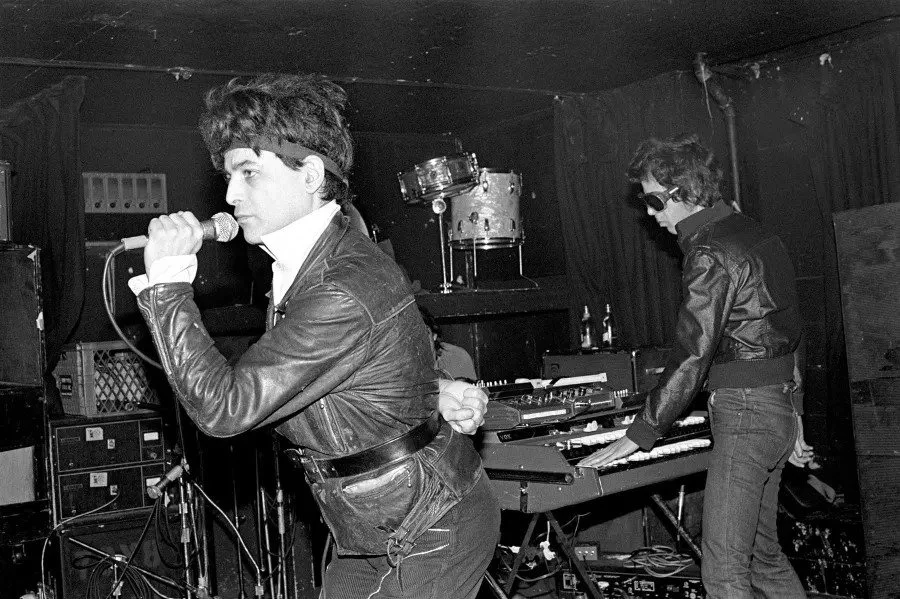
Suicide
Liebgott left in 1971 taking any guitar sound with him, leaving Suicide as a duo, with Bermowitz performing as Alan Vega and Reverby as Martin Rev. They were an early act to adopt the punk attitude and styles, often having a combative element to their fashions and shows.
The band’s first release was, “Rocket USA”, which was issued via a Max’s Kansas City compilation in 1976. Their debut, self-titled album came out in the last days of 1977. Very out of step with the rest of their punk peers, the synth music was terse, unsettling, and hypnotic. It divided people’s opinions, but over time has been recognized as an extremely groundbreaking and influential work. “Ghost Rider” was the opening track and displayed the band’s raw, edgy, fuzzy synth sound. Under the unique sound were tracks largely based, as so many punk songs were at the time, on the pop structures of early ‘60s rock ‘n’ roll. Other tracks such as, “Cheree” and “Che” also drew accolades over time. “Frankie Teardrop”, the disturbing ten-minute track about a man who kills his family, became a notorious and legendary entry to the punk library.
Suicide released a second album, Suicide: Alan Vega and Martin Rev, in 1980 before separating to collaborate with others and issue solo work. They teamed up again for albums in 1988, 1992, and 2002.
As we arrive at 1978, we’ve travelled over a span of fifteen years and from the primitive lab creations of “Dr Who” through to the more creative and polished works of the prog rockers and new age pioneers. The first synth hits arrived with, “Dream Weaver” and “I Feel Love” (and “Magic Fly”, in the UK at least), with many more to come. However, we will now shift away from the classic rock era into the growth of modern rock, which essentially blossomed in 1977. The playlist over the next three years will explore the artists and songs that created the synth-pop genre. Because once hits such as “I Feel Love” reached the top of the charts, and artists like Kraftwerk and David Bowie (with help from Brian Eno) were inspiring a new generation of artists, synths were poised to assault both the underground and the pop charts in the new decade.
37. "Electrical Language" \ Be Bop Deluxe (Feb 1978) – Be Bop Deluxe was a British band primarily led by singer and guitarist, Bill Nelson. Formed in 1972, the band had released four excellent albums over the ‘70s with elements of prog and smartly crafted rock tunes. After indie success over the first two albums, they’d reached the top twenty in the UK with their next two LPs, both released in 1976, Sunburst Finish and the very excellent, Modern Music. In February 1978, the final album, Drastic Plastic, saw a marked shift into electronics, showing how the trend was seeping into the broader sphere of rock music. “Electrical Language” was the second single from that album, released in May. It was a solid blend of electronics into the band’s brand of pop and rock, also making the band a contributor the growth of new wave.
Bill Nelson focused on his solo work after the end of Be Bop Deluxe. His albums were often ambient explorations of guitar and electronics, becoming an influential part of the ambient sub-genre.
38. “Take Me I’m Yours” \ Squeeze (Feb 3, 1978) – Among the big names that launched the new wave scene and established synth-pop, one act usually overlooked is Squeeze. Not giving them their due not only ignores their significant list of hits but misses just how early they were in the synth scene.
Formed in London in 1974 by Chris Difford and Glenn Tilbroook, they were soon joined by Jools Holland and Paul Gunn. The band’s name was a tongue-in-cheek reference to the less respected album in Velvet Underground’s discography. Less ironically, John Cale from that band produced their first EP, Packet of Three, released in the summer of ’77, and the self-titled debut LP in ’78. The two singles were produced by the band themselves at the prompting of the label, since Cale’s style of production was not chart friendly.
Jools Holland is widely recognized as a leading keyboardist of the new wave era, though is likely now known more for his long-running BBC show, Later… with Jools Holland. While much of that first album was a mix of punk and pub rock, Holland’s keyboard work shifted Squeeze’s sound into the emerging new wave sound when employed. His input was more accent than primary on the album, but for the single, “Take Me I’m Yours”, he was centre stage. Synths carried the track over the marching drums, which included a drum machine, and the Difford\Tilbrook harmonies. Using the technology was so new to Holland and the band that studio help was hired to help program them.
The album did not chart, but “Take Me I’m Yours” cracked the UK top twenty. The second single, “Bang Bang”, did less well, falling short of the top forty. Synths continued to feature prominently in their sound even after Holland left the band after the second LP. Though Holland would make his mark again via his guest appearance and extended solo on the single, “Uncertain Smile” (1982), by the band, The The.
39. “Toiler on the Sea” \ The Stranglers (May 12, 1978) - From 1977 through 1979, The Stranglers, coming out of Guildford, England, released their first four albums, establishing their esteemed place in the early days of punk and post-punk. Dave Greenfield was a critical component, as his keyboards separated the band’s sound from many of their contemporaries, often leading to them being labelled as a punk version of The Doors. His keys tended to an organ sound and rarely leaned into a pure synth sound. Combined with JJ Burnel’s snarling basslines and Jet Black’s drumming, it was hard to think of The Stranglers as a synth act, rather than a post-punk band that used synths. However, “Toiler on the Sea”, “The Raven”, and “Duchess” were the early tunes that did bring synths to the fore, providing a modern element to their retro-punk vibe.
“Toiler on the Sea” was also the song that provided the band name for A Flock of Seagulls, so it gets extra credit on this playlist for that contribution. The Stranglers’ ‘80s albums would leverage synths more prominently to great effect, giving them some of their best commercial results outside the UK on the LPs, Feline, Aural Sculpture, and Dreamtime.
40. “Moving in Stereo” \ The Cars (Jun 6, 1978) – The June 1978 release of the self-titled, debut LP by Boston band, The Cars, was a landmark entry to the evolution of new wave. One of the most successful of the genre’s early bands, the group certainly used synths as part of their mix but it was not the primary sonic element. The album was an impeccable collection of power pop tracks, with songs like, “Just What I Needed” and “Moving in Stereo”, featuring prominent synths.
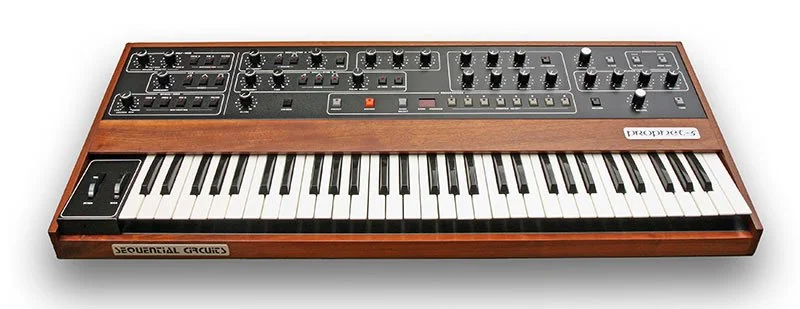
TECH SPOTLIGHT: SEQUENTIAL CIRCUITS
In 1974, Sequential Circuits was created in San Francisco by Dave Smith. He was a graduate of UC Berkeley in Computer Science and Electronic Engineering and had a music interest, playing piano in bands.
The first product was an analog sequencer for use with Moog and ARP synths. A sequencer enabled a user to record, edit, and play back music, and was critical for the artists looking to create multi-layered synth performances without needing multiple people to concurrently play the various parts. They were a huge step in advancing the ability of the pioneers to create full synth compositions.
Seeing a gap in the market, Smith combined the sequencer technology directly into the synth. He was a specialist in microprocessors, the technology that made this possible. He created the Prophet-5 in 1977 (pictured) and launched it at the NAMM International Music and Sound Expo in January 1978. This made it the first programmable, polyphonic synthesizer. Users no longer had to move cables and knobs to adjust sounds, could produce the same sounds reliably, and had a library – pre-loaded or self-created – of sound samples to draw upon, all in one device. The Prophet was a significant advancement in the capabilities of synths and one of the primary reasons the use of synths took off that year.
Sequential went out of business in 1987 and was purchased by Yamaha, who did not sustain the name and closed it down in 1989. Smith initially joined KORG before creating Dave Smith Instruments in 2002, issuing the Evolver synthesizer the same year, and then revived the Prophet name in 2008. Yamaha returned the Sequential name to Smith in 2015, but he sold the company to the British firm, Focusrite, in 2021 before he passed away in 2022.
The Cars would go on to be one of the most prominent acts of the 1980s that straddled the lines between critical appreciation and commercial success and between pop and modern rock. Greg Hawkes was the keyboardist and often applied synths and the Fairlight CMI to the band’s sound, especially later on albums such as, Heartbeat City.
41. “Definitive Gaze” \ Magazine (Jun 24, 1978) – Magazine was formed in 1977 by Howard Devoto, after he split from the (soon to be) groundbreaking Manchester punk band, Buzzcocks. He partnered up with innovative guitarist, John McGeoch to start writing songs. The quintet was soon rounded out with Barry Adamson on bass, Bob Dickinson on keyboards, and Martin Jackson on drums.
Devoto split with Buzzcocks because he wanted to explore a different musical course than punk, and “Definitive Gaze”, the first track on their 1978 debut LP, Real Life, made this clear. Opening with organ and deep, synth bass underpinning an arpeggiated bassline, the song broke out into piano and guitar before making way for a distinctive, synth melodic line. What was this? Punk? New wave? Rock? It drew from all three, making Magazine a pioneer in the post-punk movement from that first album and through the next three. Musically, Magazine picked up where Be Bop Deluxe left off, employing similar sonic mixes and song structures, but each distinct for their eras.
42. "Being Boiled" \ The Human League (Jun 1978) – Back in Sheffield, Martyn Ware and Ian Craig Marsh were deeply involved in the city’s underground arts scene. They participated in Meatwhistle, a youth theatre project started in 1972 and inspired by the glam rock of David Bowie, Alice Cooper, and early Genesis. Out of this group, Marsh formed a shock rock duo, Musical Vomit, along with Mark Civico. Though Marsh soon left, Musical Vomit continued, evolving its glam shtick into an influential proto-punk group.
Cabaret Voltaire hung out with this crew. In June 1977, they joined Marsh, Adi Newton, Glenn Gregory, Martyn Ware, and punk band 2.3’s Hayden Boyes-Weston for a one-off show, calling themselves the Studs. It was an infamous, punky demonstration. However, the fascination with punk and its limited chords wore off for Marsh, who instead formed a new act called, Future. With a mission to destroy rock ‘n’ roll, Marsh teamed with Newton to explore new forms of music. Inspired by Kraftwerk and the Morodor-Donna Summer sound, the path of electronics became the desired choice.
Martyn Ware was intrigued by this approach, wanting to use Marsh’s newly acquired Moog, and joined Future. Expanding to more devices such as the Roland System 100 and the Korg 700S, their capabilities grew. Newton was contributing through inventive uses with tape recorders. Marsh was also working as a computer operator, which undoubtedly helped their familiarity with the new technology. They changed their name to CARLOS, an acronym for Cyclic and Random Lyric Organization System. They recorded songs such as, “Blank Clocks” and “Future Religion”, with notable influences from Tangerine Dream.
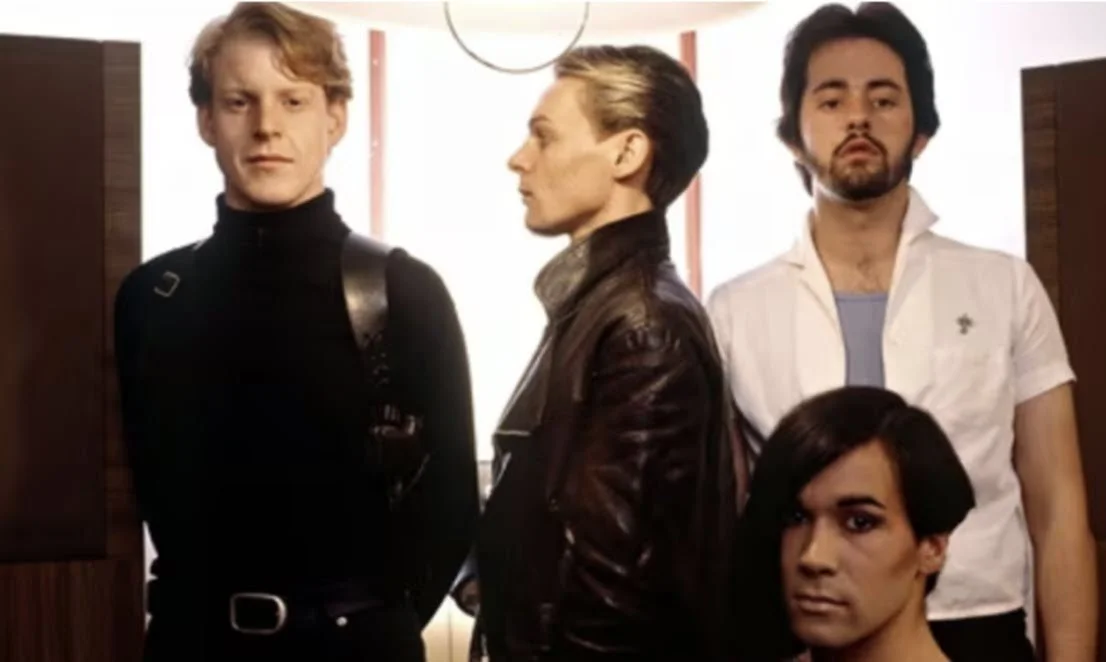
The Human League, before the split (L to R): Adrian Wright, Ian Craig Marsh, Martyn Ware, and Phil Oakey
They were unable to secure label support with their avant garde songs and the lack of a capable singer. Newton had been handling vocals but was not attuned, or skilled, with them. He was pushed out in favour of an ex-schoolmate of Marsh, the stylistic and androgynous, Phil Oakey. He was locally known for riding around town on his Norton motorcycles and for his lopsided hairstyle (inspired after he saw a woman on a bus with a Veronica Lake, ‘peek-a-boo’ style). With the new line-up of Ware, Marsh, and Oakey, they changed their name in early 1978 to The Human League, lifted from a sci-fi board game, StarForce: Alpha Centauri.
In June, the first single, “Being Boiled,” was released via the wonderful Scottish indie label, Fast Product, owned by Bob Fast. The stark melodies, cold vocals, hissing beats and ominous synths made for an altogether new sound. It furthered the notion of an industrial sound. It caught attention and managing a rather incredulous #6 spot in the UK singles chart.
The Human League played its first show in August. However, the show lacked interest as Oakey was nervous and awkward and Marsh and Ware just stood behind keyboards. They had a tape machine at centre stage in a spotlight playing the backing drum and bass parts, to emphasize the mechanical element of their music. Adrian Wright started assisting the shows to provides visuals via slide projections, becoming a fourth member of the band. They soon scored gigs with Devo, Iggy Pop, and Siouxsie and the Banshees. David Bowie hailed their music as the future of pop music. It seemed the future for The Human League was going to be bright, but that wouldn’t be so until a major shake up and a change in sound occurred.
Eventually signing with Virgin Records, The Human League fought the label’s pressure to make their music more commercial. After the release of the debut LP, Reproduction (1979), Martyn Ware chose to leave the band to continue a focus on more experimental approaches. Ian Craig Marsh joined him and, along with vocalist Glenn Gregory, they formed the act, Heaven 17, taken from a fictional band in the book and film, A Clockwork Orange. They would go on to release eight albums, including ground-breaking synth-funk classics, Penthouse and Pavement and The Luxury Gap.
Oakey persevered with The Human League along with Adrian Wright. Ian Burden assisted with touring and two teenagers, Susan Ann Sully and Joanne Catherall, were brought on as additional vocalists (famously found in a Sheffield nightclub) as well as Jo Callis. Oakey proved adept at writing catchy, danceable synthpop tunes, achieving success with a series of singles such as, “The Sound of the Crowd” and “Love Action (I Believe in Love). In 1981, the album, Dare, was released. Its fourth single, “Don’t You Want Me”, featuring Sulley as a lead vocalist in a duet with Oakey, became The Human League’s first #1 single – in both the UK and the US – and arguably one of the biggest synth-pop hits of all time.
The Human League has released nine albums, and still feature the trio of singers, brought together in a chance nightclub meeting in 1980. The band enjoyed three more top ten LPs in the UK after Dare but never equalled that LP’s international success. More hit singles followed also, such as, “Mirror Man”, “(Keep Feeling) Fascination”, “The Lebanon”, and “Human”. This built a legacy for The Human League that established them as both a creative and commercial pioneer of electronic music.
43. "Slow Motion" \ Ultravox (Aug 11, 1978) – The quintet of Dennis Leigh, Chris Allen, Stevie Shears, Warren Cann, and Billy Currie had been playing together under various band names since 1974, even issuing a single in 1975 under the name, Tiger Lily. Their sound was in the glam rock mold of the decade. By 1976, they had built enough attention to sign with Island Records, finally settling on the name Ultravox! (the ‘!’ was in homage to Krautrock band, Neu!). Leigh adopted John Foxx has a stage name and Allen changed to Chris Cross. They released two albums, Ultravox! (1977), and Ha! Ha! Ha! (1978). Both were consistent with their glam rock sound, with occasional signs of an early, edgy punk sound. And even though the first LP was produced by Brian Eno just before he worked with Bowie on Low, they did not leverage his electronics. While the albums were catchy and solid, they failed to chart and build the band’s momentum.
Shears was fired and a new guitarist, Robert ‘Robin’ Simon, replaced him. They also dropped the exclamation mark from their name. While Billy Currie played keyboards and violin, the keyboards had been a minor part of the sound on the first two albums. This changed on the third album, Systems of Romance, released in September 1978. Synthesizers were brought to the fore of their sound with Cross joining on synths. Ultravox was not only inspired in this direction by Kraftwerk, but they also recorded in the same German studio and used the same producer, Conny Plank (who also happened to own that studio).
The first single in this style was, “Slow Motion”, released a month prior. While there was still plenty of rock in the sound, the keyboards now gave it an unarguable new wave flavour. While the singles and album still did not chart, there was critical acclaim and greater attention. However, during the album’s recording, disputes over the direction of the band led to Foxx departing after the recording.
Daniel Miller
44. "Warm Leatherette" \ The Normal (Nov 1978) – Daniel Miller is the next of the many influential individuals we’ll come across on this playlist. He was a champion of synth and industrial music through his recording label, Mute Records. His career as a recording artist was short lived, consisting of just one single, “Warm Leatherette”, issued under the name, The Normal.
Eschewing the punk focus on guitars, Miller picked up a used Korg 700S in 1977 and began making music while working as a film editor in North London. The 1973 J. G. Ballard novel, Crash, the plot of which involved people being sexually aroused by car accidents, was a source of intrigue and inspiration for many artists. Miller liked it because it was outrageous, futuristic, yet seemed possible. He wrote “Warm Leatherette” based on the book, and though he intended it to be more humourous and visual than dystopian, the stark synths and spoken vocals created a jarring effect.
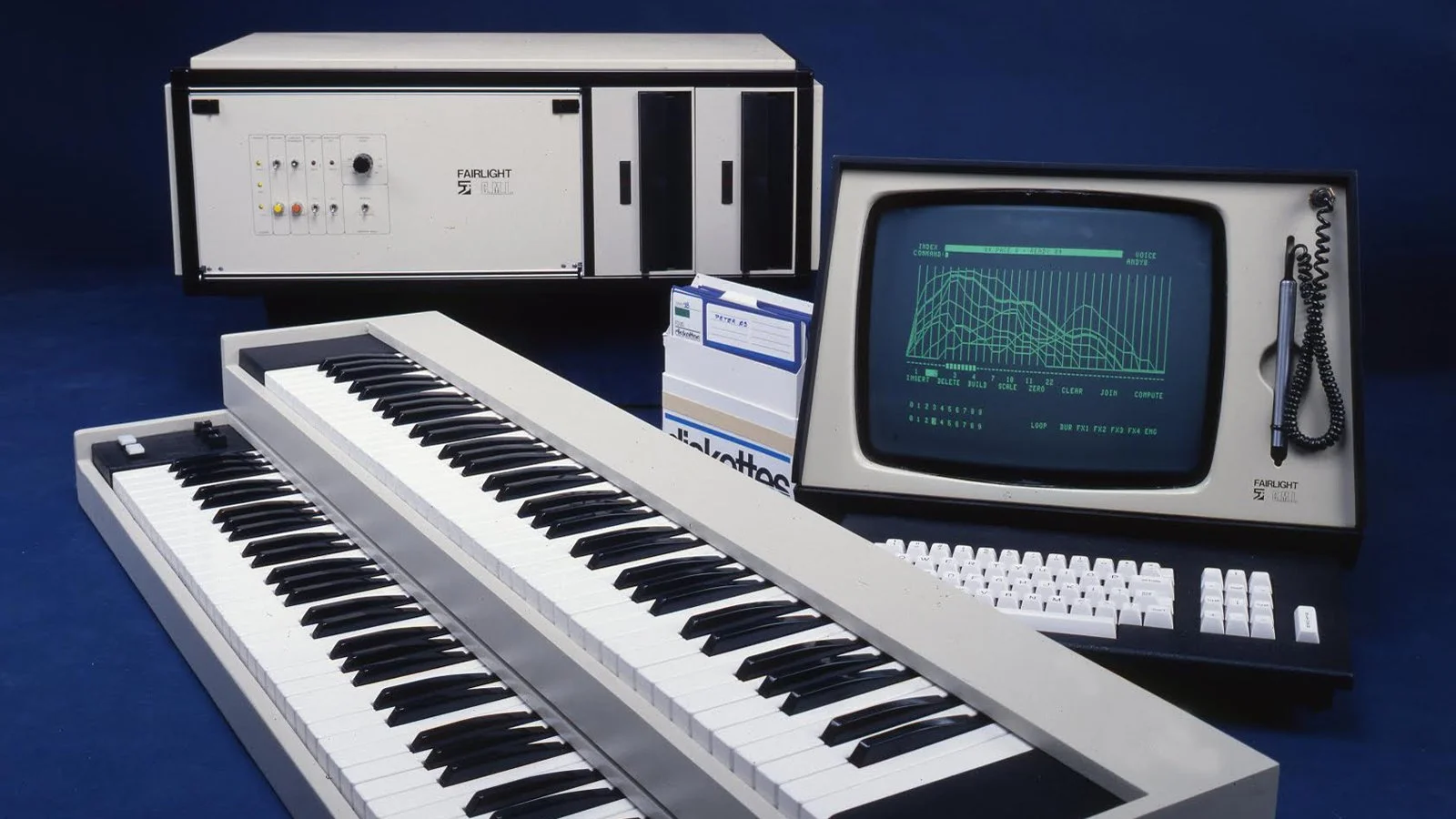
TECH SPOTLIGHT: FAIRLIGHT INSTRUMENTS
In 1975, Peter Vogel and Kim Ryrie founded Fairlight Instruments in Sydney, Australia. It introduced the Fairlight CMI in 1979 (pictured), a digital audio workstation with an integrated audio sampler. The impact of the Fairlight cannot be underestimated, given its ability to create almost any new sound with a little imagination and ingenuity. The sounds could also be instantly played back and combined. Prohibitively expensive when first available, artists were desperate to get a hold of one to use it. Once critical mass and affordability was achieved, the Fairlight became ubiquitous in the production of electronic music in the 1980s.
He issued the single on a cassette, along with the track “T.V.O.D.”, and named his label Mute, including his address. The single did reasonably well, selling thirty thousand copies. He also immediately started receiving mail back from synth bands, thinking Mute was a label focused on that genre. We will come back to this soon, since some of those cassettes he received led to the launch of more synth acts.
This track was also covered in the Ceremony series on cover songs, given the surprising choice by model and disco diva, Grace Jones, to cover the track in 1980.
45. “Wow” \ Kate Bush (Nov 10, 1978) – English teenage wunderkind, Catherine ‘Kate’ Bush, delivered her outstanding debut album, The Kick Inside, in February 1978 after being championed by David Gilmour from Pink Floyd. Andrew Powell, the producer of her original demo and first two albums, provided a synth interlude on the album in the song, “Oh to Be in Love”. Bush herself was a proficient keyboard player but was still focused on piano. The album also used the usual Fender Rhodes and Hammond organ for additional electronic keyboards.
Her second album, Lionheart, released later in 1978, increased the use of synthesizers, appearing on three tracks and played by Duncan Mackay. The album was hastily produced to follow on the success of the debut, utilizing the vast library of songs Kate had written in her teens (she was twenty when the album was released). “Wow” was the album’s second single, released in March 1979. It was a top twenty hit in the UK. Given the lush instrumentation and Bush’s exquisite vocals, it was easy to bypass the fact that much of the song was synth based. Indeed, there were no strings on it despite it sounding as such.
Kate Bush released her third album, Never for Ever, in September 1980, almost a full two years after the prior LP. This gave her time and space to work on the music more, and this time Bush herself took over production. It delivered her first UK #1 album, a top ten single with “Babooshka”, and two top twenty singles with, “Breathing” and “Army Dreamers”. Musically, it expanded, evolved, and changed Bush’s sound. She embraced electronics for the first time and was one of the first major artists to use a Fairlight CMI.
Bush’s next album was The Dreaming (1982) followed by Hounds of Love (1985). Synths and experimental use of the Fairlight to increase the use of samples and effects increased, further imprinting her unique brand on the music world. By the end of that run of albums, she had established herself as one of the leading female artists of her time.
46. "Firecracker" \ Yellow Magic Orchestra (Nov 25, 1978) – Occasionally, Japan has been a contributor to modern rock. We saw this in shoegaze, and not surprising for a playlist focused on electronics, very much for this genre too. The country essentially drove the concurrent rise in video games, so it only made sense that electronic music would be in the mix too.
Yellow Magic Orchestra was formed in Tokyo in 1978 and was a trio of Haruomi Hosono, Yukihiro Takahashi, and Ryuichi Sakamoto. While all played keyboards, Hosono provided bass and Takahashi drums and vocals for some analog additions to their electronics. They had all been involved in making music during the ‘70s, exploring the emerging electronic technologies. They had also worked together in different combinations on previous works before forming this new trio, which initially was intended to be a one-off project.
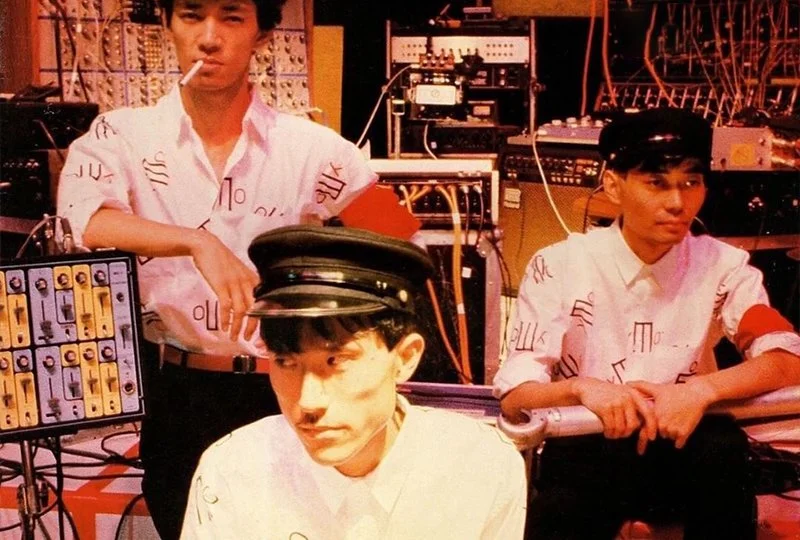
Yellow Magic Orchestra
The first release was a self-titled album in late ’78. The album was six longer tracks interspersed with short pieces and was mostly instrumental. It reached the top twenty in Japan. Most of the longer tracks were issued as singles, with “Firecracker” being included in two releases, first with “Tong Poo” and then with “Computer Game”. It was a cover of a 1959 exotica melody by Martin Denny, mixed with Asian melodies. When the single was combined with “Computer Game” and released in the US in 1979, it became a surprising minor hit, likely because the computer sounds had a resemblance to video games, which were enjoying a breakout that year thanks to, Space Invaders.
The success of the debut prompted this Japanese trio to stay together, releasing the second LP, Solid State Survivor, in 1979. The LP’s title referred to the ‘solid state drive (SSD)’ computer storage technology introduced in 1978 that dramatically improved the speed, durability, efficiency, and flexibility of computers, as opposed to the hard disc drives used to that point.
The album has become a recognized contributor to the synth genre. It reached #1 in Japan and the single, “Technopolis”, reached the Japan top ten. While ‘techno’ is a generic shorthand for ‘technology’, the term’s use for music in the late ‘80s and ‘90s, as electronic club music flourished, has been credited back to that track. The album also included, “Behind the Mask”, a track used for a Seiko wristwatch commercial and that was later covered by Michael Jackson during his recording of the Thriller album, ultimately being left off the LP.
Yellow Magic Orchestra released seven albums over five years, with a final two in 1983. An additional and final LP was then issued in 1993. They are an oft-cited influence on electronic music creators and are also considered pioneers of ambient house music. The three members were also highly accomplished individually. Haruomi Hosono has released over twenty solo albums in addition to many film soundtracks and also acted. Yukihiro Takahashi has likewise issued over twenty solo LPs, several soundtracks, composed music for video games, and wrote eight books. He passed away in 2023 at age seventy. Ryuichi Sakamoto, who also passed in 2023 at age seventy-one, is perhaps best known to western audiences due to his film scores and acting, particularly Merry Christmas Mr. Lawrence (1983) and The Last Emperor (1987), for which he won an Oscar. He also collaborated with David Sylvian from the band, Japan.
47. “Phasers on Stun” \ FM (1978) - Similar to Australia, Canada embraced new wave and synth music but was not a large producer of artists in the genre. Cameron Hawkins and Jeff ‘Nash the Slash’ Plewman formed the band, FM, in Toronto in 1976 with a bent towards prog rock and space themes. The duo was an unusual mix with a focus on electronics. Hawkins played synths, bass, and sang. Nash the Slash played electric violin and electric mandolin.
In 1977, drummer Martin Deller joined and the band recorded its first album, Black Noise. Recorded and produced by Canada’s public broadcaster, the CBC, the album was distributed by mail order only before being made available in stores in 1978. “Phasers on Stun” was the album’s lead track and only single. The prog rock influence was evident by the song’s spacey, straight-ahead rock format, but the electronics converted it into a proto-synth pop classic.
Nash left the band, replaced by Ben Mink, for the release of the second album, 1979’s Surveillance. It featured a single that was a fantastic cover of the 1967 Yardbirds tune, “Shapes of Things”. FM’s only hit came in ’85 with the synth-pop single, “Just Like You”, which reached the Canadian top forty.
48. "I.T. Splash" \ Yello (Jan 16, 1979) – Yello was formed by Boris Blank and Carlos Perón in Zurich, Switzerland. Dieter Meier, who hailed from a wealthy family and had tried his hand as a professional gambler, joined as vocalist. Meier was exploring synths and sampling while Perón used tapes. Their first single, issued early in ’79, was “I.T. Splash”. Their playful, experimental, and off-kilter approach to music was evident from the outset. Compositions with electronics did not have to follow the usual rules that applied to other instruments. Anything seemed possible and Yello was going to push those boundaries.
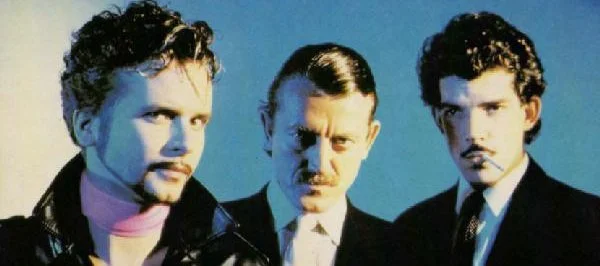
Yello: Carlos Perón, Dieter Meier, and Boris Blank
After that debut, Yello released albums in 1980, Solid Pleasure, and 1981, Claro Que Si. Neither the albums nor half-dozen singles issued brought them success, at home or abroad. Still, it was clear they were developing their brand of complex, quirky, electro-pop infused with dance beats and unique vocal treatments. While others were pushing synths onto the charts with slick pop compositions and clever mixes with rock and punk, artists like Yello were still pushing the creative envelope with the new(ish) technology.
Their third LP, You Gotta Say Yes to Another Excess, released in April 1983, finally brought them some attention. The LP reached the Swiss top twenty, the top forty in Germany, and the top one hundred in the UK. This was largely thanks to the single, “I Love You”, and its accompanying quirky video. Far more accessible thanks to its dance beat and pop style, though still not without their peculiar turns, the song almost reached the UK top forty and hit the top twenty in the US dance chart.
The 1985 LP, Stella, saw the band turn the corner into sustained chart success, thanks to the accompanying singles, “Vicious Games” and “Oh Yeah”, made famous in the 1986 film, Ferris Bueller’s Day Off. They did a lovely tune, “The Rhythm Divine”, with Shirley Bassey on vocals, in 1987. Yello is still going to this day.
49. "The Number One Song in Heaven" \ Sparks (Mar 1979) – While Sparks is the next American entry to our playlist, their career was heavily informed by the UK music scene. Formed by the brothers, Russell and Ron Mael, in Los Angeles in 1971, they had released seven albums by 1979. Their quirky brand of rock music found success after they moved to the UK in 1973, having top ten glam hits such as, “This Town Ain’t Big Enough for Both of Us” and “Amateur Hour”.
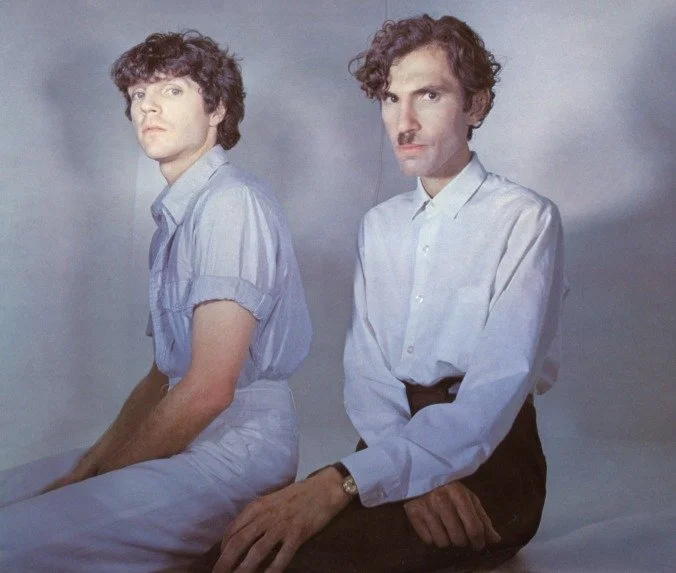
The Mael brothers, Russell and Ron - aka Sparks
Returning to the US in 1976, their 1977 album, Introducing Sparks, was a failure, leading the brothers to reconsider their musical future. Having expressed an interest in Georgio Moroder’s music, it led to him producing their next album, 1979’s No. 1 in Heaven. Naturally, with Georgio’s involvement they leaned into a heavy use of keyboards and the introduction of dance elements to their music. I am more of a fan of the second single from the album, “Beat the Clock” (a top ten hit in the UK), but the lead single, “The Number One Song in Heaven”, was more representative of their new synth-infused sound and also a UK top twenty hit.
There would be more, minor hits in the UK, US, and mainlaind Europe, such as, “When I’m With You” (1980), “I Predict” (1982), and “Angst in My Pants” (1982), but would otherwise largely remain an act more adored by a core audience than a commercially viable one.
50. "Are Friends Electric?" \ Tubeway Army (Apr 06, 1979) – Gary Webb, like many a working-class Londoner, worked a variety of jobs as a teen while also learning guitar. Taken with the punk scene, he first played in a band, Mean Street, in 1976. After auditioning for another band, The Lasers, he met bassist, Paul Gardiner, and they formed Tubeway Army in 1977 along with Gardiner’s uncle, Jess Lidyard, on drums. They adopted the stage names, Valerian (Webb), Scarlett (Gardiner), and Rael (Lidyard).
Tubeway Army went through line-up changes as a guitarist was brought on and then dismissed and two different drummers replaced Lidyard before he returned. Through this they recorded and released their first two singles, “That’s Too Bad” (Feb ’78), and the excellent, “Bombers” (Jul ’78). It was around this time that Webb changed his stage name to Gary Numan. He also wanted to shift the sound away from punk and record under his name only, but having signed to the label, Beggars Banquet, these changes were prevented by them.
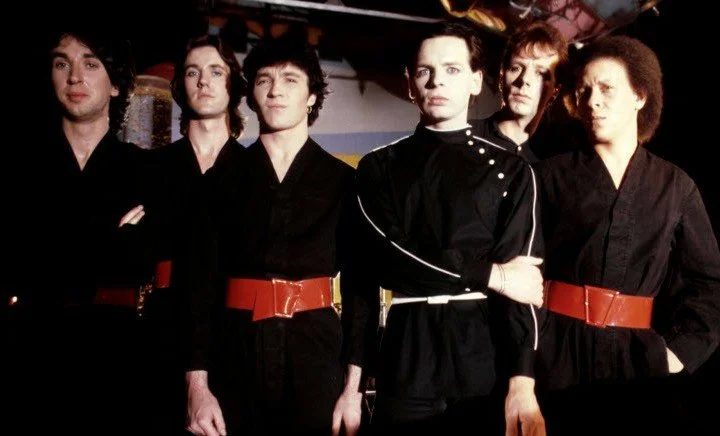
Tubeway Army
The self-titled debut album was released in November 1978, maintaining the mix of punk and new wave. Like Daniel Miller and The Normal, there were also songs inspired by the Ballard novel, Crash. The LP failed to chart. During recording, Numan came across a MiniMoog in the studio and started playing around with it. It made minor appearances in the album, but moved to the fore in their next recording, the album, Replicas. The single from the LP was the excellent, “Down in the Park,” released a week before the LP in March 1979. Though not a chart success, the tune was an impressive blend of synth-new wave and post-punk dark wave. It was arguably the first classic synth song of the UK new wave era, going on to become an influential and quintessential track from Numan’s career.
The next single, “Are Friends Electric?”, did succeed, delivering Tubeway Army a #1 UK single and propelling the album to the same spot in the album chart. Although not a pure synth track, given it included drums and bass, the rhythmic synths were its primary feature. Super catchy while still a little sinister, it was a fantastic post-punk tune, helping explode the possibilities of the growing world of modern rock. It was another classic from Numan, who was establishing himself as a leader, both artistically and commercially, in the establishment of synth-pop. His post-punk peers trying to make sense of electronics and making little commercial headway, took notice of Numan’s success with this single. Synth music could be successful!
51. "Life in Tokyo" \ Japan (Apr 13, 1979) – Japan was the sensational quintet of David Sylvian, Mick Karn, Richard Barbieri, Rob Dean, and Steve Jansen. Formed in London in 1974, the band started as a mix of punk and glam, as heard on the fantastic debut LP, Adolescent Sex (Mar 1978). The follow-up, Obscure Alternatives (Oct 1978), moved the band into moodier, post-punk tunes. Despite the excellence of those albums, the band had not yet broken through. And while Richard Barbieri had provided some significant keyboard moments over those two albums on tracks like, “Transmission”, “Performance”, “Suburban Love”, “…Rhodesia”, “Suburban Berlin”, and “The Tenant”, they were not at the fore of Japan’s sound.
That changed in 1979, when the band worked with – who else? – Georgio Moroder. The band already had a connection to Germany, being signed to the Hansa label after being discovered by them in a talent contest in 1977 (where they finished second to The Cure). The result of the Moroder collaboration was the non-album single, “Life in Tokyo”, released in April of ‘79. The track was another instant synth classic, mixing the band’s esoteric personality with dance beats and ethereal synths. Shockingly, given its infectious groove, it did not chart but would in 1982 after a Steve Nye remix and re-release (for the third time), when it reached the UK top forty.
The following December, Japan issued their third LP, Quiet Life, one of the best albums of the early synthpop era and a new wave classic. The title track was another quintessential synth masterpiece. The synth sound remained prominent thereafter, to the extent that guitarist Rob Dean left the band in frustration after the next LP, Gentlemen Take Polaroids (1980). The final album, Tin Drum, was released in 1981 with Sylvian going solo, generally focusing on atmospheric music thereafter.
52. "Electricity" \ Orchestral Manoeuvres in the Dark (May 21, 1979) – OMD formed in 1978 in the Merseyside area of England, a period in which Liverpool was having a moment along with post-punk acts like Echo & The Bunnymen and The Teardrop Explodes. Starting as the duo of Paul Humphreys and Andy McCluskey, and of course influenced by the likes of Kraftwerk, they explored the possibilities of music entirely made by electronics. Their first release was the single, “Electricity”, issued in the spring of 1979. McCluskey played bass, so it wasn’t purely a synth composition, but otherwise the band built an impossibly catchy tune using just a few devices available to them. It did not chart, showing synth-pop was not yet a sure thing for success. It also showed artists did not require a full band to make music with electronics, with solo and duo acts becoming more commonplace within the synth genre.
Though “Electricity”, did not break through, it put OMD at the forefront of the burgeoning synth-pop wave. In February 1980, the duo released their self-titled, debut album. The single, “Red Frame/White Light”, was issued at the start of February and managed its way into the charts, but not highly. A re-release of “Electricity”, which was included on the album, similarly failed to progress their fate. However, the next single, “Messages”, broke through to the UK top twenty. The single was a much less spooky sounding version than the album version, with clean, bright synths, a danceable beat, and a hypnotic, super-catchy repeating synth line through it. The song showed that a pure synth track could be very pop sounding and accessible.
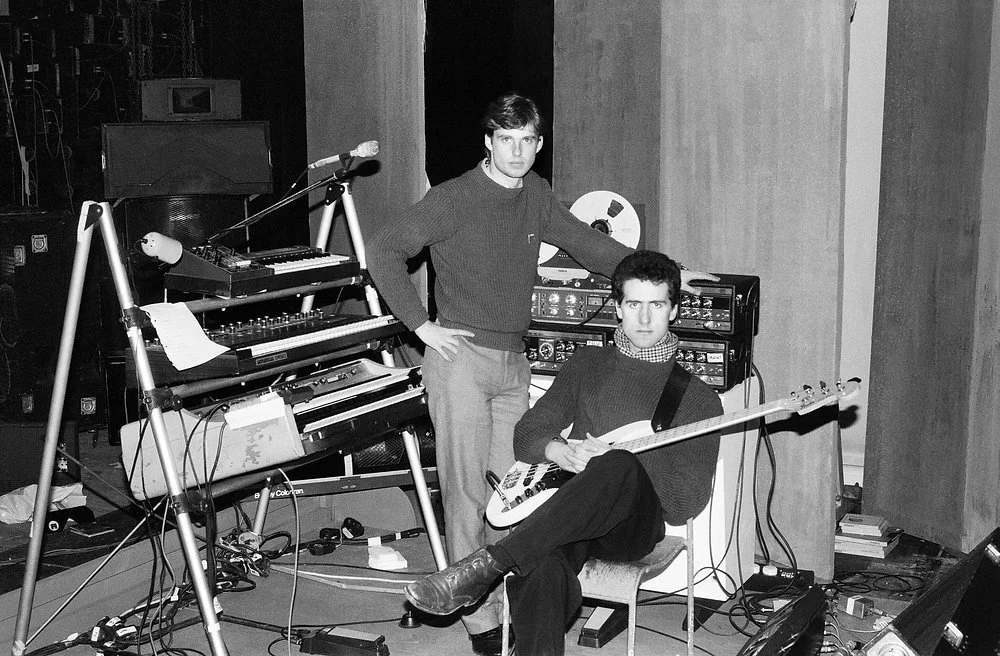
OMD: Paul Humphreys and Andy McCluskey
OMD’s second album, Organisation, arrived in October 1980, just eight months after the debut. The album’s only single, “Enola Gay”, was put out a month prior. The line-up for the album saw the duo expand to a trio, with Malcolm Holmes joining on drums, adding to Andy McCluskey’s bass as an additional, non-electronic instrument. “Enola Gay”, however featured minimal use of those instruments, with most of the track being programmed on a Korg Micro-Preset and the beats via a drum machine. A sure sign that synth music was establishing a firm foothold in the UK music scene was Organisation and “Enola Gay” both reaching the UK top ten.
The third album, Architecture and Morality, was released in November 1981. It was an ambitious, exquisite, and monumental album, becoming not only the best release of their career, but one of the best albums of the era and synth-pop genre. It reached #3 in the UK album chart and barely charted in the US top two hundred.
The first single, “Souvenir”, was issued earlier in the year in August. It reached #3 in the UK singles chart. The grace, grandeur, and beauty of the album were all present in the song. It evidenced OMD’s approach of using synth melodies as the chorus rather than a vocal. The sweeping grandeur of the song was representative of the album’s structure, which blended pop and moody, atmospherics. It was an impeccable listen from start to finish.
The next two singles were, “Joan of Arc” and “Maid of Orleans (The Waltz Joan of Arc)”. The latter was retitled from its album title, “Joan of Arc (Maid of Orleans)”, to avoid confusion with the prior single. It is also often referred to as just, “Maid of Orleans”. Both reached the UK top five and “Maid of Orleans” also went to #1 in multiple other countries. Now with back-to-back top ten albums and four consecutive top ten singles, OMD was one of the UK’s top acts and, along with Gary Numan, one of the most prominent synth acts topping the charts.
OMD is still going strong, having released fourteen albums and counting. Their creative and commercial peak extended through the 1986 album, The Pacific Age. They only reached the UK top ten once more with the single, “Locomotion” (1984). They broke through in the US after their inclusion on the Pretty in Pink soundtrack, with the US top ten single, “If You Leave” (1986), followed by two top twenty singles, “(Forever) Live and Die” (1986) and “Dreaming” (1988).
53. “Computer Games” \ Mi-Sex (July 1979) - Similar to its fellow Commonwealth countries, Australia and Canada, New Zealand was an enthusiastic supporter of new wave and synth music but not a large producer of such acts. This is the first of two artists we’ll feature on this playlist.
Mi-Sex was formed in Wellington in 1978, taking their name from the Ultravox! song, “My Sex”. The debut album, Graffiti Crimes¸ was released in the summer of ’79, becoming a top ten hit in New Zealand and top twenty album in Australia. They supported Talking Heads on a 1979 tour. “Computer Games” was their third single overall and the second from the album. It reached the NZ top ten and went to #1 in Australia. It was a catchy, dancey, heavily synth-driven track. It was well ahead of its time in sound and structure, and likely with better distribution could have been a hit in the UK.
The band released four albums up to 1983. They had an additional top ten hit in NZ and Australia with, “People”, in 1980.
54. "Money" \ Flying Lizards (Jul 13, 1979) – The Flying Lizards arrived on the scene in 1978 with their first single, a cover of Eddie Cochrane’s 1958 tune, “Summertime Blues”. Formed in 1976, the Lizards were a collective project led by producer, David Cunningham, who hailed from Northern Ireland. In the summer of ’79 came the next single, another cover of a ‘50s tune, Barrett Strong’s, “Money”. Their approach featured minimalist, deconstructed versions of the songs, filled with sound effects and emotionless, spoken vocals. It was the perfect representation of how juxtaposed electronic music was to the traditional compositions of rock ‘n’ roll.
If synths weren’t a surefire recipe for success, in the UK novelty often was, and the idiosyncratic approach of the Flying Lizards on, “Money”, scored them a UK top ten. It also reached #50 in the US and a top ten in Canada. Given the famous version by The Beatles in 1963 was not released as a single, this made the Lizards’ take arguably the most successful.
While the video suggested the music was made using kitchen utensils, “Money” was undoubtedly a mix of electronics and sound effects. There was an outro with dub bass and guitar effects on the longer, album version, but those instruments only served to highlight the harsh electric tone of the track. Deborah Evans-Stickland’s impassive vocals matched the vibe, reinforcing the cold message of the tune, “just give me money.”
Flying Lizards released two more albums, Fourth Wall (1981) and Top Ten (1984), the latter of which was all covers. An instrumental album recorded by Cunningham in ’78 was eventually released in 1995. The Lizards could not repeat the success of the debut LP, with the cover of “Money” largely leaving them an influential one-hit wonder.
55. “Memories Can’t Wait” \ Talking Heads (Aug 3, 1979) – Few bands have defied categorization as much as Talking Heads. Rising out of the New York scene around the club, CBGB’s, along with peers such as The Ramones, Blondie, Suicide, and Television, they weren’t punk in terms of sound but were definitely creative and outside the norms of rock for the time. They had a punk attitude. Usually rhythmically based, their music jumped, turned, and caught the ear with hooks and David Byrne’s unique vocals and lyrics.
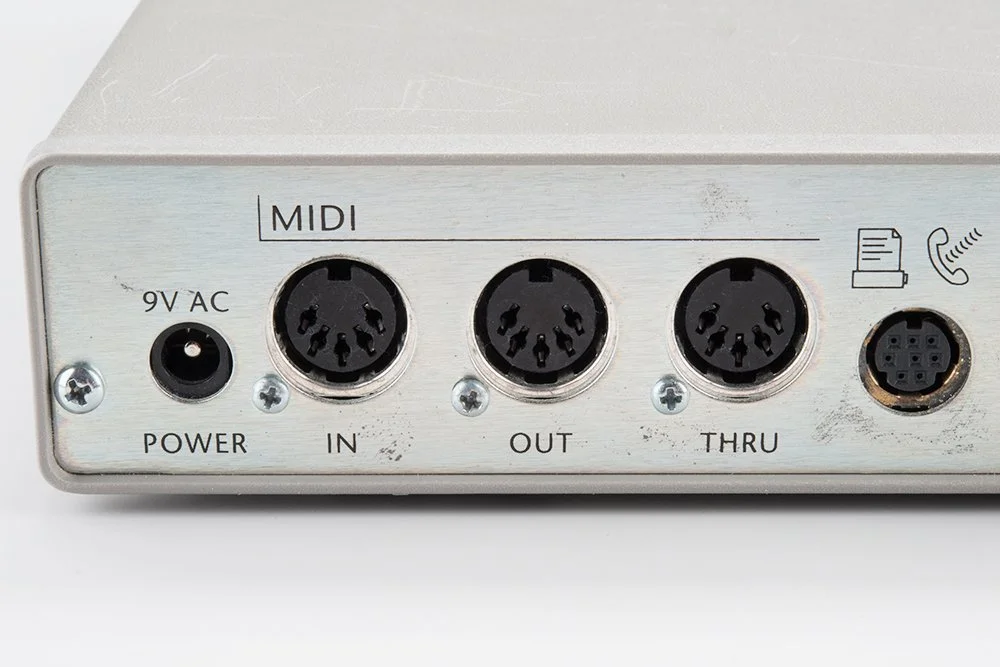
TECH SPOTLIGHT: MIDI
Musical Instrument Digital Interface was not a company but a technical standard for the communication, interface, and connections between electronic instruments and computers. It is also a file format for the storage and transfer of music, offering a small file size that was critical in the early days of personal computers, given their small memory and storage capabilities. The creation of this standard allowed devices from different manufacturers to work together, hugely broadening the capabilities in creating sound. Any user of early video games and media would recognize MIDI as the usual audio format, though MIDI was not actually an audio file, but rather a set of instructions to create tones, resulting in audio created by the device. This furthered the flexibility of sound creation since the files could be manipulated to change the results.
The creation of MIDI was initiated in 1981 by Ikutaro Kakehashi, the founder and president of Roland. He sought to create a simpler interface than what Oberheim had created for his tech. He approached Dave Smith and Sequential, and the pair coordinated with their respective Japanese and American peers. Perhaps not surprising, initially all the Japanese firms were on board, whereas only Sequential was a willing US participant. However, Robert Moog got involved, introducing MIDI in 1982 in an issue of Keyboard magazine. It was then demonstrated at the 1983 NAMM International Music and Sound Expo by Smith.
Not heavy users of synthesizers through the first two LPs, Talking Heads (1977) and More Songs About Buildings and Food (1978), the Brian Eno effect came to bear as the producer on the third album, Fear of Music. “Memories Can’t Wait” pushed electronics to the fore, and were a prominent feature on their single, “Life During Wartime”. Keyboards continued to be more prominent in later albums as they improved their chart success in the 1980s, especially on the 1983 LP, Speaking in Tongues, featuring their biggest hit, “Burning Down the House”.
56. "Cars" \ Gary Numan (Aug 24, 1979) – As he had desired for Replicas, Gary Numan dropped the band name, Tubeway Army, after the release of their second album. The band remained intact behind him with Paul Gardiner on bass, Chris Payne on keyboards, and Cedric Sharpley on drums and tambourine (a significant presence in “Cars”, which I’ve only noticed for the first time now, after forty-six years of listening to this song!).
“Cars” was the first release under Numan’s name, issued as a single in August 1979. It went to #1 in the UK (in both ’79 and again in ’80) and Canada and reached the US and Australian top tens. His first solo LP, The Pleasure Principle, came out a couple weeks later and went to #1 in the UK and top twenty in the US and Canada. “Cars” was one of the first synth dominant tunes to enjoy such widespread and immense success. Like many synth tunes of the time, the bass and drums were not electronic, but that served to give it a warmth and depth that electronics was not providing yet.
For my tenth birthday party in 1980, I received 7” singles from my friends, one of which was, “Cars”. It was one of the first songs I owned and loved that my brother, who shaped my musical tastes at that time, did not like. He felt synth music was insufficiently artistic. Me and many others disagreed, embracing the new sound.
Numan was not able to repeat the success of “Cars” internationally but did have many more charting singles in the UK. He eventually migrated his sound from synthpop into industrial, and continues to release albums and tour to this day.
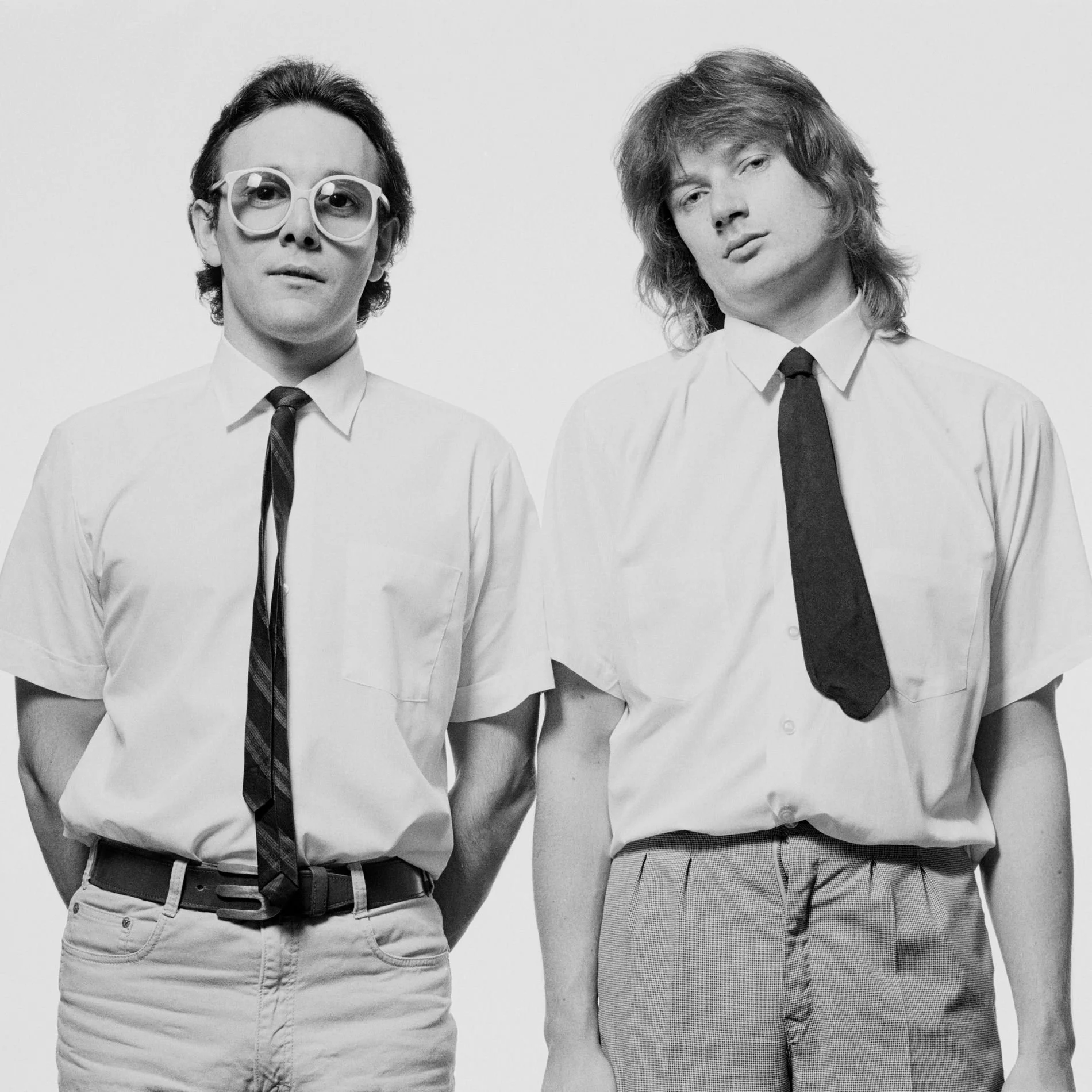
Trevor Horn and Geoff Downes of The Buggles
57. "Video Killed the Radio Star" \ The Buggles (Sep 07, 1979) – Trevor Horn would become a significant champion of electronics as an artist and a producer, but in 1979 he was the unknown co-founder of The Buggles. Formed in 1977 along with Geoff Downes on keyboards and Bruce Woolley on guitar, “Video Killed the Radio Star” was the first single, released in September 1979. Featuring journeywoman, Debi Doss, on vocals, the song became a #1 hit in the UK and several other European countries and reached the top forty in the US. Famously, thanks to its lyrics, it was the first video ever played on MTV when the station debuted in August 1981. The album, The Age of Plastic, reached the UK top forty. There would be one more album in 1981, but The Buggles could not replicate the success and became a one-hit wonder. However, its melodic synths became another touchstone for audiences in embracing the synth sound.
Horn went on to produce the likes of Yes, ABC, Grace Jones, Malcolm McLaren, Pet Shop Boys, Godley & Crème, and the 1984 fundraising single, “Do They Know Its Christmas”, by the all-star line-up, Band-Aid. In 1983, he created the label, ZTT, with journalist Paul Morley. The label launched acts like Frankie Goes to Hollywood, Art of Noise, and Propaganda, putting it at the fore of the mid-1980s synth and sampling revolution.
58. “Atomic” \ Blondie (Sep 28, 1979) – Blondie started as a punkier outfit, with minimal keyboards in the mix over the first two albums, Blondie (1976) and Plastic Letters (1977). Jimmy Destri was the full-time keyboardist, but his contributions tended to piano and organ.
“Heart of Glass”, their breakout hit from the third album, Parallel Lines (1978), undoubtedly raised the band’s use of electronics, aided by producer, Mike Chapman. Yet, most of the album was very rock oriented, creating a reputational schism for Blondie between the broad perception of them as a disco band versus most of their music being edgy and rock based.
The fourth album, Eat to the Beat (1979), had a more pronounced use of synths on tracks such as the first single, “Dreaming”. This was especially so for, “Atomic”, a full-on electro-dance track that saw Blondie lean into the club music they had invigorated with “Heart of Glass”.
In 1980, they released the single, “Call Me”, the feature song for the movie, American Gigolo. It had a synth solo in the middle, with a longer take on it for the extended version. What was different for that track compared to their others? It was co-written and produced by Georgio Moroder and the keyboards were played by Harold Faltermeyer. Blondie had a knack for being in the heart of what was happening (see, “Rapture”), and that was no different for the arrival of synthpop.
After the success of, “Call Me”, they released “Atomic” as a single in early 1980 and it went to #1 in the UK and the top forty in the US. Blondie was one of the biggest acts of the era and one of the few to leverage punk and new wave to commercial success.
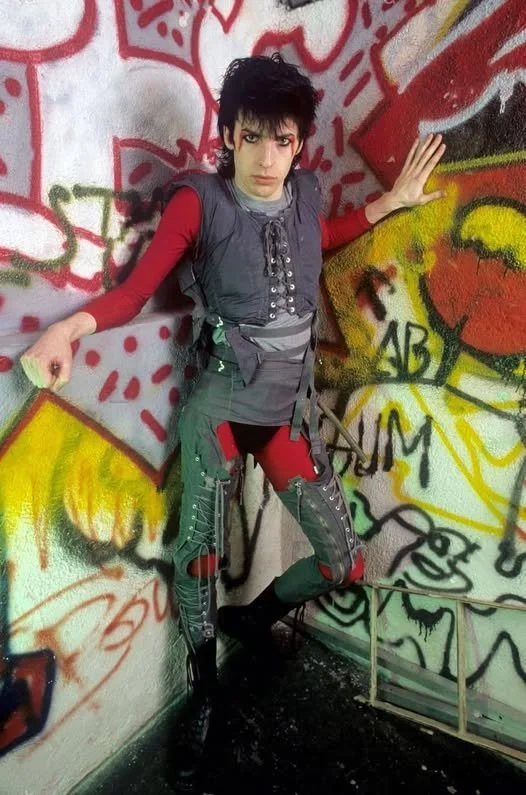
Fad Gadget - aka Frank Tovey
59. "Back to Nature" \ Fad Gadget (Oct 1979) – Frank Tovey was a Londoner who studied visual arts and mime at Leeds Polytechnic university. Interested in playing music, he gravitated to electronics when he couldn’t become proficient with traditional instruments. Looking to combine music with his mime, he began making sound collages with tape recorders. Fully producing music with various electronics in his London apartment, he created a demo of the track, “Back to Nature”.
Tovey was one of those initial artists that mailed demos to Daniel Miller after seeing the Mute Records address on the “Warm Leatherette” cassette. Miller signed Tovey as Fad Gadget, the first act signed to Mute. Miller did most of the re-recording of “Back to Nature” in the studio given Tovey’s inexperience with proper recording equipment. It was followed by the single, “Ricky’s Hand”, which reached #11 on the UK Indie chart.
Fad Gadget released four albums from 1980 to 1984 before Tovey started recording under his own name. All the albums charted on the UK indie chart, and he had a top ten indie hit with the song, “Collapsing New People”, in 1984. Fad Gadget was a pioneer in the experimental electronic sound and helped evolve the industrial sound. Tovey passed away in 2002 at age forty-five due to heart failure.
60. “Funkytown” \ Lipps Inc (Nov 1979) – Including this track in the playlist is a bit of a diversion, but it was such a prominent example of electronically crafted music, it cannot be ignored. It will also be the last we sample from the world of disco, funk, R&B, and the pop variants to those realms. Synths were employed across all genres as the 1980s arrived, so covering it all isn’t practical.
That said, it’s worth noting that Prince was launching his career during this period. For You, his debut album, came out in 1978 and was followed by four more by 1982, setting him up for the massive success of his fifth LP, Purple Rain, in 1984. He used keyboards from the start, and they were increasingly part of the ‘Minneapolis sound’ that he mostly defined.
Lipps Inc. was also a Minneapolis act that primarily became the vehicle for singer, Cynthia Johnson. However, it was started by DJ, Steven Greenberg, in 1979. His plan to call the act, Lip Synch, was foiled since the name was already taken, so he spun it into the same sounding, Lipps Inc. Cynthia made it a duo when Greenberg selected her from auditions. Among the musicians hired for the recordings was, David ‘Z’ Rivkin, who helped launch Prince’s career and whose utilization of drum machines and electronics was influential in the creation of the Minneapolis sound.
The first release by Lipps Inc was its biggest, making the act a one hit wonder. Mouth to Mouth was a four-song LP released in November 1979. “Rock It” was the first single and didn’t break through. “Funkytown”, released as a single in May 1980, became a huge success with its creative mix of synths, violins, dance beats, disco-funk rhythms, and Johnson’s distinct vocal line. The album reached the US top five, and “Funkytown” went to #1 in the US and #2 in the UK. It was one of the last hits of the disco era, with dance moving to the fringes until a resurgence in the mid-‘80s when electronic music brought beats back to the fore.
61. "Changeling" \ Simple Minds (Nov 23, 1979) – Arising out of a Glasgow punk band, Johnny & The Self-abusers, Simple Minds branched off in late 1977 as the quartet of Jim Kerr, Charlie Burchill, Brian McGee, and Tony Donald. Taking the ‘Simple Minds’ name from a Bowie lyric, the band shifted from punk into a new wave groove, with a healthy mix of synths in the mix.
Their debut album, Life in A Day, was released in April 1979. The title track was the first single, issued a few weeks before the album. It reached #62 in the UK singles chart and displayed the band’s mix of rock and synth, as well as some of the expansiveness of their style that would come to characterize their brand. The album reached the UK top forty.
Simple Minds delivered its second album, Real to Real Cacophony, only seven months after its debut, issuing it in November 1979. It was again produced by John Leckie. Having worked as a tape mixer, engineer, or mixer since the start of the decade, he’d had his hand on many classic releases. He started producing in 1977 and quickly became accomplished with the emerging modern rock sounds.
“Changeling” was the lead track and first single from the new album. It used synths and electronics more prominently than the first, creating a hypnotic and alluring sheen for the band’s modern rock sound. Indeed, the band drew on Krautrock as a primary influence. It was one of the first examples of how a band could combine rock and electronics to an amazing effect, and it revealed the direction the band was headed. Their label, Arista, was less taken by it. “Changeling” wasn’t released until January 1980, well after the LP, and the album wasn’t well-promoted leading to disappointing results for the band.
Regardless, Simple Minds persevered, releasing two albums on the same day in September 1981, Sons and Fascination and Sister Feelings Call. Initially a double album, it almost reached the UK top ten, establishing Simple Minds thanks to fantastic tunes like “The American” and “Love Song”. Though they were yet to see a single get into the UK top forty, they had managed that in Australia and Canada. They were evolving their mix of synths into catchy, post-punk rock, presented with increasingly broad structures, a style that would become their hallmark.
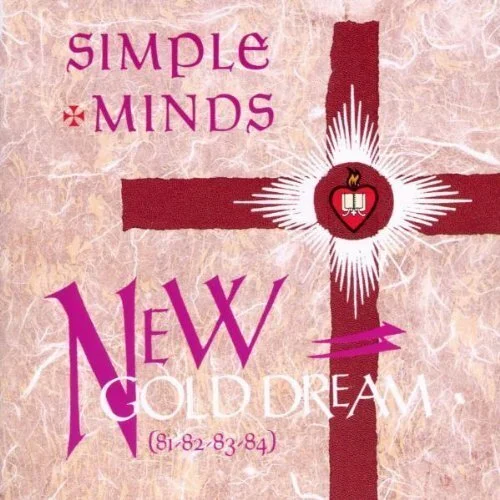
The September 1982 release, New Gold Dream (81-82-83-84), was one of the best albums of the decade and especially of the new wave genre. The synths were more prominently employed to great effect, creating impeccable, danceable, and infectious tracks. It wasn’t quite synth-pop, but an exemplary mix of electronics, pop, and rock. The LP’s quartet of singles were nearly unparallelled within the genre: “Promised You A Miracle”, “Glittering Prize”, “Someone, Somewhere, In Summertime”, and the title track (only released in Italy, it should have been issued everywhere). The first two reached the UK top twenty and the third the top forty. They hadn’t broken in the US yet, but very few UK synth-pop acts had done so yet, regardless the quality of the music. The album reached the UK top ten and even the US top one hundred.
Depending on what sound of Simple Minds you prefer, their change in direction on the next LP, Sparkle in the Rain (1984), was either exciting or disappointing. Commercially, it was good for the band as the album reached #1 in the UK. The next LP after, Once Upon A Time (1985), cracked the US top ten, benefitting from the breakthrough the single, “Don’t You (Forget About Me)”, had established for them earlier in the year (a song, it should be noted, with a synth hook, but that wasn’t written by the band). These releases reduced the prominence of synths in their sound, opting for a more straightforward rock sound with an anthemic feel. By the end of the decade, it was easy to forget that in 1982, Simple Minds was one of the finest synth-based acts to be found.
62. "Living by Numbers" \ New Muzik (Nov 30, 1979) – Tony Mansfield, Nick Straker, Tony Hibbert, and Phil Towner came together in London in 1977, initially under the name, End of the World. They changed it to New Muzik after Clive Gates joined on keyboards, replacing Straker. Towner had played on The Buggles, “Video Killed the Radio Star”. They employed a typical, English pop style, but mixed in bright synths up front to give them a new wave vibe.
They signed to GTO Records and released the single, “Straight Lines”, in August 1979, which almost made the UK top forty. The next single in November was, “Living by Numbers”, which almost reached the top ten. The debut LP, From A to B, was released in April 1980 and reached the UK top forty. Like Simple Minds, it was an excellent example of how synths could enhance mainstream compositions to shift songs onto new musical ground.
New Muzik released their second album, Anywhere, in March 1981. It did not build on the mild success of the first album and its singles. And while the singles from Anywhere were, “Luxury” and “While You Wait”, the real gem on the album was its opening track, “They All Run After the Carving Knife”. It opened the LP in a decidedly experimental and electronic fashion, featuring oddly toned sound effects for a full minute before launching into the contradictory, brightly styled pop song. Once running, the song rode melodic synth lines and accents, playing off the lovely guitar strums and steady beat.
New Muzik was one of those bands that seemed destined for bigger things, but it wasn’t to be. They released one more album, Warp, in 1982, that was more experimental and electronic. It was an early product of digital samplers and emulators. It and its three singles did not chart, and the band folded shortly after.
63. "Hot on the Heels of Love" \ Throbbing Gristle (Dec 1979) – Similar to Cabaret Voltaire, this was an arts collective that focused on visual and performance art as much as music. Also influenced by the Dada movement, the group originated from a performance art group, COUM Transmissions, in the English town of Kingston upon Hull (aka Hull). The founding members were Neil Megson and Christine Newby, who performed under the names, Genesis P-orridge and Cosey Fanni Tutti (yup, a play on the Mozart opera, Cosi fan tutte).
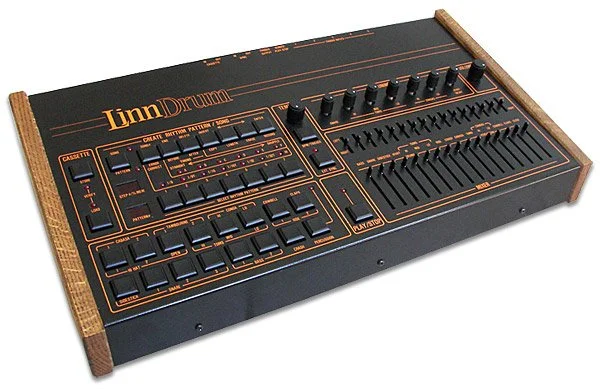
TECH SPOTLIGHT: LINN ELECTRONICS
Roger Linn and Alex Moffett created Linn Moffett Electronics in 1979, soon after renaming it Linn Electronics. Roger designed and released the LM-1 (LinnMoffett1) Drum Computer in 1980, a drum machine that was programmable and the first to use samples. In 1982, it was evolved into the superior, LinnDrum (pictured), and then in 1984 the Linn 9000, the first digital drum machine that was also integrated with a MIDI sequencer. Many of the 1980s synthpop hits used these Linn machines.
Linn expanded into sequencers and a Midistudio, but went out of business in 1986. Forat Electronics purchased the assets and sold the Forat F9000 and LinnSequencer. Linn went on to work at Akai and in 2001 formed Roger Linn Design.
Naming their group, Throbbing Gristle… a slang term for (ahem) a male erection, P-orridge and Tutti were joined by Chris Carter and Peter ‘Sleazy’ Christopherson (who worked at Hipgnosis, the design company famous for album cover designs for Pink Floyd, Led Zeppelin and many others). In 1976, Cosey Fanni Tutti had a COUM exhibition on pornography and the sex industry, titled The Prostitution Project. Sex was an area of interest in her work, having also worked as a stripper and in porn movies. It was at this exhibition that Throbbing Gristle made its first performance.
The first releases from the band were recordings of their live performances, though they also created a recording studio dubbed the Death Factory. The debut album arrived late in 1977, The Second Annual Report. The band’s mission to explore the darker and obsessive elements of humanity was clear, mixing electronics, tape loops, and spoken excerpts into unsettling and ominous songs. I spared this playlist a sample of that work, given it’s ominous and unsettling sounds and content.
Kingston upon Hull is a ninety-minute drive east of Sheffield and Leeds. Throbbing Gristle had a proximity to Cabaret Voltaire in location, attitude, and sound. Born in the environs of industry, the mechanical, cold, and jarring sounds of these acts were the start of what would be dubbed, industrial music. One of the prominent genres to grow out of the synth revolution.
After the release of the debut LP in 1977, Throbbing Gristle continued to refine their experiments in noise, electronics, and provocative performance. In May 1978, there was the single, “United”, which melded a Kraftwerk sound into their industrial edge. It was followed by the second album, D.o.A. The Third and Final Report, in December. While still mostly soundscapes of computerized and digital sounds, their formation into almost intoxicating, yet sinister tracks such as, “Hamburger Lady”, suggested new ground in their compositions. “Blood on the Floor” offered a distinct industrial sound, to be drawn on by many as that genre built over the coming years.
The third LP, 20 Jazz Funk Greats, arrived a year later at the end of 1979 and was the first to be recorded entirely in the studio. The cover photo of the band pleasantly standing in a flowery coastal spot belied the fact it was Beachy Head, the most notorious spot for suicide in the UK. The title track indeed contained horn-like effects, suggesting some sort of jazz component to their distortions of songs. “Hot on the Heels of Love” was as close as the band came to a pop arrangement, mixing hypnotic beats with synths and breathy vocals. The album reached #6 in the UK indie chart. In 2019, Pitchfork magazine named the album the best industrial album of all time.
Throbbing Gristle called it quits in the summer of 1981, though additional albums would follow. Journey Through A Body (1982) was a work of ‘radio art’ commissioned by Italian national radio and was recorded in ’81. The score to the 1981 short film by Derek Jarman, In the Shadow of the Sun, was released in 1984. CD1 was released by Mute Records in 1986, essentially untitled but given that name as the first to be available from the band on CD. It was made with recordings done in 1979.
Genesis P-Orridge and Peter Christopherson formed the industrial band, Psychic TV, which would continue to explore the sonic variations started by Throbbing Gristle. Cosey Fan Tutti and Chris Carter formed, Chris and Cosey, moving into more of a synth-pop vibe, though with many of the darker elements of their prior act. Throbbing Gristle then reunited in 2004, releasing three more albums by 2009. Christopherson passed away in 2010 at the age of fifty-five, and P-Orridge from leukaemia in 2020 at age seventy.
64. “Underpass” \ John Foxx (Jan 4, 1980) – After disappointing results with the third album, Systems of Romance, Ultravox was dropped by its label at the end of 1978. They then embarked on a self-financed tour of the US in early 1979. Foxx (Dennis Leigh) had chafed at the challenges of working within the band and the debates around musical direction. Desiring more experimental use of electronics, he had helped moved the band in that direction during the prior LP but still decided he’d rather set off on his own. He left Ultravox at the end of the US tour.
He released his first solo single, “Underpass”, in January 1980. It was a purely electronic composition, distilling the J. G. Ballard themes of urban dystopia into a cold, futuristic feeling. The disaffected, robot-like vocals furthered the mechanical nature of the music and channeled the same aura as Kraftwerk and Gary Numan. There could be no more perfect a song to launch electronic music for the new decade. “Underpass” reached the UK top forty.
Foxx’s debut solo album, Metamatic, was released two weeks after the single and reached the UK top twenty. He achieved three more top forty singles over the next year and his next two albums also reached the UK top forty. He stepped away from music in 1985 to return to work as a graphic artist. Other than a couple of singles in the early ‘90s and some work on video game music, he did not resume his recording career full-time again until 1997, when he began a collaboration with Louis Gordon. He also later worked with Benjamin ‘Benge’ Edwards under the name, Maths. Over his entire career, Foxx has released over thirty albums and EPs including his collaborations.
65. “I Got You” \ Split Enz (Jan 21, 1980) – Our second entry from New Zealand, Split Enz was formed in Auckland in 1972 by Tim Finn and Phil Judd, quickly expanding to a quintet though with no drummer or electric guitarists. Therefore, the early sound was more acoustic and folk based. After several line-up changes, they added electric guitar and in 1974, keyboardist, Eddie Rayner. This is when they changed their name from ‘Ends’ to ‘Enz,’ utilizing the ‘nz’ to reference their New Zealand roots.
By 1976, the band had released a few non-charting singles and their first LP, Mental Notes (1975). They moved to the UK and signed with Chrysalis Records. Their second album, Second Thoughts, was produced by Roxy Music guitarist, Phil Manzanera. Tim’s brother, Neil, joined them in the UK in 1977 to replace Judd, who exited the band and formed the successful new wave band, The Swingers. The third album, Dizrythmia, was released in ’77. While all three albums had charted in the top twenty in NZ and top forty in Australia, and the single, “My Mistake”, had similarly charted, the band was not breaking through in the UK. Chrysalis dropped them.
If the synths weren’t modern enough for music fans, the laser etching in the True Colours vinyl certainly put Split Enz on the ‘cutting edge’ of modern music
Frenzy, the 1979 album, was recorded following some minor success with its lead single, “I See Red” (1978). The album marked a change in sound from their glam-prog-art rock to a power pop orientation. They returned to New Zealand and signed with A&M Records, releasing their fifth album, True Colours, in the summer of 1980.
The lead single off True Colours was the album’s lead track, “I Got You”, released early in the year in January. The tight pop structure was punctuated by new wave synths, bringing the band their long-awaited breakthrough. It went to #1 in NZ and Australia, #5 in Canada, the top twenty in the UK, and almost reached the US top forty. The album was also a #1 hit in NZ and Australia and reached the top forty in the UK and US. It was very interesting that by 1980, a band could move itself from the hinterlands by shifting away from ‘70s rock and into the synth flavoured sounds of new wave, though undoubtedly the song’s infectious pop structure was the true hook.
They consolidated their success with the next album, their sixth, Waiata , released in March 1981. It was another #1 LP in NZ and Australia, and almost reached the top forty in the US, but didn’t chart in the UK. The hits from the LP were, “One Step Ahead” and “History Never Repeats”, but oddly the track I know best from it and one that got plenty of airplay in Canada was, “Hard Act to Follow”.
The next LP arrived in April ’82, Time and Tide. It was another #1 hit in their region, as were the singles, “Dirty Creature” and “Six Months in A Leaky Boat”. The latter charted but not well in the US and UK, but over time has endured as a classic of the era. The album and that single were big hits in my native Canada, likely colouring my memory of it.
Split Enz’s catchy blend of synths with smartly crafted pop songs revealed the talent of the Finn brothers. However, after the 1983 LP, Conflicting Emotions, founder Tim left the band to go solo. With his brother and Phil Judd gone, this left Neil leading a band that had no founding members, which felt wrong as they recorded and released their next LP, See Ya ‘Round (1984). They decided to retire Split Enz, with Tim returning for a final tour. Neil and bandmate, Paul Hester, went on to form the highly successful band, Crowded House.
66. "Atmosphere" \ Joy Division (Mar 18, 1980) – Known more for their dark wave moodiness, melancholic basslines, and Ian Curtis’ fraught, resonant lyrics and vocals, Manchester’s Joy Division had built a strong local following. Building off punk roots, the band quickly shifted to a less angry style with a more nuanced and artistic sound that became a pillar of the post-punk movement.
They arrived on the scene with the punky EP, An Ideal for Living, issued in June 1978. It was followed by the stupendous single, “Transmission”, in October. Recording with producer Martin Hannett and supported by the nascent label, Factory Records, founded by local TV presenter, Tony Wilson, the quartet released the debut album, Unknown Pleasures, in June 1979. The band had started to play around with electronics, of particular interest to guitarist, Bernard Sumner, but the use was minimal. “Transmission” had some minor atmospherics in the background, and on the album the most notable use were the effects on the song, “She’s Lost Control”.
The next single was the song, “Atmosphere”, with “Dead Souls” as the B-side. It was issued via the Sordide Sentimental label in France in March 1980 but with a German title, “Licht under Blindheit” (‘Light and Blindness’). The limited edition run outside the UK was orchestrated by the band’s manager, Rob Gretton, in defiance of the UK radio industry, who he felt had not sufficiently given “Transmission” enough radio play, despite the lyrics, “dance, dance, dance, to the radio.”
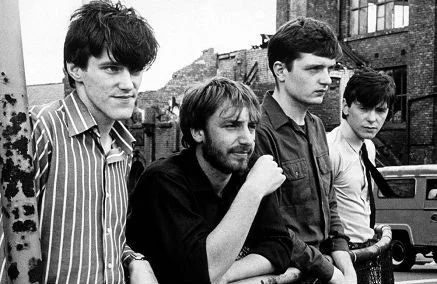
Joy Division: Stephen Morris, Peter Hook, Ian Curtis, and Bernard Sumner
“Atmosphere” was the first proper lean into electronics by Joy Division. The song’s plodding, funereal aura came via the sombre, dark synths underpinning Stephen Morris’ ominous drums, punctured by wonderful crescendos of orchestral synths. It made the song majestic, and provided a new, more artistic use of electronics that would set the blueprint for a significant portion of the new wave era.
After touring the UK and recording through the spring of 1980, Joy Division was preparing for its first tour of North America and the release of their second album in the summer. On May 18, singer Ian Curtis took his own life, sending their plans askance.
As the band dealt with their loss and uncertain future, Factory Records continued with the band’s releases as planned. In June, the epic single, “Love Will Tear Us Apart”, was released. It continued the band’s increasing use of synths, providing a melancholic line behind the songs’ propulsive drums, foreboding bassline, and Curtis’ plaintive vocals.
In July, the album, Closer, was released. While electronics appeared through the album, they were mostly down in the mix, with the exception being the track, “Isolation”, which was built around shimmering synths and a drum machine. The album helped cement Joy Division, posthumously, as a leader in the post-punk movement and for the increasing mix of rock and electronics that became the genre’s distinguishing sound.
A similar act to Joy Division at the time was The Cure. Though not generally a synth-based band, Robert Smith and The Cure have leveraged electronics extensively through their career to enhance their brand of pop and dark wave modern rock. After forming in Crawley, England in 1976, the band released singles and an album of punky, sparse mixes of guitar, bass, drum, and of course, Robert Smith’s distinctive vocals. It wasn’t until Mathieu Hartley joined on keyboards that electronics came into their sound, most notably on the 1980 single, “A Forest”. They continued to frequently employ synths, though more for effects than a primary sound. They did have some tracks that strongly leaned into electronics, most notably on the single, “The Walk,” in 1983, and its B-side, “The Dream”. And one of their biggest hits, 1987’s, “Just Like Heaven”, rode a memorable, shimmering synth line.
67. “Whip It” \ Devo (May 16, 1980) – Such was their sound, Devo sounded like an electronic band, when in reality they were predominantly anchored on guitar, bass, and drums. Their songs were so angular, quirky, and thoroughly modern, that electronics would have seemed the natural path to their sound. Certainly, they utilized synths from the outset, but it wasn’t until their album, Freedom of Choice, and the single, “Whip It”, that they brought a synth dominant sound into their repertoire, and in so doing scored a surprising and implausible hit.
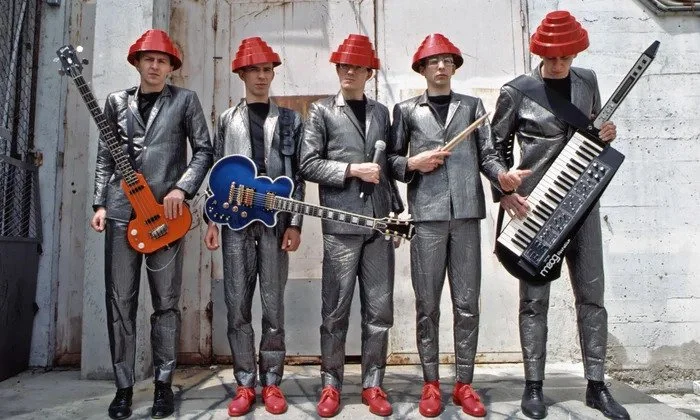
Devo
Devo (from the idea of de-evolution), was formed in 1973 in Akron, Ohio by Gerry Casale and Bob Lewis while attending Kent State University. They were joined shortly after by Mark Mothersbaugh. Similar to the likes of Cabaret Voltaire and The Human League, the project was a multi-media vehicle for their political messaging. The group expanded with the addition of Gerry and Mark’s brothers, coincidentally both named Bob (yes, the quintet had no less than three members named Bob, but hey, it was the ‘70s!). By the time of the first album, Bob Lewis was gone and Alan Myers was in on drums.
They released three singles over 1977 and into 1978 on the UK indie label, Stiff Records. One was their avant garde take on The Rolling Stones track, “(I Can’t Get No) Satisfaction”. The debut album arrived in 1978. Q: Are We Not Men? A: We Are Devo! was unlike anything available at the time and managed a top twenty spot in the UK. It featured contributions from Brian Eno and production support from Conny Plank and David Bowie. Though unique sounding, the band had a place in the punk and post-punk milieu of the time.
The second album, Duty Now for the Future, followed in ’79. It did not do well, and with punk waning and new wave ascendent, Devo faced an uncertain future. The album featured synths regularly in the mix but they did not define the sound.
Devo decided to change their direction, making their music more accessible and danceable. Freedom of Choice was released in May 1980. The first single, “Girl U Want”, was issued in April and was a perfect distillation of the Devo sound. It was sharp, catchy, quirky, and featured catchy synth accents. It did not break through.
The second single was, “Whip It”, and the rest, as they say, was history. It became one of the most notorious and iconic songs of the year – if not commercially, to which it was getting to #14 in the US singles chart, but most certainly by reputation. The track rode a wickedly catchy mix of drums and synth rhythms, punctuated with punky guitar. It was released as a single in August 1980, and consistent to the band’s multi-media history, they made accompanying videos to their songs. This positioned them well for when MTV launched one year later, and “Whip It”, with its provocative sexual imagery, became a staple of the new channel though it’s been claimed that MTV actually banned the video.
Devo was never destined to be a consistent, commercial band. The success of “Whip It” was largely a one-off, but given the quality of their discography, it is not accurate to deem them a one-hit wonder. That one song, though, helped propel new wave and synth music into the mainstream in the US.
68. “Vienna” \ Ultravox (Jul 11, 1980) - After John Foxx departed Ultravox in the spring of ’79, the band seemed likely to disband as members drifted to other work. Guitarist, Robin Simon, stayed in the US before returning to the UK and joining the band, Magazine. Billy Currie started playing with Gary Numan. Warren Cann and Chris Cross guested on others’ recordings.
James ‘Midge’ Ure was a Scottish singer, guitarist, and keyboardist who came out of the glam scene, having played with the band Slik. He had a stint with Glen Matlock’s post-Sex Pistols band, Rich Kids, and then with Irish rockers, Thin Lizzy. He then started participating in the act, Visage (who we’ll visit shortly) with Steve Strange and his Rich Kids bandmate, Rusty Egan. They had also recruited Billy Currie into the line-up. Egan suggested to Currie that Ultravox should recruit Ure, to which the Scot agreed.
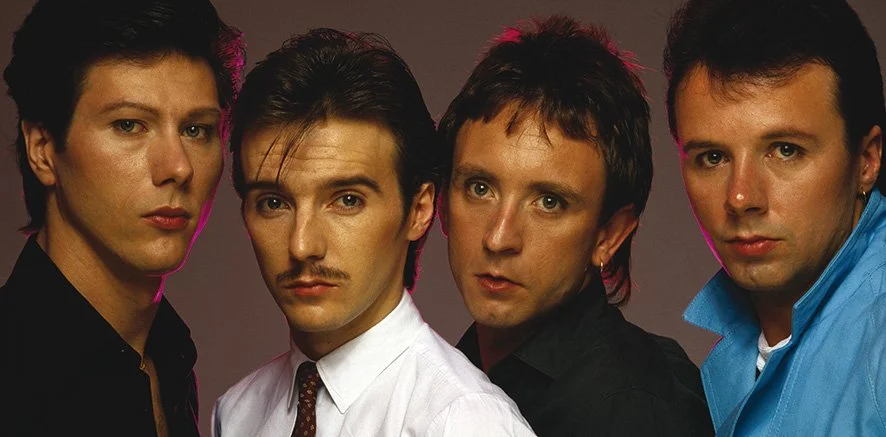
Ultravox: Warren Cann, Midge Ure, Chris Cross, and Billy Currie
Resurrected, Ultravox toured the US again in the fall of ’79 and began working on new material. Having been dropped by their label, Virgin, the band signed with Chrysalis in February 1980. The first single released was, “Sleepwalk”, in June. I discovered this song around 1984, the same period as their hit album, Lament, which I latched onto. It sounded like the epitome of cool, just the perfect presentation of synths as a mix of pop and punk. The sound built off what had been started on the prior LP, Systems of Romance, working again with Conny Plank. Ironically, given Foxx had left to more deeply explore electronic music, “Sleepwalk” was markedly electronic. The single was Ultravox’s first top forty hit.
The first album with Midge Ure in the fold was released in July. Vienna continued the band’s mix of edgy, punk infused rock with electronics. For most of the tracks, the synths were balanced in the mix with the rest of the instrumentation, but for the title track, it was an epically structured tune built on pulsating synth drums, crescendos of synths, electric piano, and Ure’s emotive vocals. A viola added that touch of warmth and grace to the track.
Eventually released as a single in January 1981, “Vienna” was the band’s breakthrough hit, reaching #2 in the UK singles chart, helping propel the album to a top ten placing. Every genre has its epic tunes and share of stirring ballads, and with this, Ultravox had provided the nascent genre one of the first of that kind.
Ultravox released four more albums up to 1986, with all reaching the UK top ten. They had several hit singles also but never broke through in North America, though were popular in college and alternative radio. The band had additional stints in the 1990s and mid-2000s, releasing three more LPs. Midge Ure also had a successful solo career starting with the album, The Gift, in 1985.
69. "Memphis Tennessee" \ Silicon Teens (Sep 1980) – Mute Records was still a fledgling enterprise, with only the singles by The Normal and Fad Gadget in its library. Preferring to stay behind the scenes but still explore the possibilities of electronic music and its ability to subvert music industry norms, Daniel Miller started making music under the band name, Silicon Teens. Why he didn’t reprise use of The Normal was not clear. Perhaps because it was known that the band was actually just him?
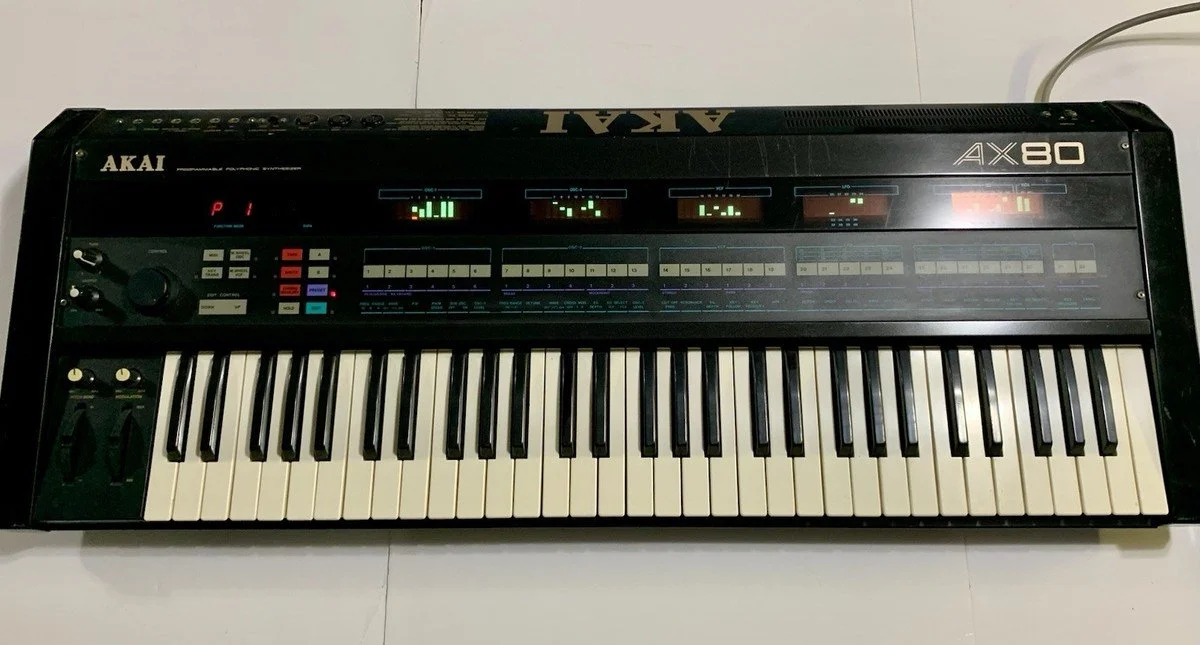
TECH SPOTLIGHT: AKAI
Formed in Tokyo in 1929 by Masukichi Akai and his son, Saburo, as Akai Electric Company, its primary product known internationally were tapes and tape players and recorders. They also manufactured amps, microphones, receivers, and record players. In 1984, it got into the manufacturing of portable recording studios and synths under the name, Akai Professional (AKAI Pro AX80 pictured). Digital samplers followed in ’85. The company went under in 2000, though Akai Professional spun off the parent company in 1999. Sold to a US firm, it produced as Akai Professional Musical Instrument Corporation, which went under in 2005. The brand was acquired by Jack O’Donnell and now operates as a subsidiary of his company, inMusic Brands (which also now owns Moog).
Pushing the concept of Silicon Teens further, he invented four band members, Jacki, Diane, Paul, and Darryl, and a producer, Larry Least (a play on producer and RAK Records founder, Mickie Most). Championed by John Peel on BBC Radio, the first single was a cover of the Chuck Berry tune, “Memphis Tennessee”. Less bleak than “Warm Leatherette”, the electro-pop single was still futuristic and mechanical in its sound. Frank Tovey (Fad Gadget) helped handle press as Silicon Teens lead singer, Darryl, but it was eventually determined by the press that the band didn’t exist and was all the work of Miller. Perhaps we have this project to thank for future concepts such as Damon Albarn’s act, Gorillaz?
“Memphis Tennessee” didn’t chart; however, Silicon Teens had some success with additional singles that year, “Judy in Disguise” and “Just Like Eddie”. Both were also covers of ‘60s songs and reached the UK indie top ten. A full album, Music for Parties, was released in September, concluding the project.
Later in 1980, Miller approached a new, all-electronic quartet from Basildon, a small city east of London and near the Thames River estuary. He felt their synthpop sound would be a good fit for Mute Records. He helped them produce their first recordings, leading to the release of the first single in February 1981. The song was, “Dreaming of Me” and the band was, Depeche Mode.
70. "Potential" \ Soft Cell (Oct 08, 1980) – Until this era, solo or duo acts would have almost exclusively worked with guitar and piano, toiling in the folk or pop realms. Of course, solo artists would regularly employ musicians to provide full instrumentation for their recordings and tours. Electronics opened the door to a whole new world of artists who could produce music, record it, and perform it individually or in duos. The size, cost and reliability of the early generation of synths still made it mostly prohibitive for home recording and complex live performances (i.e. without extensive use of backing tracks), but those with access could create full music compositions on their own or in pairs. We have seen this already in the playlist with Jean Michel Jarre, Suicide, Daniel Miller, Fad Gadget, and OMD.
Soft Cell is next in our growing parade of duo acts. Marc Almond and Dave Ball met in 1977 at Leeds Polytechnic and started working together in ’78. Inspired by their neighbouring city, Sheffield’s early electronic scene with the likes of Throbbing Gristle and The Human League, the pair started crafting similarly sparse and bleak electronica music.
Given the limited performance potential of keyboards, Soft Cell followed their peers in utilizing various and provocative means to entertain. Their performances challenged the norms of the time, with Almond often appearing in drag, smearing himself with cat food, and utilizing sexual imagery and actions.
Their first recording was an EP, Mutant Moments, recorded on a two-track recorder and released via their own label, Big Frock Rekord. It was funded by a loan from Ball’s mother and only two thousand copies were issued, making it an eventual collector’s item. “Potential” was the first track on the EP and clearly channeled the vibe of the Sheffield scene or the work of Daniel Miller.
Soft Cell next appeared on the Some Bizarre Album compilation (along with the likes of The The, B-Movie, Blancmange, and Depeche Mode.) in January 1981 with the track, “The Girl with the Patent Leather Face”. This led to them signing with Some Bizarre Records, which also involved distribution support from Phonogram Records. This was followed by the band’s next single, “Memorabilia”, a danceable track that channeled their early, stark electronics with a more accessible mix of beats and funk. It did not chart, keeping Soft Cell in the underground.
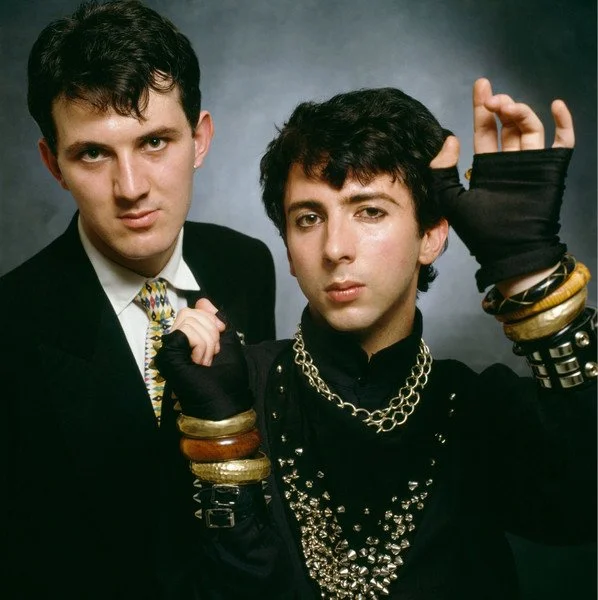
Dave Ball and Marc Almond of Soft Cell
That all changed with their next single, a cover of an obscure 1960s soul song, “Tainted Love”, written by Ed Cobb and recorded by Motown-styled singer, Gloria Jones. Her recording had gained traction in the UK during the 1970s as part of the northern soul club scene. Soft Cell had been covering it in their live set and recorded it along with another ‘60s Motown hit, “Where Did Our Love Go”, originally recorded by The Supremes. The twelve inch version of the single blended the two songs.
Soft Cell’s version of “Tainted Love”, released in July 1981, was a masterpiece in synth composition. Taking the catchy melody of the original and packaging it in a simple, contemporary synth style that was both warm and futuristic with its digitized beats and sound effects. Marc Almond’s great vocals, channeling the song’s soul origins, ultimately sold it. The song went to #1 in countries around the world and to the US top ten. It became the biggest synth hit yet and one of the biggest hits of the decade. It helped define the new decade and the new musical genres arising out of the influence of electronics.
In November 1981, the band’s debut album, Non-Stop Erotic Cabaret, was released and included “Tainted Love”. Two more singles, “Bedsitter” and “Say Hello, Wave Goodbye”, reached the UK top ten but could not repeat their success elsewhere. Despite going on to release another UK top ten LP in 1983 and a top twenty in 1984, Soft Cell never repeated the monstrous success of “Tainted Love”, rendering them largely a one-hit wonder. Regardless, they were an integral part in launching and raising the profile of synth-pop.
71. “Icehouse” \ Flowers (Icehouse) (Sep 1980) – As noted with the introductory Australian act on this playlist, Flash and the Pan, synth-pop charted well in Australia but produced a limited list of artists in the genre. Severed Heads, formed in ’79 and released their first album in ’80, featuring some experimental music akin to Throbbing Gristle. Pop and disco stars like the Bee Gees (UK transplants) and Olivia Newton-John utilized synths, but not such that it defined their sound. Likewise, Australian modern rock acts just getting started such as INXS (first album released in October 1980) and The Church (first LP issued in April 1981) used electronics sparingly.
A leading Australian act which leaned into synth-pop was Icehouse. However, when they formed in 1977 in Sydney, they were more of a pub rock act. Initially known as Flowers, they were driven by Iva Davies, a classically trained multi-instrumentalist. He was joined by Keith Welsh, a bassist. Supported by a rotating list of musicians, the group built a reputation playing covers of ‘70s glam rock.
By the time of the release of the first album, 1980’s Icehouse, they had established an original sound of new wave pop. Synths were not significant on every track, such as on the first, Australian top ten single, “Can’t Help Myself”. However, various synths were deployed on other tracks, notably on the album’s title track and fourth single. The album reached the Australian and New Zealand top ten, and #82 in the US. This led to an international distribution deal with Chrysalis, which also necessitated a name change due to a conflict with a Scottish band. They adopted the name of their album as the band name going forward.
“Love in Motion” was the first single released as Icehouse, which was essentially a solo act for Iva Davies from that point on, joined by various musicians through the band’s career. “Love in Motion” was recorded while on tour in the UK and was produced by Steve Nye, who worked with many notable modern rock acts. It reached the Australian top ten thanks to its mesmerizing, rich synth textures (a Prophet-5) and undulating bassline.
The first album released as Icehouse (though the label would re-issue the prior album under that name too) was, Primitive Man (1982). It featured the single, “Hey, Little Girl”, which reached the UK top twenty to become the only hit on that side of the Atlantic. The only top ten US hit they achieved was, “Electric Blue”, in 1987. Icehouse released seven albums in all, with the last one in 1993.
72. “Fashion Victim” \ Rough Trade (Oct 13, 1980) – Toronto duo, singer Carole Pope (born in Manchester but emigrated to Canada when she was five) and guitarist\keyboardist Kevan Staples, first started performing together in 1968 as part of the city’s famed folk scene. Expanding to a band with an ever-changing list of other musicians, the duo adopted the name, Rough Trade, in 1974.
Their notorious live shows around Toronto built their name, particularly down to Pope’s provocative stage antics, fashions, and lyrics. Though not ‘out’ in a formal sense, she also neither disguised her nature, making her an early icon of the gay and lesbian community. Indeed, the band’s name was a reference to a term denoting straight males who participated in gay sex, often with a turn towards roughness or violence. When he opened his West London record shop in 1976, Geoff Travis adopted the band’s name for the shop and future recording label.
The first album, which though recorded in studio was titled, Rough Trade Live!, was released in 1976 and was a mix of rock, funk, disco, and jazz. It included the song, “Birds of A Feather”, which would be a hit in 1985 when issued as a single to promote a greatest hits album. Always theatrical, the band then moved directly into that space with a live musical, Restless Underwear, which starred drag icon, Divine, and was only performed once, at Massey Hall in 1977. They later reprised it in New York in 1980.
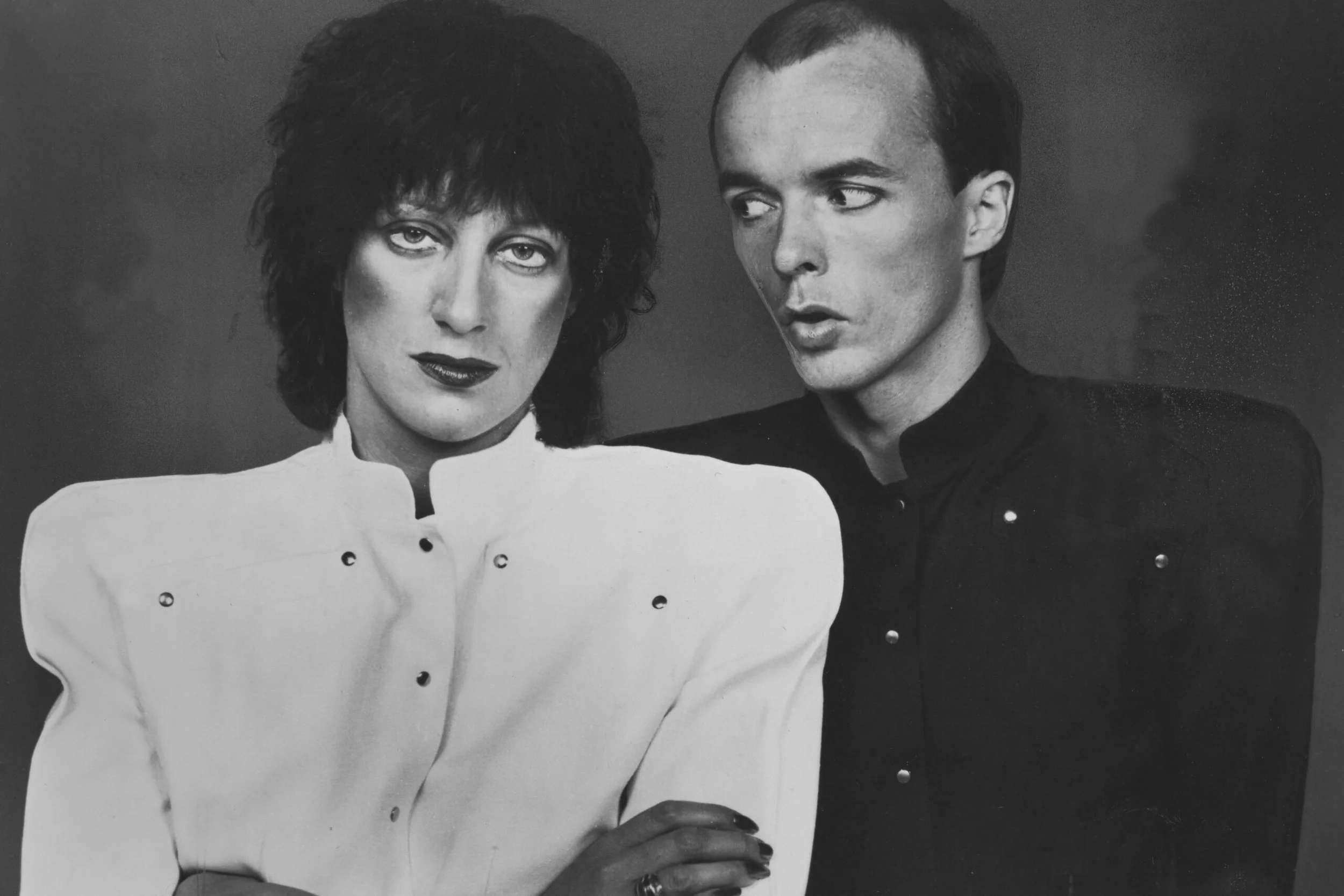
Carole Pope and Kevan Staples of Rough Trade
Over the next couple years, Rough Trade continued to perform around Toronto and develop their music, moving more into the contemporary sounds of new wave. They got into film work, being recruited to provide a song for the thriller, Cruising (1980), starring Al Pacino and set in the gay community of New York. They submitted the song, “High School Confidential”, with a thought that New York punk band, Mink Deville, could perform it. The song described an attraction towards a girl, which was sexually ambiguous unless you assumed the song’s perspective, as sung by Carole, was from a female, and therefore became an adroit lesbian reference, especially with the lyric, “it makes me cream my jeans when she comes my way.” At the time, many would have chosen to assume it was not such a reference, given the general reluctance to acknowledge homosexuality in North American society. For the gay and lesbian community, it would be a coming out celebration. The producers of Cruising, despite the film’s gay set piece, still felt the song was too provocative and rejected it. Rough Trade instead provided the song, “Shakedown”, which became their first single release in 1979. They also performed in the 1980 Canadian horror film, Deadline.
Still unsigned nor nominated for any awards, the band was oddly selected to perform at the Canada’s music awards show, the Junos, in April 1980. The supposed reason was to feature up-and-coming artists, particularly from the new music scene. The band performed the yet unreleased, “High School Confidential”, with Carole decked out in red leather, a drag queen wandering around stage, and the band in leather S&M outfits. Against the show’s producers wishes, Pope did her notorious crotch grab on national television during the, “cream my jeans,” lyric. Whatever scandal that might have caused socially, it scored them a contract with True North Records.
The band’s second album, Avoid Freud, was released in October 1980. The first single was, “Fashion Victim”, a slick pop tune riding a synth and piano foundation. Pope was an exceptional singer, giving the songs punch and drama. It reached the Canadian top forty. “High School Confidential” was finally released as a single before the year was out, reaching the Canadian top twenty. Less synth based, it became one of the leading songs of the new wave era in Canada thanks to its notoriety and hooks.
Rough Trade released four more albums by 1984 but never broke out of Canada in terms of success. They sustained their synth heavy mix of pop and rock, with hits like, “All Touch”, “For Those Who Think Young”, “Weapons”, and “Crimes of Passion”.
73. "To Cut a Long Story Short" \ Spandau Ballet (Oct 31, 1980) – In 1978, Steve Strange and Rusty Egan began hosting Bowie and Roxy Music nights on Tuesdays at Billy’s, a club located in the basement of a Soho, London brothel. It grew in popularity, leading to a move in 1979 to the Blitz Club, a wine bar in Covent Garden. Enforcing a strict dress code that emphasized styles outside the usual norms of London – androgyny was a common theme – the club was packed with a crowd of some of the most expressive, stylish, and avant garde people from the city. This crowd became known as the Blitz Kids and they created the new romantic scene.
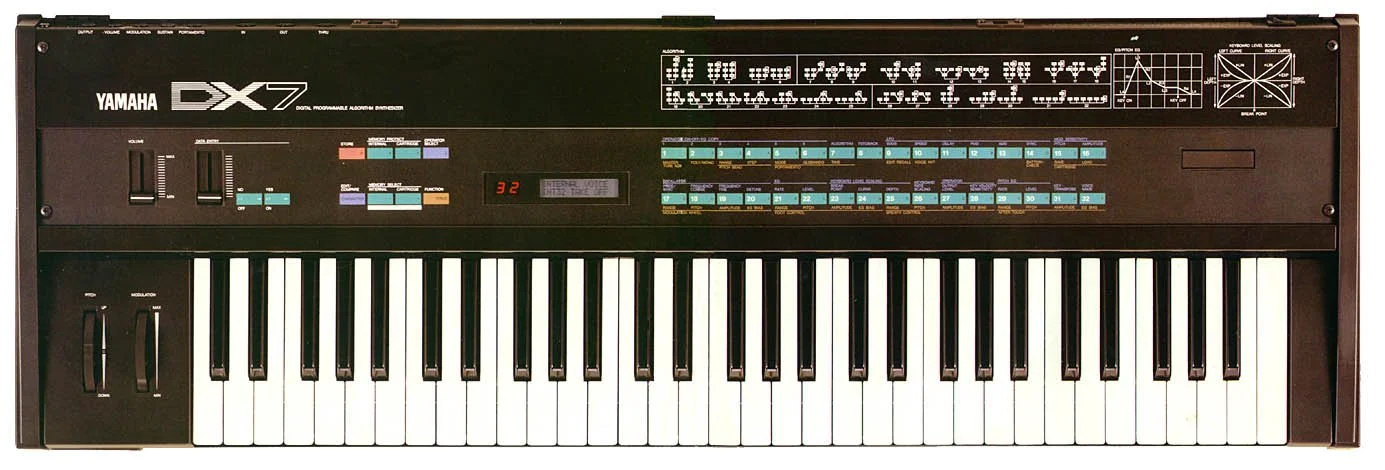
TECH SPOTLIGHT: YAMAHA
Formed as the Nippon Gakki Co, it was founded by Torakusu Yamaha in 1887. The company changed its name to its founder’s on its one hundredth anniversary, though its products had utilized the name for decades.
Yamaha is the largest manufacturer of instruments in the world, starting as a reed manufacturer before expanding to pianos and furniture in the early twentieth century. More varied production followed, particularly with audio equipment starting in 1922, motorcycles in 1955, sporting goods in 1959, and band instruments and drums in 1965-‘67.
Our interest starts with the production of the Yamaha DX7 in 1983 (Pictured). It was the first commercially successful digital synthesizer. The company also purchased Sequential Circuits in 1988, and from 1987 to 1993 was a majority owner of KORG.
Gary Kemp and Steve Norman formed a band in 1976, recruiting schoolmates to round out the band. Inspired by the Sex Pistols and the burgeoning punk scene, they played sped up versions of late ‘60s and early ‘70s classic rock. Running through several line-up changes and band names, they started gigging around London. Kemp and Norman became regulars among the Blitz Kids and were taken by the scene’s focus on electronic music, prompting a change in their band’s sound. Their line-up was Gary on guitar and synths, his brother, Martin Kemp, on bass, Steve on guitar, John Keeble on drums, and Tony Hadley, who also played synths and provided very capable and resonant vocals.
They also settled on a name, suggested by writer, Robert Elms, who wrote for The Face and the New Musical Express magazines and was a chronicler of the new romantic scene. He had seen graffiti in Berlin, “Rudolf Hess, all alone, dancing the Spandau Ballet,” which referenced the notorious Nazi leader and the prison and concentration camp in the Spandau borough of Berlin.
Spandau Ballet built interest through their shows, effectively being the house band at the Tuesday Blitz Club, leading to a signing with Chrysalis Records. Their first single, released on Halloween in 1980, was “To Cut a Long Story Short.” An angular, synth driven tune, it displayed the broad, melodic, and danceable elements that would be the band’s trademark, aided by a catchy, smart, pop song structure. It reached the UK top ten.
The second album, Diamond (1981), used synths but the album leaned more into funk, with guitar, percussion, and horns defining the sound. The outstanding single, “Chant No. 1 (I Don’t Need this Pressure On)”, brought them another UK top ten hit. Their third LP, True (1983), saw a return to a purer synth-pop formula, still keeping their funk beats in the mix. The title track, a soft ballad, went to #1 in the UK and top five in the US, becoming one of the biggest hits of the decade and a synthpop classic.
74. "Nowhere Girl" \ B-Movie (Nov 02, 1980) – Like any genre, synth-pop had its share of one hit wonders. Into this category we place the band, B-Movie, and the new wave classic, “Nowhere Girl”. Arising out of Mansfield, a small city an hour’s drive south of Sheffield, the band employed the increasingly standard new wave mix of drums, guitar, bass, and synths backing smartly crafted pop songs.
Their first release was a three-song EP, Take Three, in July 1980 via Dead Good Records, an indie label founded by Martin Patton and Andy Stephenson in 1979. The label also put out B-Movie’s next EP, Nowhere Girl, a six-song release that curiously had the title track on side A at forty-five RPM, and five songs on side B at 33 1/3 RPM. The EP provided the first version of “Nowhere Girl”, as heard on this playlist. The song’s mix of post-punk, darkly tinted pop offset by a bright, melodic synth, was an exemplary entry to the early new wave scene.
Also on the Nowhere Girl EP was the song, “Remembrance Day”, which received its own single release in 1981, this time on the Some Bizarre label (also formed by Martin Patton), reaching #61 in the UK singles chart to give the band their first minor taste of success. “Nowhere Girl” was re-released as a single in 1982 with much a more polished and forceful recording, with a more propulsive synth beat and higher toned vocal. It reached #67 in the UK chart. The twelve-inch version included a six-and-a-half-minute version that, to me, was the definitive version and the one often played on my local alt-radio station in Toronto, CFNY, where it became a beloved classic. It lengthened and elaborated on the song’s many catchy and engaging moments, as any good extended mix should.
B-Movie eventually released an album via Sire Records, Forever Running, but not until 1985. It included newly recorded versions of the singles which resulted in, disappointedly, a far inferior, watery pop version of “Nowhere Girl”. The album did not succeed and the band broke up. However, they reformed in the early 2000s and have since released three albums since 2013.
75. "Fade to Grey" \ Visage (Nov 14, 1980) – As noted with the Spandau Ballet track, Stephen ‘Strange’ Harrington was a co-founder of the Blitz kids club scene that led to the new romantics. With Visage, we bring his music into that equation.
The Welshman, like so many others, got taken up with punk after seeing the Sex Pistols in 1976. He started arranging shows in his hometown of Newbridge, getting to know Glen Matlock of the Pistols as well as JJ Burnel of The Stranglers. Moving to London, he fell in with the city’s punk crowd and formed a punk band, Moors Murderers, with punk fashion icon, Susan Lucas, aka Soo Catwoman. She was a member of the Bromley Contingent that followed the Pistols around. Other notable people of the punk scene also spent time in the band, including Chrissie Hynde and Topper Headon (The Clash). This act only recorded one song and disbanded in 1978.
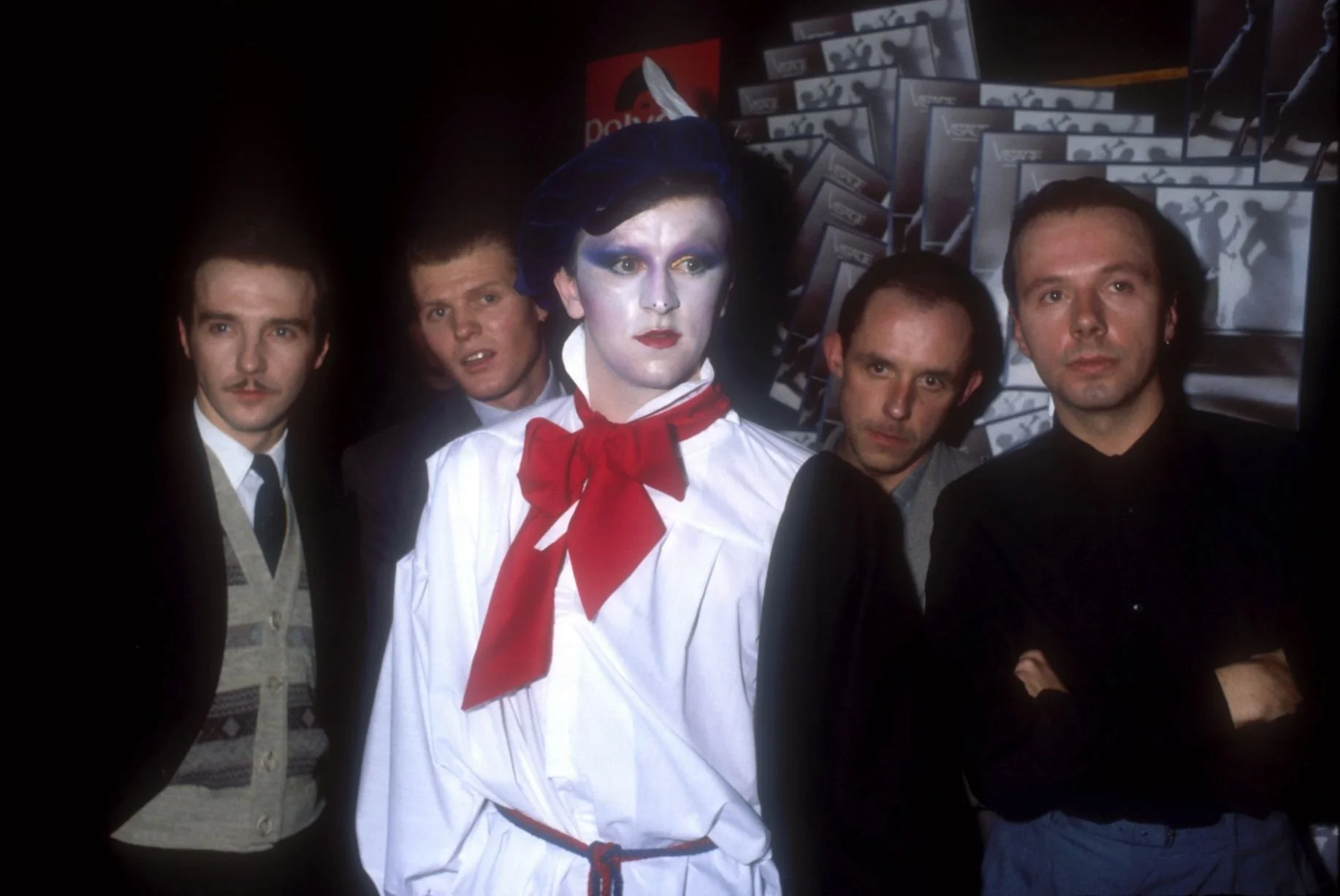
Visage: Midge Ure, John McGeoch, Steve Strange, Dave Formula, and Billy Currie
After a brief stint with Liverpool band, The Photons, Harrington, now going by Steve Strange, started the Bowie and Roxy club nights with Rusty Egan, the drummer from Matlock’s band, Rich Kids. Egan was starting a new project with his fellow Rich Kids bandmate, Midge Ure. They had already recorded a couple songs and asked Strange to join to front the band. Billy Currie from Ultravox was recruited on keyboards along with three members from the band, Magazine, guitarist John McGeoch, bassist Barry Adamson (who wouldn’t stay long but participated in the recording of the first album), and keyboardist Dave Formula. Visage was born.
Some of their early gigs were at Strange and Egan’s club nights, which were growing in popularity and notoriety. This led to the band issuing a single, “Tar”, in November 1979 on indie label, Radar Records. The electro-funk tune did not chart.
Visage started working with producer Martin Rushent. He had been an engineer on an impressive list of recordings such as Jesus Christ Superstar and several glam and prog era albums by T-Rex, Gentle Giant, Fleetwood Mac, and Curved Air. Two of the first albums he produced were The Stranglers first two LPs, shifting him into the punk scene. Those were followed by albums by Generation X, Buzzcocks, and 999. His work with Visage was one of his first forays into electronic music, a genre he would help define, particularly in working with The Human League.
By the time of the release of the band’s self-titled debut LP in November 1980, the club nights were winding down after its time at Blitz. The Blitz Kids, of which Strange was a leading figure, were in the midst of launching the new romantic movement, and Visage’s album would be central to that sound.
“Fade to Grey” was the album’s first single and was released the same day as the album. It was the next entry into the growing list of classic synth pop tunes. It reached the top ten in the UK and many other countries in Europe, and #1 in Switzerland.
The song was first written by Currie and Chris Payne, a keyboardist from Tubeway Army. It started as an instrumental worked on during Gary Numan’s tour, with Cedric Sharpley from Numan’s band also contributing. Currie brought it to Visage, and Ure added the melody and lyrics. Thus, despite Visage being a sextet that, in addition to its three synth players, also had a drummer, bassist, and guitarist (McGeoch also provided sax), the song’s composition and sound, aside from the drums, was almost entirely electronic. Egan’s girlfriend, Brigitte Arendt, provide the French vocals.
The video for “Fade to Grey” was directed by Kevin Godley and Lol Creme, former members of the band, 10cc. The duo had released three albums so far from 1977 to 1980. After directing their video for the 1979 single, “An Englishman in New York”, they began a formidable career as innovative video directors. The Visage song was one of their early projects that helped build their career, leading to work with The Police, Ultravox, Yes, Duran Duran, and many other ‘80s acts. Their video for their own song in 1985, “Cry”, was one of the most iconic videos of the decade.
Visage issued three more singles, with “Mind of a Toy” reaching the UK top twenty and the title track just missing the same threshold. The album also reached the top twenty, making Visage one of the leading synth acts in the UK.
76. “Antarctica” \ Men Without Hats (1980) – Back to Canada, and this time to Montreal for one of the most infamous acts of the synth-pop era, but that reputation was yet to come. The first iteration of Men Without Hats was a short-lived punk band in 1977. Its singer, Ivan Doroschuk, American born and of Ukrainian heritage, revived the name with a synth-based act in 1980 that included his two brothers, Stefan and Colin, and Jérémie Arrobas. The Doroschuk brothers tended to eschew hats in the chilly Montreal winters, thus dubbing themselves, the ‘men without hats.’
Their first release was a four-song EP, Folk of the ‘80s. “Antarctica” was indicative of the pure synth-pop sound, though the video showed Ivan playing a bass. Catchy with dance beats, it clearly indicated where the band was headed and the vibe many synth acts were starting to explore.
Their first album, Rhythm of Youth, was released in April 1982. The first single, “I Like”, did not chart. “The Safety Dance” was then released and almost reached the top ten in Canada. However, momentum built in the US, eventually reaching the top ten. It did the same in the UK and many other countries. The shorter version was what people knew as the single and for its infamous video, but its extended version drove its success in the dance clubs, now a force unto themselves for the success of synth acts.
Also bolstered by another strong single, “I Got the Message”, the album reached the US top twenty. It was really a super catchy album start to finish. Canadian acts don’t often reach the upper echelons of the US charts, but for a new wave synth act, it was remarkable. Heck, it was remarkable for any synth act to be that successful in the US in 1982.
Some songs ride the line between serious art, playful insouciance, and parody. Whether it was the admittedly goofy video, its jaunty rhythms, or the (probably unintentionally) amusing lyrics, but many view “The Safety Dance” as a novelty song, the kind of track of an era that was dismissible and not to be taken seriously. Yet, there aren’t many synth-pop tunes that are as catchy – or as successful. And over forty years on, it still pops up, showing a staying power most of the music of that time has not achieved.
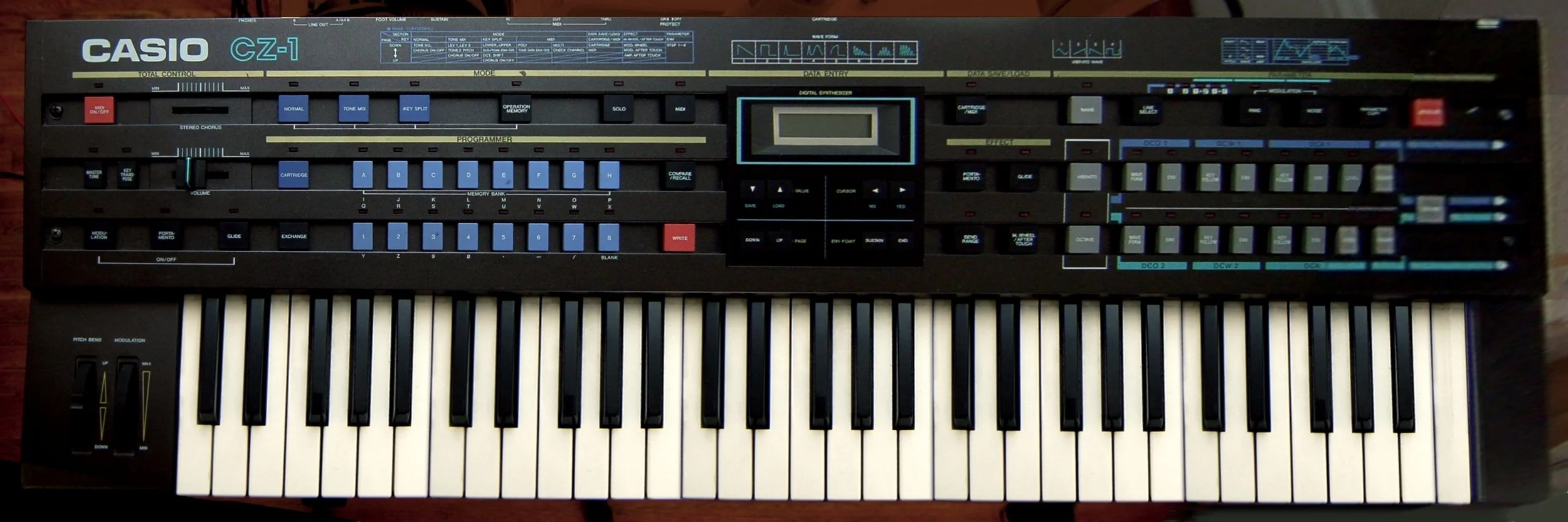
TECH SPOTLIGHT: CASIO
Created in Tokyo 1946 by engineer, Tadao Kashio, the company was originally called, Kashio Seisakujo. Originally focused on calculators, the company branched into computers in 1957 and wristwatches in 1974. It started producing keyboard instruments in the 1980s, coming to dominate the household market by the end of the decade, becoming synonymous with the basic, canned sounds people could amateurly produce. Not particularly notable in professional music, Casio’s success was representative of the rise of synths such that a sustainable home market could be established.
Men Without Hats continued to release albums through the 1980s, eventually moving away from pure synth-pop. They had some minor successes but never equalled the heady heights of that debut album and the single that defined theirs – and an entire genre’s – brand. Love it or hate it, it was an anthem, because remember, “We can dance if we want to / We can leave your friends behind / 'Cause your friends don't dance / And if they don't dance / Well they're no friends of mine.”
77. “You’ll Always Find Me in the Kitchen at Parties” \ Jona Lewie (1980) – John Lewis was from Southampton, England, and started his career playing in blues bands in 1963 while still in school. He went solo in 1974, adopting the name Jona Lewie to separate himself from others with the same name and most notably, the British department store. Building on his blues background, his music was a blend of pub rock, boogie woogie blues, and a splash of celtic folk, a part of a particularly English brand of music. While some tracks got BBC radio play, he did not see success.
In 1977, he signed with label Stiff Records, a label that would be legendary in building UK punk and new wave, but at the time was just starting out. In 1980, he started mixing synths into his music. He wrote a song with Keith ‘Keef Trouble’ Trussell, who he’d been in bands with in the ‘70s. “You’ll Always Find Me in the Kitchen at Parties” was true to Lewie’s brand of pub rock and blues but, composed on synths, it became an outlier for him as a synthpop classic. With female backing vocals from the wives of the song’s producer, Bob Andrews, and Stiff Records’ owner, Dave Robinson, the song had a sublime, understated ‘60s girl group vibe (Kirsty Maccoll often sang it live with him). Jazzy keyboard breaks added some novelty. And of course, the lyrics were brilliant – self-effacing, laying out the plight of the single guy, awkward at parties, hanging out and finding redemption in the kitchen. It was a song that could only exist, and break through, at that time.
By the end of 1980 there was no doubt there was a sense of change in the air, and not only because a new decade had started. The rock and disco of the 1970s, still very present on the UK charts, was being increasingly infiltrated by synths and other forms of new wave. Ska was popular with the likes of The Specials and The (English) Beat. Madness had four top tens that year, only matched by The Police, who bridged the year between their second and third albums. Artists like David Bowie, Roxy Music, Kate Bush, and Queen were making the shift into the new sounds and having hits with them.
In the US, the charts remained dominated by R&B, soft rock, and rock acts like Tom Petty, Fleetwood Mac, The Eagles, and Pink Floyd, who were riding the juggernaut of their album, The Wall. New wave and punk were healthy in the underground scenes and college campuses, but still far from any mainstream attention. Few acts were embracing synths, at least certainly not as a central tool for composition.
In 1979, Margaret Thatcher was elected as UK Prime Minister and in 1980 Ronald Reagan was elected as US president. It was a period of high inflation, high unemployment, an energy crisis, and economic malaise. Their approaches of tax cuts, austere monetary policy (most in the UK only), and their central banks approach of high interest rates to break the back of inflation, led to recession and, in England, social unrest. Political tensions with the USSR increased amongst a fresh wave of anti-communist sentiment and nuclear fear. Music reflected the mood of conflict and darkness that hung over western nations.
In 1981, synthpop continued its inexorable growth. In February, Duran Duran and Depeche Mode released their first singles. New Order, formed from the ashes of Joy Division, released their first single in March. Kim Carnes had a massive synth-pop hit with “Bette Davis Eyes”. Martyn Ware and Ian Craig Marsh left The Human League and formed, Heaven 17. Phil Oakey and the revamped The Human League had huge success with the Dare album and the single, “Don’t You Want Me.” A Flock of Seagulls launched out of Liverpool, becoming one of the most iconic synth acts of the era. Thomas Dolby and Eurythmics released their first music. Synths featured prominently in the novelty hits, “It’s My Party” by Dave Stewart and Barbara Gaskin, “Der Kommissar” from Austrian singer, Falco, and Vangelis’ track from, Chariots of Fire.
By 1983, economies were improving and synthpop was reaching its peak period, running through to the end of 1985. People were feeling good and in a mood to party. Music reflected this, shifting towards lighter forms of pop and rock, with a greater lean into beats and dance music. Synths were the perfect instrument to reflect this mood, lightening and enlivening the sound of any genre and injecting a modern element reflected the new hope people had for the future.
Even in mainstream music, synths were ubiquitous. Michael Jackson had one of the biggest albums ever with the late 1982 release of the album, Thriller. Lionel Richie challenged him with the LP, Can’t Slow Down. In 1984, Purple Rain by Prince and Born in the USA by Bruce Springsteen dominated the charts, Van Halen gave us one of the most infamous synth sounds ever in, “Jump”, and Midge Ure wrote a synth-pop fundraising hit that raised millions for the all-star single, “Do They Know Its Christmas”. Madonna released her first album in 1983 and her follow-up, Like a Virgin, in ’84, which together delivered four top ten hits. All these releases were built with synths as the integral, if not the primary, component.
For the UK synth acts that had experienced great success in the early 1980s but struggled to break through in the US, that would change in the last half of the decade. Bands like Duran Duran and Depeche Mode led the way, as well as Kate Bush, enjoying breakout success. The UK cause was also aided largely by the soundtracks for a string of massive films from John Hughes, such as The Breakfast Club (1985), Pretty in Pink (1986), Ferris Bueller’s Day Off (1986), and Some Kind of Wonderful (1987). Bands like Simple Minds, OMD, Psychedelic Furs, The Smiths, and New Order all saw their fortunes change after inclusion in the soundtracks.
Yet, despite the success of UK acts in North America after 1985, interest in synth music waned. Guitars moved back to the fore, leading to the arrival of grunge in North America and acid house and then Britpop in the UK. Rap grew out of the fringes to assert itself in mainstream music, as did country music. But that didn’t mean electronics went away, they just became one of the instruments that everyone used, in almost every genre. Dance and rave culture led to the growth in electronic dance music (EDM). By the 2000s, use of electronics was beyond normal, it simply failed to register any differently than a guitar, bass, or drum.
From our modern vantage point, listening to the synth use in the 1970s seems natural, like the sound has always been there. But as this playlist reveals, it was anything but. Few utilized it, few outside the UK embraced it, and it wasn’t until the technology matured and artists started to master its use that a heyday arrived in the early 1980s. How that happened is the story of this profile.