
Everyday is Halloween: A Retrospective on the Origins of Goth Music
Click below on the streaming service of your choice to listen to the playlist as your read along.


In a 1964 court case regarding an obscenity charge, US Supreme Court Justice, Potter Stewart, famously noted that while it was difficult to define what qualified as pornography, he knew it when he saw it. I feel the same sentiment can be applied to goth music. Among the sub-genres of modern rock, goth is the one most based on aesthetics; to the degree that it is much bigger as a fashion style than a genre of music. But this is not a fashion website, and when it comes to goth music the borders are hard to identify, yet you know it when you see it – and for the most part, hear it too.
In previous profiles, we broke down the post-punk era into new wave and dark wave. The latter is where we will find goth and many of the acts in this profile were also in the dark wave playlist (I have selected different tracks for this playlist). Dark wave was separated from new wave via a lesser use of synths, a focus on rhythm over melody, and an emphasis on dark tones and themes. Goth artists explored these sounds, pushing the darkness to match the aesthetic and usually combined elements of romance, macabre, and horror.
Before the arrival of a recognizable goth genre, there were many acts that created the blueprints, whether musically, visually, or both. Most were covered in the Builders of Modern Rock profile, but we’ll still note the key contributors.
In 1956, Screamin’ Jay Hawkins had the seminal hit, “I Put A Spell on You”, a haunting track which, when matched with his costumes and props, made him arguably the first goth artist. 1962’s “Monster Mash” by Bobby ‘Boris’ Pickett and 1963’s “Jack the Ripper” by David ‘Screaming Lord’ Sutch (plus most of his other work) introduced themes of the macabre and horror into the lyrics and, while still pop styled, employed darker tonal elements to match the content.
As with almost everything related to modern rock, Velvet Underground, and particularly their 1967 album with singer, Nico (not to mention her solo work that followed) were inspirations for most goth artists. The caustic sounds and dark, stark content were models for the goth approach.
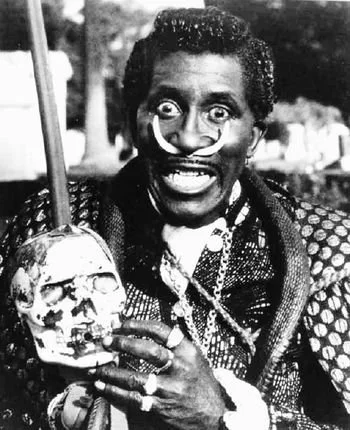
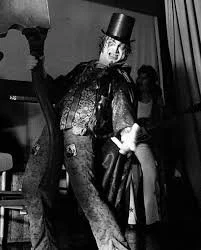
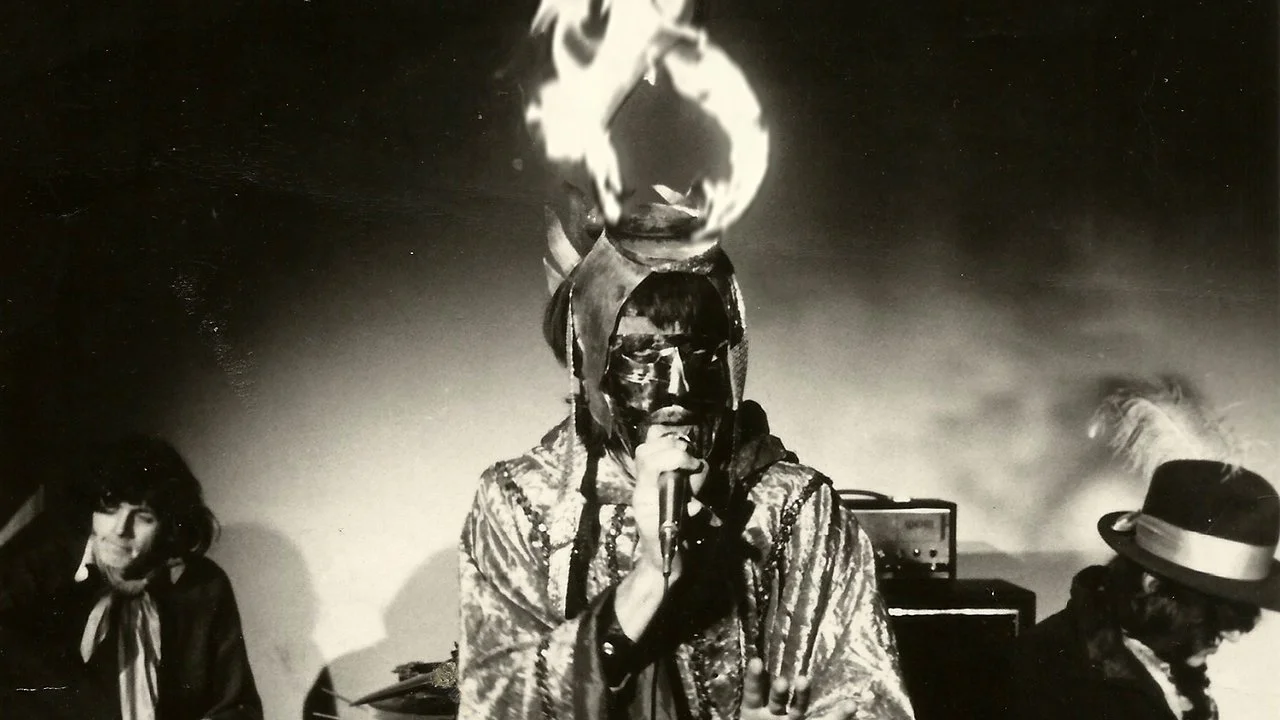
The pioneers of goth (L to R): Screamin’ Jay Hawkins, Screaming Lord Sutch, and Arthur Brown
The Crazy World of Arthur Brown, with his experimental sounds, screams, theatrical performances, and use of costume and face paint were instrumental features to modern rockers that wanted a visual style to enhance the music. Brown’s 1968 hit, “Fire”, is considered by many as an early example of goth.
The 1970s brought glam music which made the use of make-up, costumes, and greater performative elements all regular parts of rock music. David Bowie, in particular, utilized sci-fi with alien and space references in his music. Most glam artists were from the UK, where the genre mostly thrived, but American band, Alice Cooper, contributed more horror themes to its look. The early terms for such artists were ‘shock rockers’ due to the use of blood, horror, or disturbing imagery live or on their album art. In 1975, Roger “Roky’ Erickson, formerly of ‘60s psych rock band, The 13th Floor Elevators, started releasing songs with content about aliens, demons, and monsters. Indeed, his band was even known as The Aliens, issuing a highly regarded album in 1980.
Heavy Metal also grew in the 1970s in which horror, shock, and space themes were frequently in play. The darker sounds of the likes of Black Sabbath and Judas Priest also offered heavier, more aggressive styles of music that were not far removed from some of the goth sounds that came soon after.
In 1976, punk arrived, quickly followed by a broadening of the sound that drew on the energy, attitude, and appearance of punk but with a more refined and artistic presentation. It was in this milieu that the seeds of goth were planted, which will be evident as we make our way through this playlist.
This profile traces the acts of the modern rock era that built on the foundations of these artists and established a brand of music and style that coalesced around the goth culture. Not all of these acts were goth in appearance but would have been listened to by goths. The origins of any genre typically work through an escalating inventory of music and styles before reaching a critical mass requiring identification, and goth was no different.
- - - -
"Human Fly" \ The Cramps (Nov 1978) – Much of this list will be UK focused, as is usual for modern rock profiles, but in this case we’ll start with a band out of New York, which was the locus for North American post-punk in the late ‘70s. This act’s start, however, was in Sacramento, California in 1972, where Erick Purkhiser and Kristy Wallace formed a band after getting married. They moved to Akron, Ohio in 1973 and then to New York in 1975, where their act started to push forward. They were called The Cramps.
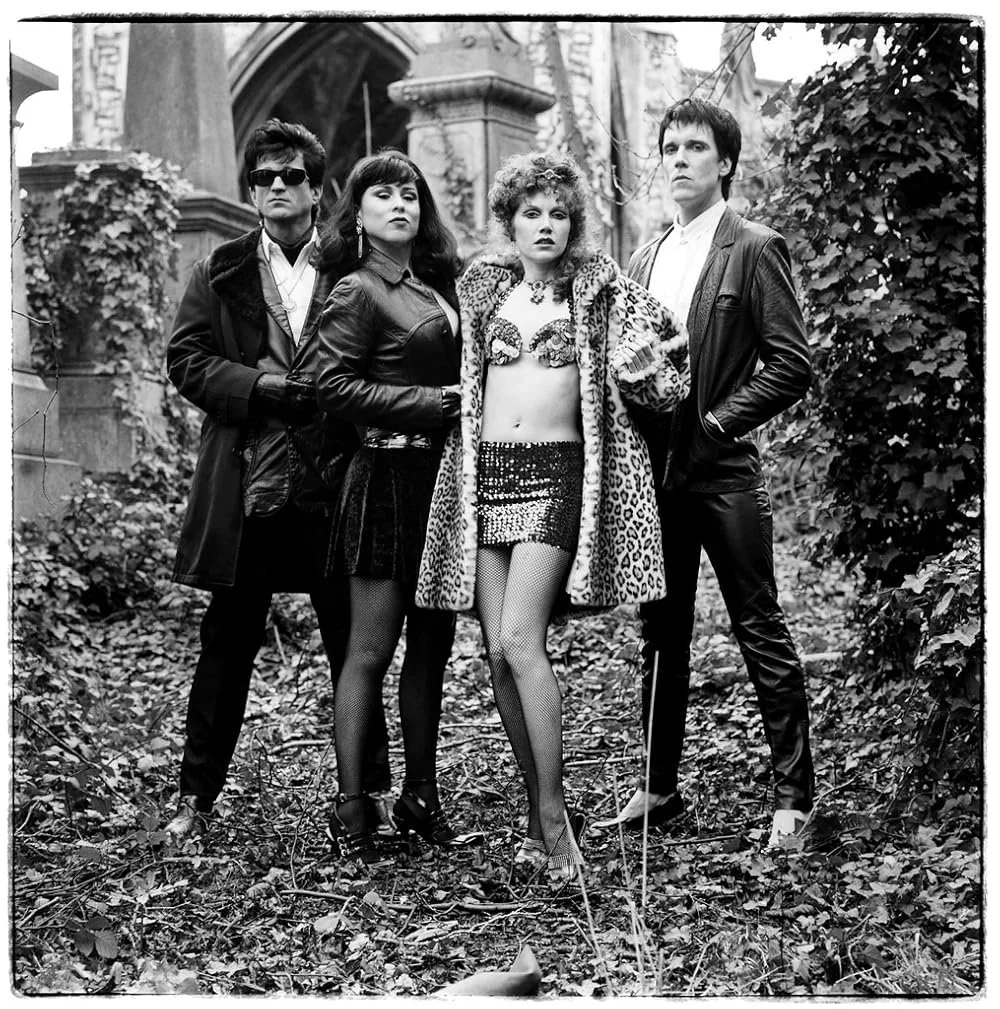
The Cramps, featuring the couple, Poison Ivy and Lux Interior (on the right).
Working among the New York punk scene of CBGBs and Max’s Kansas City, The Cramps separated themselves with a sound that mixed rockabilly and punk – eventually dubbed psychobilly - making their sound unique. They also had offbeat lyrics that mixed sci-fi themes. Their presentation combined a punk look with ‘50s camp, creating a retro appeal that inspired future goths. Stage names were adopted, with Purkhiser known as Lux Interior and Wallace as Poison Ivy. Lux Interior’s style, with black leather outfits and pale-faced make-up, also inspired goth.
The Cramps released their first singles in 1978, a cover of the 1963 Trashmen song, “Surfin’ Bird”, and then an original tune, “Human Fly”. The first LP, Songs the Lord Taught Us, was released in 1980. They went on to issue nine albums in total before Lux Interior’s passing in 2009.

Siouxsie Sioux, whose early looks aimed to provoke
"The Staircase (Mystery)" \ Siouxsie & the Banshees (Mar 1979) – A common feature of most genres is a general denial by the artists to be a part, deriding the labelling and grouping of their work with others. It is usually the case that artists do not aim to create a genre or define themselves within one, so it is understandable they reject the concept since it misidentifies their creative impulse. Such was the case with Siouxsie Sioux (Susan Ballion), who hated becoming known as the ‘queen of goth,’ though even she could not deny her influence on the creation of the genre.
Siouxsie was part of the Bromley Contingent that followed the Sex Pistols. Her look, with heavy make-up, bondage clothing, and dark, heavily teased-up hairstyles became a defining look for goth. When she formed the Banshees with Steve Severin in 1976 they developed a darkly toned, ominous style of post-punk. “The Staircase (Mystery)” was their second single, released in early 1979 following their debut single, “Hong Kong Garden”, issued in late ‘78. They released eleven albums and still tour occasionally. Siouxsie & the Banshees were one of the top post-punk acts both musically and commercially, and easily one of the most defining acts in terms of style for instigating the goth culture.
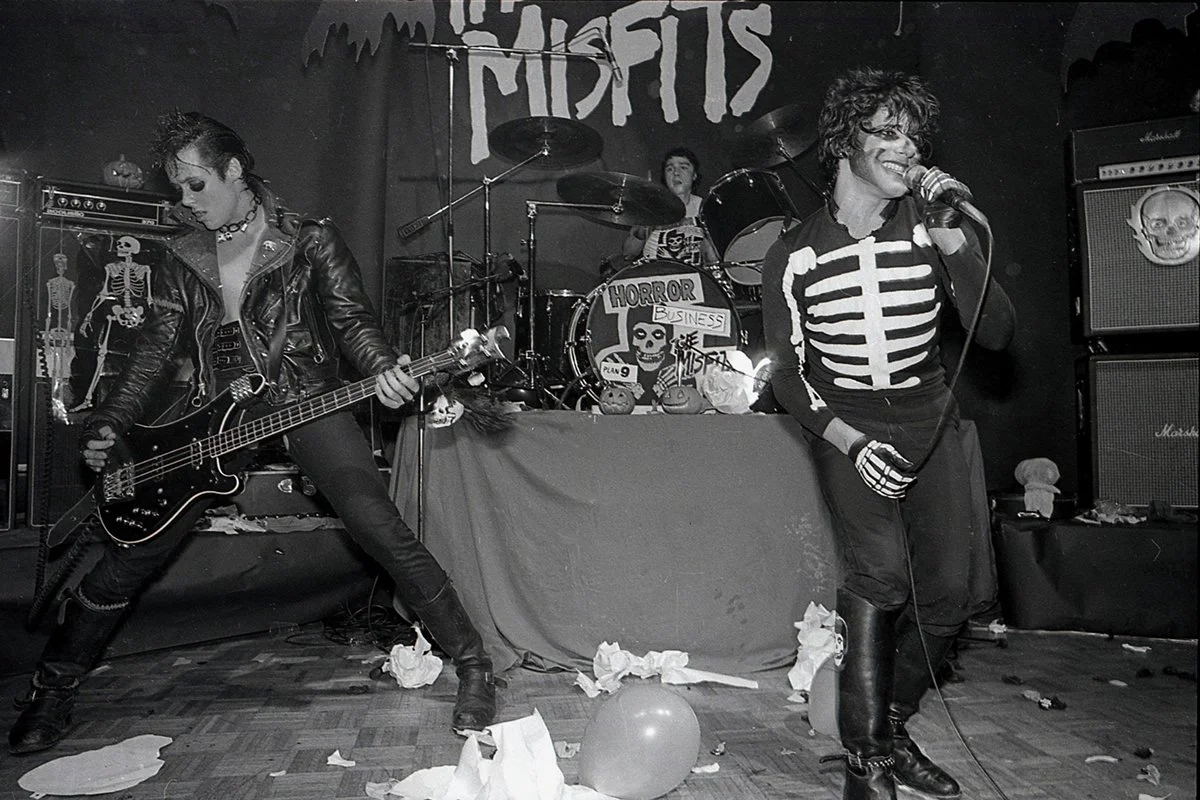
The Misfits
"Horror Business" \ The Misfits (Jun 1979) – The Misfits were a punk band from New Jersey formed in 1977 by Glenn Danzig. Their songs dwelt on horror themes and their look mixed punk, metal, and campy horror and sci-fi. The sound was more influential on hardcore punk and other mixes of metal and punk, but their look was akin to goth. The debut LP did not arrive until 1982 but was preceded by two EPs and several singles, with the first delivered in 1977. “Horror Business” was the third single, released in 1979. They broke up in 1983 but re-formed in the early 2000s, continuing to release albums and tour occasionally.
"Bela Lugosi's Dead" \ Bauhaus (Aug 1979) – If goth had a discernable starting point, this song was it. Bauhaus formed in 1978 in Northampton, England. “Bela Lugosi’s Dead” was their first single, released in 1979. The lyrics were written by the bassist, ‘David J’ Haskins, and the song was a gloomy, echoey mix that reverberated with the mystique of classic horror films, of which the song’s namesake would have frequently starred. More singles followed leading to the debut LP, In the Flat Field, in 1980. Bauhaus released four albums up to 1983, the period in which goth was established. Their darkly toned, post-punk music, frequent macabre references, and black themed visual style, all provided touchstones for the goth culture. The link to goth was enshrined when Bauhaus performed “Bela Lugosi’s Dead” in the 1983 vampire film featuring David Bowie, The Hunger.

Bauhaus (L to R): David J, Peter Murphy, Kevin Haskins, and Daniel Ash
Though Bauhaus challenged their identification as a goth act, it’s been hard to deny their place as a pioneer of the genre. They reformed for a tour in 1998, dubbed the ‘Resurrection’ tour, that leaned into the spiritual themes of goth. When they reunited again in 2005 to perform at the Coachella festival, they opened with “Bela Lugosi’s Dead” and singer, Peter Murphy, was suspended upside down by a cable, descending onto the stage like a bat. Whether they called themselves goth or not, they have continued to lean into the genre’s vibe, making them a defining act of the genre.

Adam Ant, with Jordan
“Cleopatra” \ Adam and the Ants (Nov 1979) – Stuart Goddard, known as Adam Ant, was a Londoner who formed the band, The Ants, in 1977 after falling into the King’s Road punk crowd. This included hanging at the SEX boutique run by impresario Malcolm McLaren and designer Vivienne Westwood. Punk icon and boutique employee Pamela ‘Jordan’ Rooke first managed The Ants. Adam presented as a mix of punk and glam, and the band’s sound was a disjointed mix of post-punk and funk. After issuing their first two singles in late ’78 and the summer of ’79, their first album, Dirk Wears White Sox, arrived at the end of November. “Cleopatra” was on the album and revealed the band’s penchant for campy, dirge-like takes on the post-punk sound.
Malcolm McLaren effectively took The Ants away from Adam after the first album, forming the act, Bow wow wow around them. Adam rebounded with a new line-up, releasing two more albums as The Ants, enjoying a variety of hits. He then went solo to even greater success. While his costuming grew more eccentric, mixing North American aboriginal warpaint and fringed boots with British naval officer jackets, he did not follow the musical or fashion styles of goth. However, his early work on Dirk Wears White Sox is considered a proto-goth release and many goths reference it as an influence.
"Nervous System" \ Killing Joke (Nov 1979) – Formed in 1979 in Notting Hill, London, Killing Joke was the consummate post-punk band, mixing punk with foreboding mixes of drums and bass under screaming guitars and anguished vocals. Not very goth in appearance, their album art, music, and lyrical themes did draw on macabre imagery. “Nervous System” was the first single and EP. The 1980 self-titled debut LP became a classic of the post-punk era, featuring tracks such as “Wardance” and “Requiem”. Their 1985 single, “Love Like Blood”, is a classic of the goth genre, achieving an impressive mix of pop-punk with haunting moodiness.
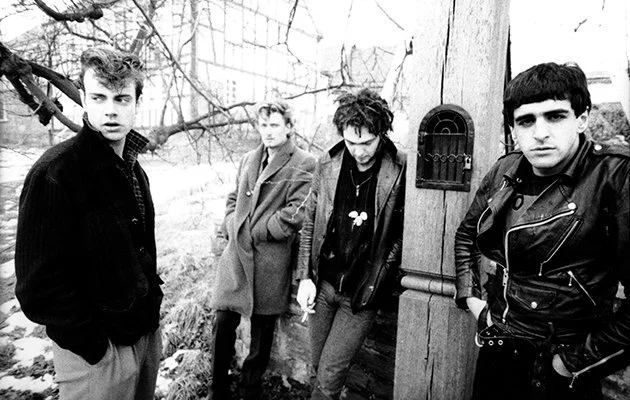
Killing Joke
Killing Joke has released fifteen albums and additionally influenced industrial music, which frequently overlaps goth. Their music has also drawn on metal influences. The band is still active today.
"Dead Souls" \ Joy Division (Mar 1980) – Another pioneer of the post-punk sound, building impressive melodies over moody rhythms, Joy Division’s tenure was short due to singer Ian Curtis’ suicide in May 1980. The band issued an EP, two albums, and several singles over their four-year run. Curtis’ haunting vocals and fraught, morose lyrics reflected his personal challenges with epilepsy and problems resulting from his extra-marital relationship with journalist, Annik Honoré. Following his suicide, his lyrics took on deeper meaning as they, at times, starkly reflected his personal demons.
“Dead Souls” was the B-side to the single, “Atmosphere”, released in France in the spring of 1980 under the title, “Licht und Blindheit”. Joy Division’s use of high-toned, melodic bass as a lead instrument, Martin Hannett’s muddied production, and Curtis’ resonant vocals were all highly influential on the goth sound. Hannett once described their sound as, “dancing music with Gothic overtones.” Peter Saville’s design – notably the use of cemetery sculptures for the single, “Love Will Tear Us Apart”, and the LP, Closer – also lent the band its bona fides as goth progenitors. Joy Division was resurrected as New Order, who in turn evolved their post-punk sound into a mix of new wave and dance that distanced them from the goth movement.
Industrial-goth act, Nine Inch Nails, covered “Dead Souls” in 1994 for the film, The Crow. It was a suitable choice for a movie with supernatural themes and a shadowy visual style. New Order was originally asked to provide a cover of, “Love Will Tear Us Apart”, but when that didn’t come together (the band was heading into an extended hiatus), they granted approval for Trent Reznor and Nine Inch Nails to cover “Dead Souls”.
Gothic Literature
The title, “Dead Souls”, was drawn from a nineteenth century Russian novel by Nikolai Gogol. The 1800s saw the rise of Gothic fiction, a sub-genre of Romantic literature that focused on supernatural themes and fear. Notable authors and works included:
Mary Shelley, Frankenstein, 1818;
Edgar Allan Poe, The Tell-Tale Heart, 1843;
the Brontë sisters, Wuthering Heights by Emily and Jane Eyre by Charlotte, both in 1847;
Nathaniel Hawthorne, The Scarlett Letter, 1850;
Robert Louis Stevenson, Strange Case of Dr. Jekyll and Mr. Hyde, 1886;
Oscar Wilde, The Picture of Dorian Gray, 1890; and
Bram Stoker, Dracula, 1897.
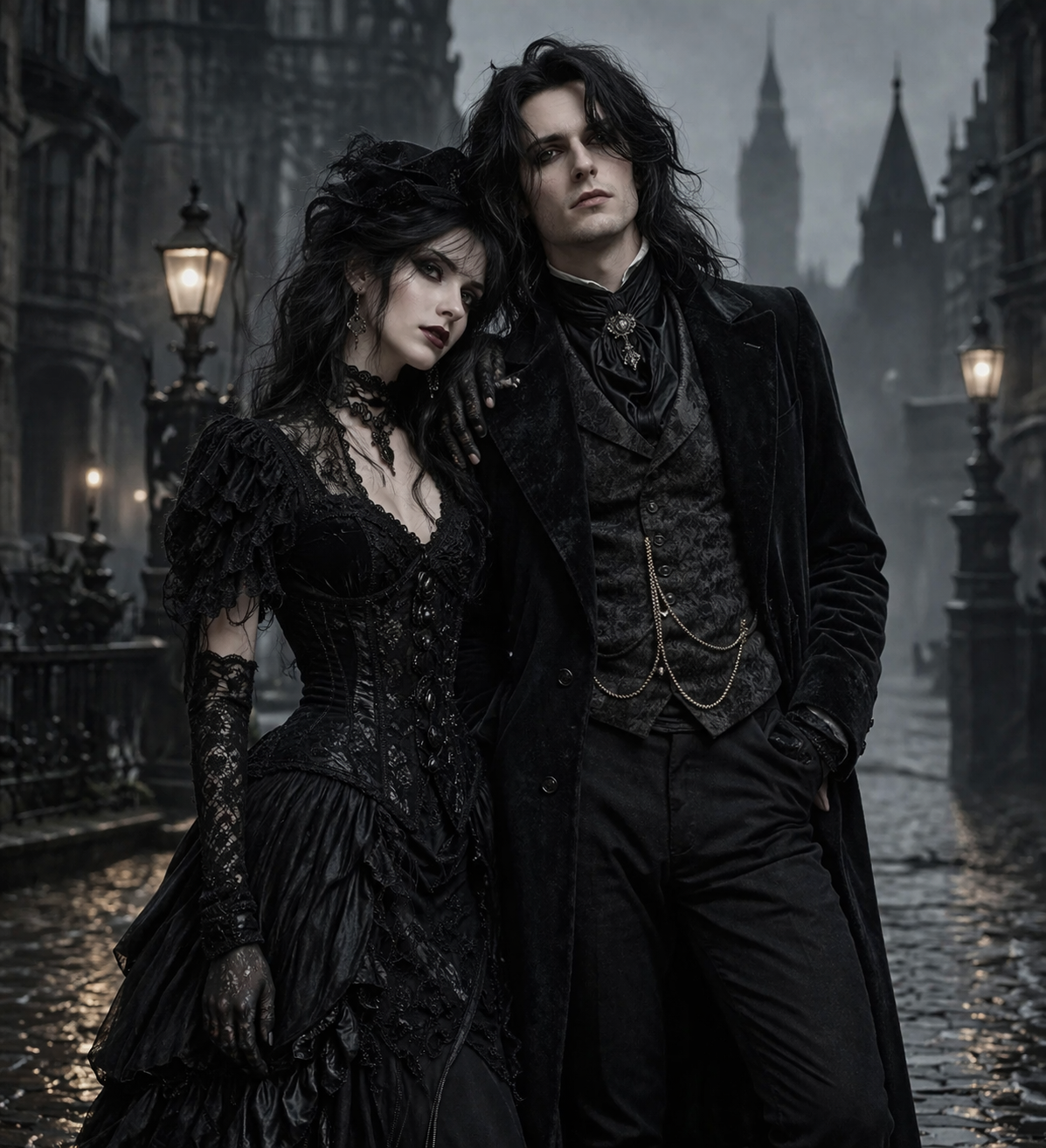
Goth fashions often channel the styles of the Edwardian and Victorian eras, the periods for gothic literature. Musicians don’t often adopt these styles, it’s more popular as fashion, whether related to the music or not.
The term, Gothic, arose as a pejorative term in the Renaissance to indicate something as medieval and barbaric. It was taken from medieval architecture and the Goths, a Germanic people descended from the Visigoths. Horace Walpole’s novel, The Castle of Otranto (1764), was later sub-titled, A Gothic Story, which gave rise to the use of the label in literature.
It was this era of artistic content that directly inspired much of 1980s goth music and fashion. It also was taken up in film. Gothic was a 1986 film by Ken Russell depicting the historic congregation hosted by Lord Byron in 1816 at Villa Diodati on the shores of Lake Geneva. Among his guests were Mary Shelley, Percy Bysse Shelley, and John Polidori. Byron suggested they write ghost stories, which led Mary to write Frankenstein and for Polidori to pen, The Vampyre, two works monumental in setting up a century’s worth of gothic romance and horror stories.
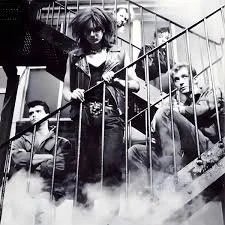
The Danse Society
"Clock" \ The Danse Society (Sep 1980) – The Danse Society came out of Barnsley, England in 1980. “Clock” was the first single, self-released in 1980 on their Society label. The sound was consistent with Joy Division and Killing Joke, with thick, rolling basslines and piercing guitars. It reached #11 on the UK indie chart, showing UK fans were open to this growing sound. Like many acts of the time, their look was a mix of light glam, punk, and new wave styles. While synth and pure new wave bands were lightening their fashions and employing more colour, dark wave bands were sticking to black.
The Danse Society released three albums up to 1986, eventually signing to Arista Records. Like many post-punk acts, they did well on the indie charts but did not break through to the main charts.
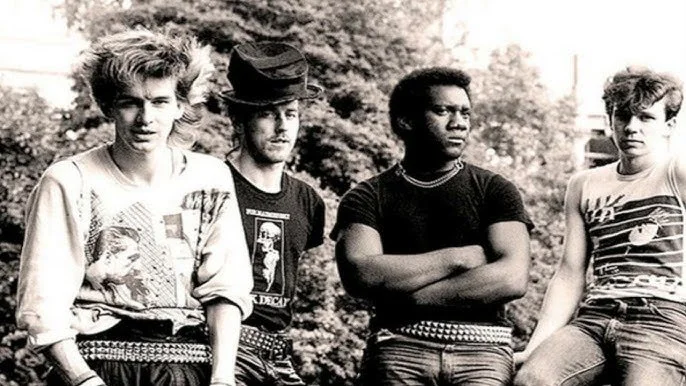
UK Decay
“For My Country” \ UK Decay (Sep 1980) – UK Decay was formed in 1979 out of the ashes of the band, Resiztors. They also ran a punk fanzine and a clothing shop, so their enterprise was of varied output. “For My Country” was the third single, released in 1980. The debut LP, For Madmen Only, arrived in October 1981. They had success on the indie charts with their heavy, post-punk sound.
In 1967, journalist John Stickney referred to the music of The Doors as “gothic rock,” which was the first modern use of the term for rock music. Similar references arose over the 1970s to bands that related to The Doors and mixed aggression, drama, dark tones, and a heightened fashion sense. In a 1981 interview with Sounds magazine, UK Decay’s singer, Steve ‘Abbo’ Abbott, jokingly referred to their music as ‘punk gothique’ (the band considered themselves punk). The article, by Steve Keaton, ended up being titled, “The Face of Punk Gothique,” which helped promote use of the term, goth, for this growing brand of music, which to that point had been dubbed, ‘positive punk’ by the British press.
"The Damage Done" \ The Sisters of Mercy (Nov 1980) – Formed in Leeds in 1980 by Andrew Eldritch and Gary Marx, The Sisters of Mercy did not release their first album until 1985. However, they issued their first single in 1980, “The Damage Done”. Consistent with the moody, echoey vibes of the growing post-punk sound, it was a version of the band that tied more to its punk roots than its later, electro-industrial-goth incarnation. Eldritch played drums on the track, but eventually they utilized a drum machine nicknamed, Doktor Avalanche.
Their visual style was black and over time they would lean into the goth aesthetic. The Sisters of Mercy were one of the more notable bands of the genre, issuing three albums between 1985 and 1990 which included several iconic tracks: “This Corrosion” (1987), “Lucretia (My Reflection)” (1988), “More” (1990), “Doctor Jeep” (1990), and “Temple of Love” (1992), a re-release of a 1983 single.
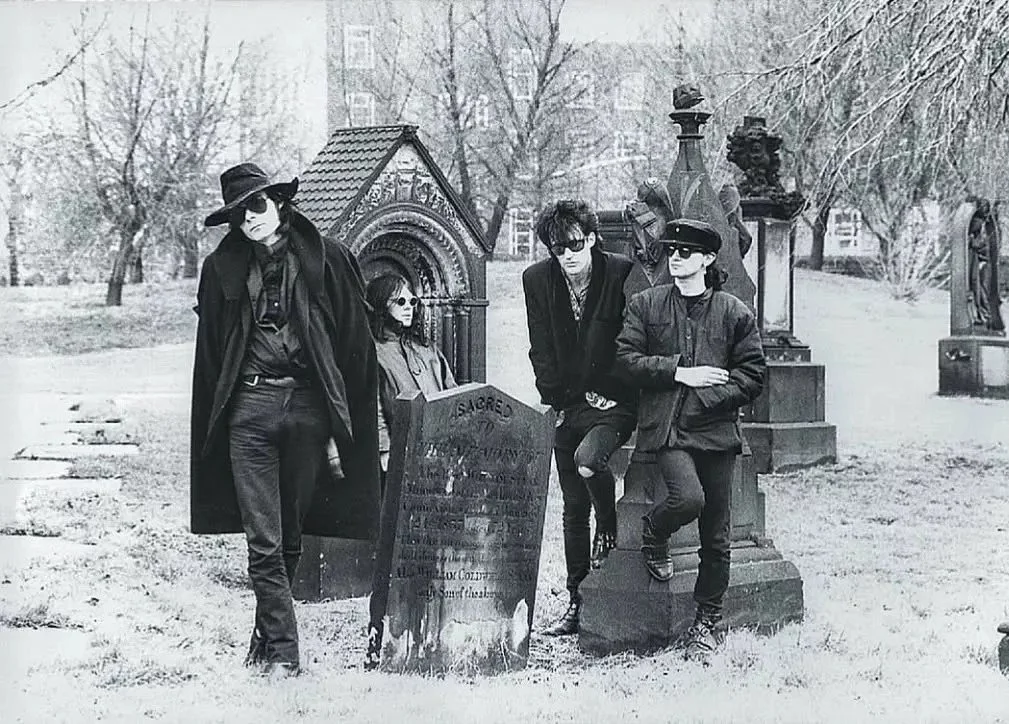
The Sisters of Mercy
"Mr. Clarinet" \ The Birthday Party (Nov 1980) – One of the most easily identifiable characters of the goth genre was Nick Cave. Few individuals seemed to embody the gaunt, macabre vibes of goth quite like him. I mean, his real name was ‘Cave,’ which seemed to imbue in him a career as a moody outsider. While his later work with his band, The Bad Seeds, has been a bit lighter in style and tone and more broadly embraced, his early work with his first band, The Birthday Party, was decidedly caustic and a little menacing.
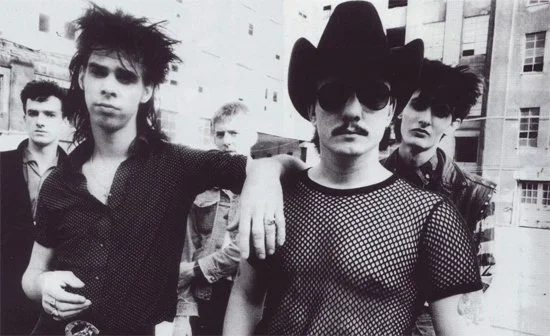
The Birthday Party, circa 1981, featuring Nick Cave (on left)
Formed in Melbourne, Australia in 1977, they were first known as Boys Next Door, releasing one LP in 1979 before changing to The Birthday Party, under which they’d issue three LPs from 1980 to 1982. Cave was joined by Mick Harvey and Phill Calvert.
“Mr. Clarinet” was the third single issued as The Birthday Party. It succinctly captured the band’s stark, slightly unhinged and uneasy sound. Their 1981 single, “Release the Bats”, further set the blueprint for goth, offering a precedent for others to follow with interests in mixing gothic horror with the post-punk sound. (I would have preferred to use that track for this playlist, but Spotify only offers an inferior live version of the track, at least in Canada where I am located.)
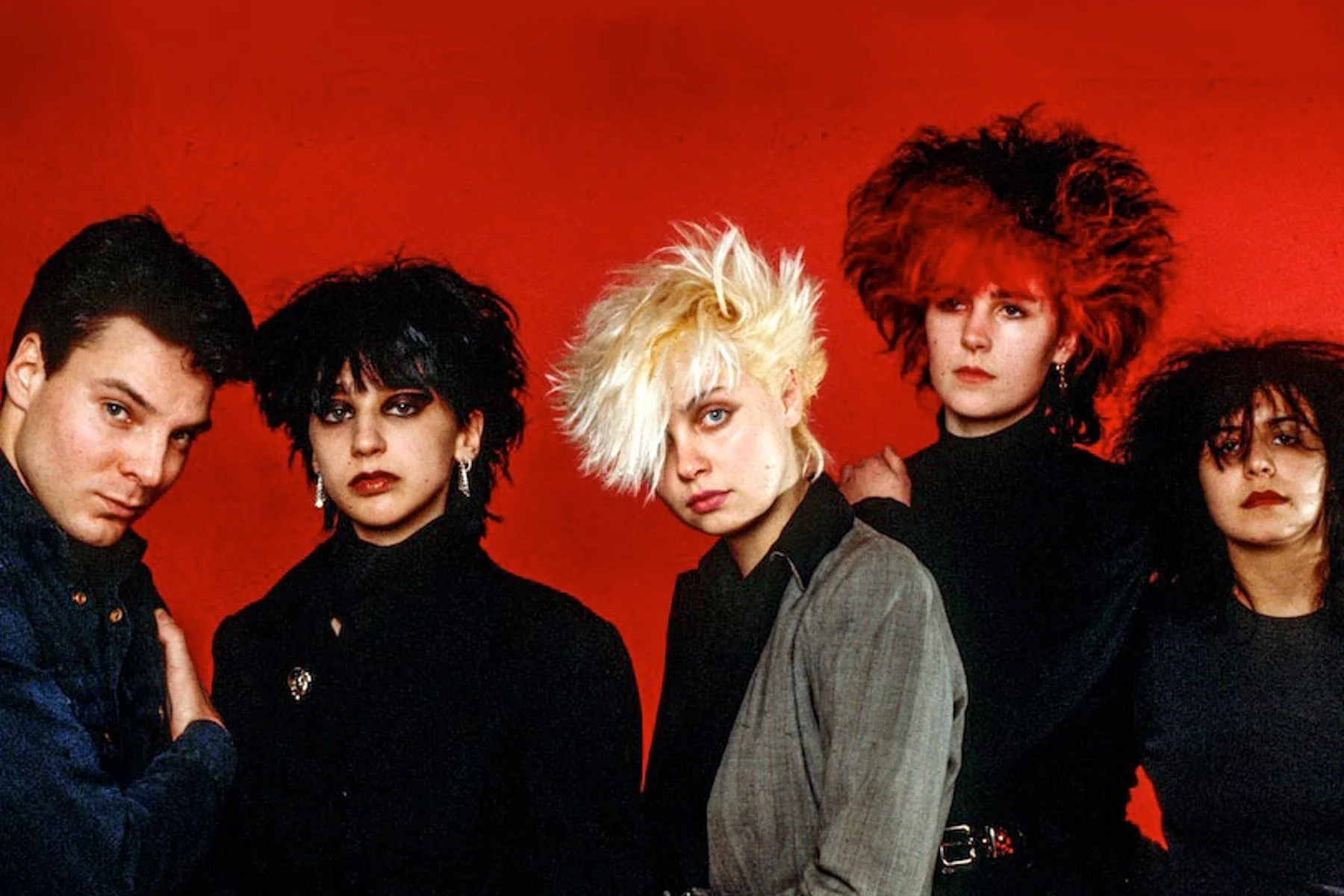
Xmal Deutschland
"Schwarze Welt" \ Xmal Deutschland (Mar 1981) – No retrospective of modern rock seems complete without input from Germany. The country has been particularly creative when it comes to pushing the boundaries of rock music. Xmal Deutschland was from Hamburg, West Germany, and was distinct among goth founders for the heightened use of electronics and an all-female line-up (though that changed with a male drummer after their first year). “Schwarze Welt” was the first single, issued in 1981, and was followed by a goth classic, “Incubus Succubus” in 1982. They released four albums over the ‘80s, shifting their sound to a lighter lean into new wave and pop.
"Rebel Without A Brain" \ Theatre of Hate (Apr 1981) – Though not as visually linked to goth, Theatre of Hate’s sound was in the pocket, built on tribal drumming, Kirk Brandon’s operatic vocals, and a distinct use of sax as compared to most other goth practitioners. Started in London in 1978 as The Pack, after issuing several singles Brandon switched to Theatre of Hate in 1980 with a new line-up. After a first single, “Original Sin”, released in late 1980, they issued the single “Rebel Without A Brain” in 1981. The debut album, Westworld, arrived in 1982, and remained their only LP until reforming and issuing more in the 1990s. Their theatrical, broad sound was the foundation for notable tracks such as, “Nero” (1981), “Do You Believe in the West World” (1982), and “The Hop” (1982).
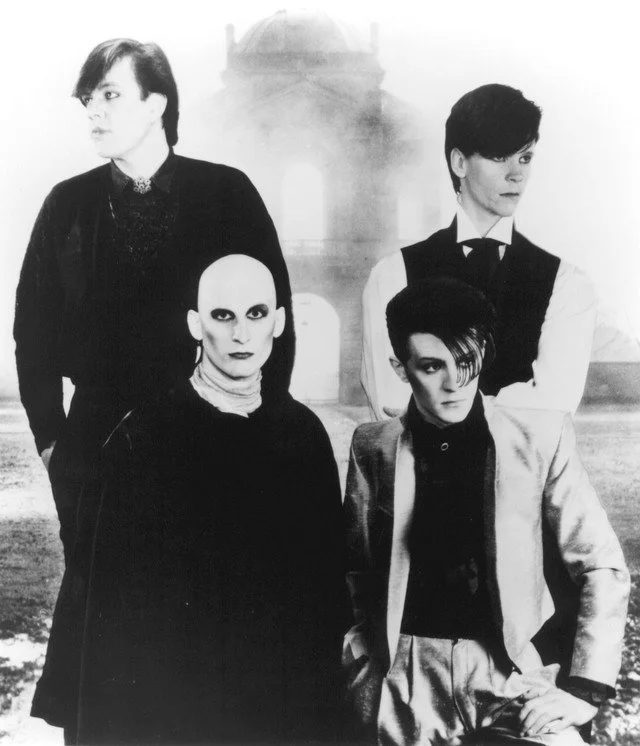
Classix Nouveaux
"No Sympathy, No Violins" \ Classix Nouveaux (May 1981) – Juxtaposing Theatre of Hate was Classix Nouveaux, a band that embraced a goth visual style but whose music was more akin to new wave with a healthy use of synths. Singer, Sal Solo (Chris Stevens), with his bald, pale head and black fashions, gave off a distinct goth image. Formed in 1979 out of the remnants of the punk band, X-Ray Spex, they issued their first singles in 1980 and first LP, Night People, in 1981. Though several singles from the LP charted in the UK, the album track, “No Sympathy, No Violins”, best captured their darker, most goth-adjacent sound. The band released two more LPs in ’82 and ’83 and a fourth in 2023.
"Poison Takes A Hold" \ Play Dead (Jun 1981) – Hailing from Oxford, England, Play Dead was a quartet that released five albums from 1983 to 1992. Firmly in the moody, snarling bass sound of post-punk, they enjoyed consistent success on the UK Indie charts. “Poison Takes A Hold” was the first single, issued in 1981. Their look was a mix of punk, rock, and goth thanks to the requisite black, teased-up hairdos. They were a band that showed how deep and viable the post-punk world was in the UK, such that bands could assemble a reasonable career within the genre without achieving significant chart success or international exposure.
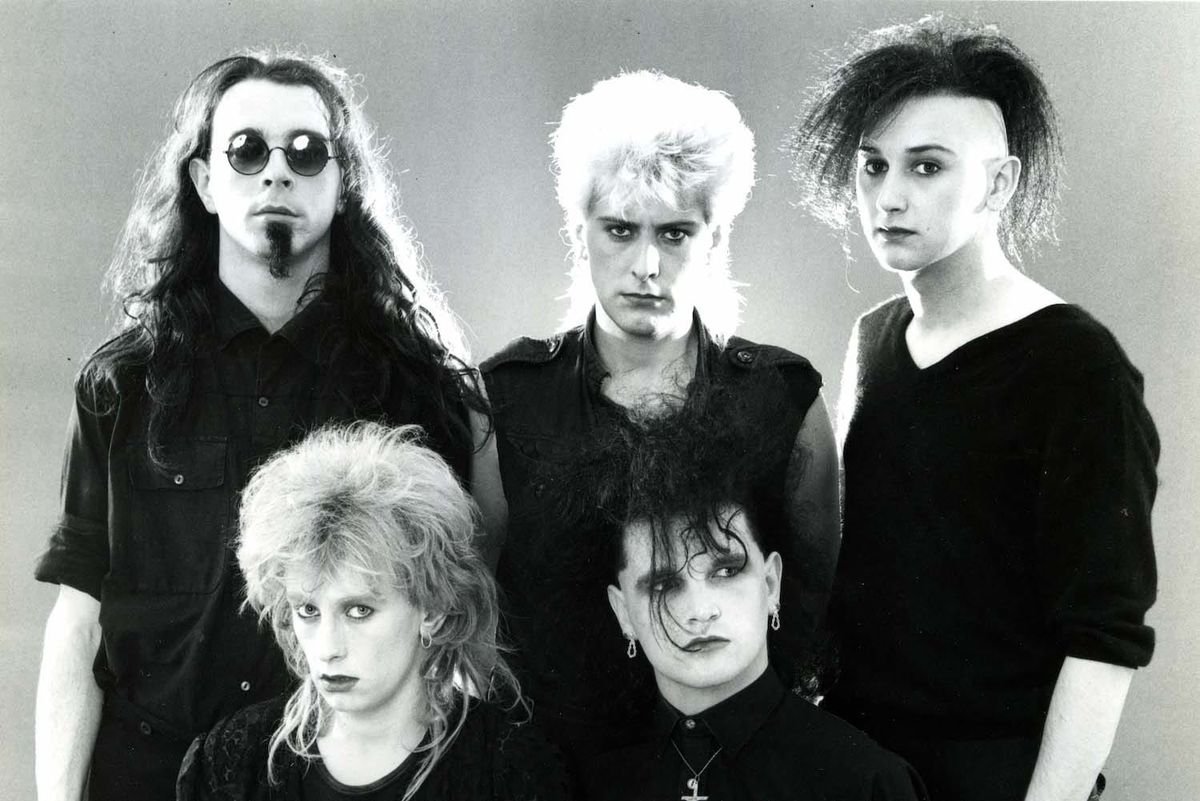
Virgin Prunes
"Sandpaper Lullabye" \ Virgin Prunes (Sep 1981) – Gavin Friday (Fionan Hanvey) was a childhood friend of Bono’s (Paul Hewson) in Dublin, Ireland. And while Bono and U2 would progress out of the local scene into a more commercially viable mix of new wave and rock, Friday and his band, Virgin Prunes, stayed firmly in the experimental realms of early ‘80s post-punk.
They were known for shocking and carnival like performances that challenged audiences’ sensibilities and fit their unconventional sound. Virgin Prunes issued four EPs over 1981-‘82, all titled, A New Form of Beauty. “Sandpaper Lullabye” was from the first of those releases and revealed a slightly unsettling, childlike quality to their piercing guitars and sharp drums. Their debut LP, …If I Die, I Die, was released in 1982 and was followed by a second album in 1986 before disbanding in 1987.
"A Bigger Splash" \ Tones on Tail (Mar 1982) – Following the break-up of Bauhaus, guitarist Daniel Ash and drummer Kevin Haskins joined with Glenn Campling to form Tones on Tail. Continuing the murky, experimental feel of Bauhaus, the trio released two EPs in 1982 and 1983 before issuing an LP, Pop, in 1984. Ash employed a more subdued, echoey vocal deeper in the mix which gave the band a more haunting feel. “A Bigger Splash” was from their self-titled, first EP, revealing that ethereal sound. Tones on Tail provided some of the more notable tracks of the post-punk and goth sound, such as “There’s Only One” (1982), “Performance” (1984), and the iconic, catchy, club-friendly, “Go!” (1984).
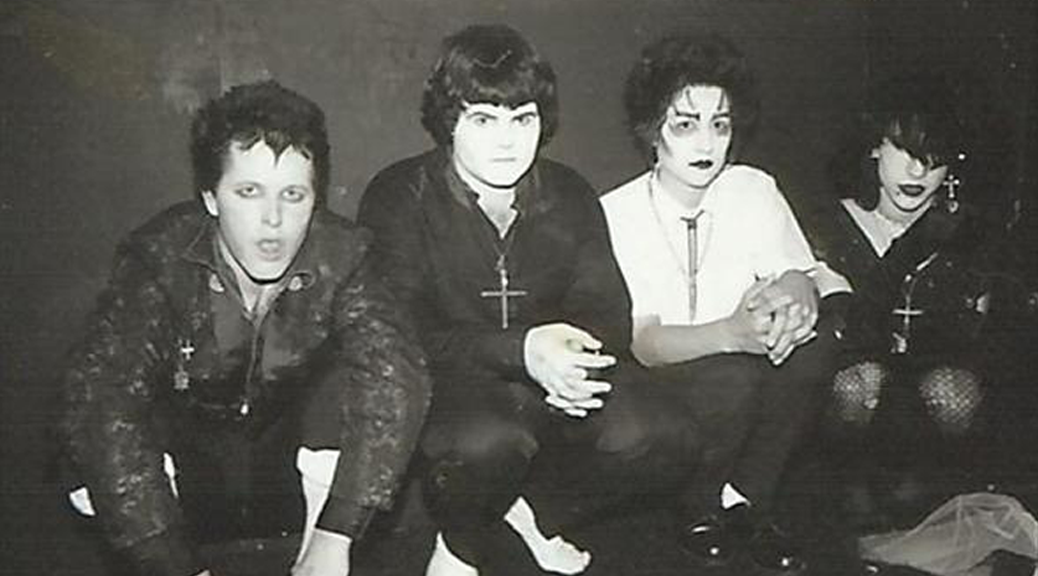
Christian Death
"Figurative Theatre" \ Christian Death (Mar 1982) – Sunny Los Angeles seemed an unlikely locale for a goth scene, but perhaps the Hollywood proximity made it ideal for embracing goth’s theatrical elements. Christian Death was formed in 1979 as a punk band, fitting into the city’s vibrant scene with the likes of the Germs, X, Bags, and Black Flag. After a line-up change, the band shifted to a post-punk sound and embraced the goth look, which in the US was coined, Deathrock.
Only Theatre of Pain was Christian Death’s debut LP, released in 1982 and on which, “Figurative Theatre” appeared. Another line-up changed occurred before the next two LPs and an EP, all released by 1985. After, original front man, Rozz Williams (Roger Painter), departed and guitarist\vocalist, Volar Kand took over. The band continues to today and has released over a dozen additional albums.
"One Hundred Years" \ The Cure (May 1982) – Like Siouxsie and the Banshees, The Cure had an uneasy relationship with its goth status. Yet undoubtedly, they were one of the most influential acts to promote the sound and look of the genre, not to mention being its most successful act.
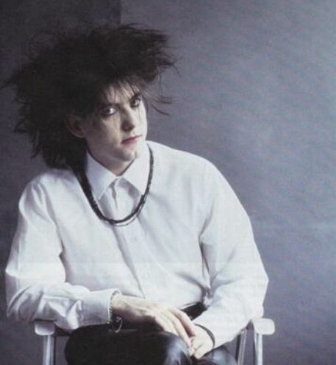
Robert Smith of The Cure
They started out as a post-punk band with the debut LP, Three Imaginary Boys (1979), which provided a version of punk and dark pop. But over the next three LPs, Seventeen Seconds (1980), Faith (1981), and Pornography (1982), their sound – and look – shifted into proto-goth territory. Each album grew progressively darker, mixing ethereal moodiness under Robert Smith’s seminal vocals.
Personally, I have only had a passing interest in horror and sci-fi but been much more amenable to goth. It started with the Pornography album. My love for it during my early teens, just a couple years after its release, indoctrinated me to the wondrous sounds and imagery of goth.
Pornography was arguably the archetypal release of the genre. “One Hundred Years” was the lead track, and though not released as a single best exemplified the album’s swirling, vast morass of piercing guitars, thundering drums, haunting synths, and tortured vocals of bleak despair.
The Cure lightened their sound on the following albums, The Top (1984) and The Head on the Door (1985), employing brighter synths into danceable mixes of pop and new wave. Smith even, briefly, cut his hair and stopped wearing lipstick to divorce himself from the goth look. However, The Cure never fully departed from the murky post-punk sound they helped define and have returned to it with great effect on subsequent LPs, Disintegration (1989), Bloodflowers (2000), and Songs of A Lost World (2024). Smith has also sustained, despite his aging status, his iconic goth look of wild black hair and messy lipstick.

The Aston brothers from Gene Loves Jezebel
"Shaving My Neck" \ Gene Loves Jezebel (May 1982) – Formed in London in 1980 by twin brothers, Michael and Jay Aston, Gene Loves Jezebel would ultimately achieve some success with a mix of post-punk and rock and a look more akin to glam than goth. However, their first releases contributed to the coalescing look and feel of the goth genre. Released in 1982, “Shaving My Neck” was the first single which, with its screams and echoey vibe, seemed lifted right out of a horror film. Promise was the first album, released in 1983, which reached the UK top ten. The Discover LP (1986), with the track, “Desire”, saw their peak of goth effect.
The Aston brothers split after the 1987 LP, The House of Dolls. Jay continued Gene Loves Jezebel, releasing two more albums. Michael returned under a new line-up for some tours and recording through the 1990s, but the siblings parted ways in 1997 and have not reformed. Jay still tours to this day as ‘Jay Aston’s Gene Loves Jezebel.’
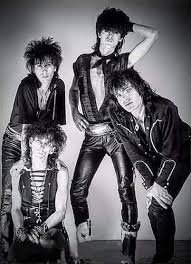
Lords of the New Church
"New Church" \ Lords of the New Church (Jul 1982) – Lords of the New Church was a supergroup of sorts formed in 1981 by Steven ‘Stiv’ Bators from the Dead Boys, Brian James from The Damned, Dave Tregunna from Sham 69, and Nick Turner from The Barracudas. Surprisingly, their sound was more new wave and post-punk than their predecessor acts. Their look, however, was pure goth, particularly from Bators as the front man.
They released three albums starting with a self-titled LP in 1982, from which “New Church” was the lead track and first single. “Open Your Eyes” was the more successful single but didn’t capture the goth feel as much as the first track. “New Church’s” thundering drums, spiritual references, and distant, harmonic vocals were pure goth.
Lords of the New Church had success with later singles, first the highly danceable, “Dance with Me” (1983), and then with an irreverent cover of Madonna’s, “Like A Virgin” (1985).
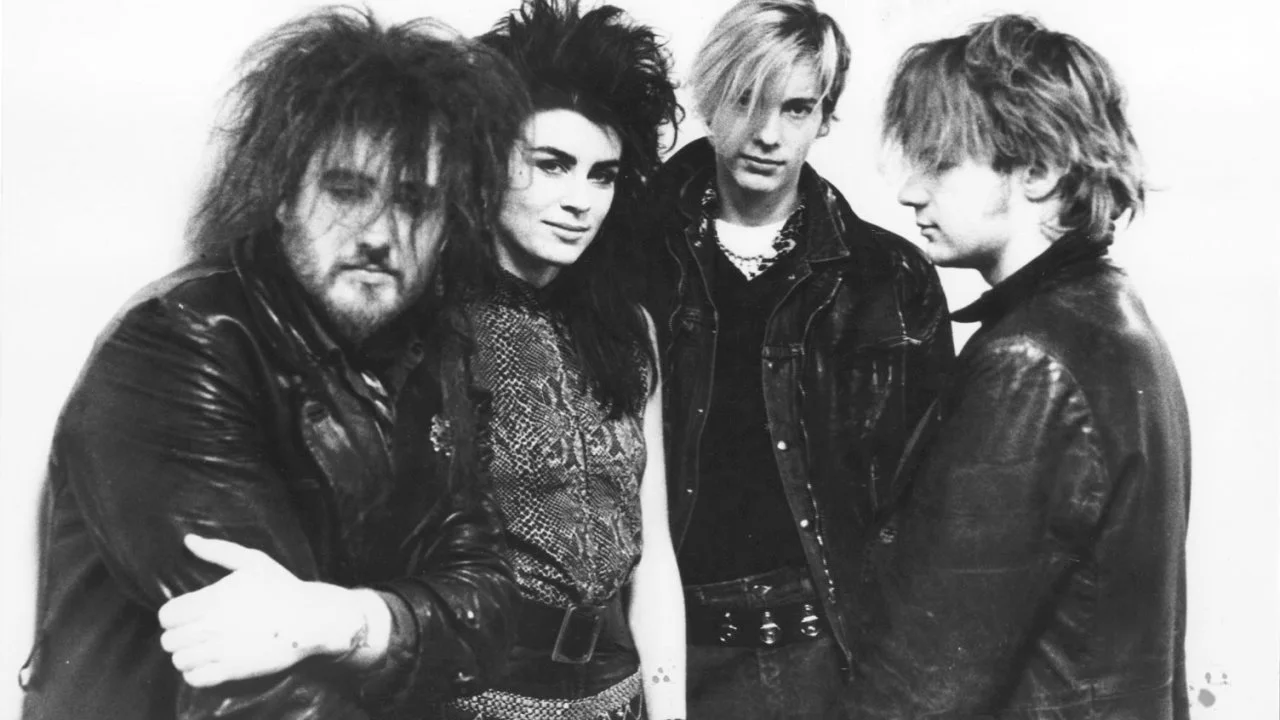
The March Violets
"Fodder" \ The March Violets (Aug 1982) – Another act from Leeds, The March Violets were similar to their peers via a greater use of electronics and even their own nicknamed drum machine, ‘Dr. Rhythm.’ Featuring two lead vocalists in Rosie Garland and Simon ‘Detroit’ Denbigh, the band offered a bouncier but no less resonant version of the dark wave sound.
A disquieting but persistent element of post-punk was the use of Nazi imagery and references. Joy Division’s name came from a group of prisoner prostitutes within concentration camps. Siouxsie Sioux and others often sported swastikas in their fashion. The name, The March Violets, derived from Märzveilchen, a term used for German opportunists who rallied to the Nazi cause after Hitler consolidated power within the country. Like the other artists mentioned, they paid little heed to this aspect and were not proponents of Naziism, focusing attention on their music.
They issued two EPs in 1982, a self-titled release and Religious as Hell, on which “Fodder” appeared. A series of singles followed with some success on the UK indie charts, including a #1 with, “Walk into the Sun” (1984), as the band brightened their sound.
“Caged” \ 1919 (Aug 1982) – Formed in 1980 in Bradford, England by Mark Tighe and Ian Tillieard, this act’s first name was Heaven Seventeen. It was likely taken from a reference in the book and film, A Clockwork Orange, which was the same inspiration for the synth-pop band, Heaven 17, who formed in Sheffield around the same time. This may be why the band changed their name to 1919 as the line-up filled out to a quartet with Nick Hiles and Mick Reed.
Their first single, “Repulsion”, was released in 1982, followed later that year by, “Caged”. Channeling a mix of Killing Joke and Bauhaus, the band shifted between danceable tracks, U2-styled guitar licks (especially on the “Repulsion” B-side, “Tear Down These Walls”), and classic, post-punk murky rhythms.
After a series of singles and a mini-LP, Machine (1983), the band splintered into two acts: The Hive and Another Cinema. 1919 was resurrected in 2014 by Tighe with a new line-up, though was eventually joined by original drummer, Mick Reed. Tighe passed away from cancer in 2017, but the band continued, still performing and releasing music today.
"I Fell in Love with A Ghost” \ Lydia Lunch (with Rowland Howard) (Sep 1982) – A New York based scene that started in the 1970s and extended through the ‘80s was ‘no wave’, which separated itself from new wave via a less structured and noisier approach to composition. A well-known band out of that scene was Sonic Youth.
One of the original no wave acts, formed in 1976, was Teenage Jesus and the Jerks. The singer was Lydia Koch, better known as Lydia Lunch. Her spoken word approach was akin to the early, poet-punk offerings of fellow New Yorker, Patti Smith. Teenage Jesus and the Jerks released a few singles before disbanding.
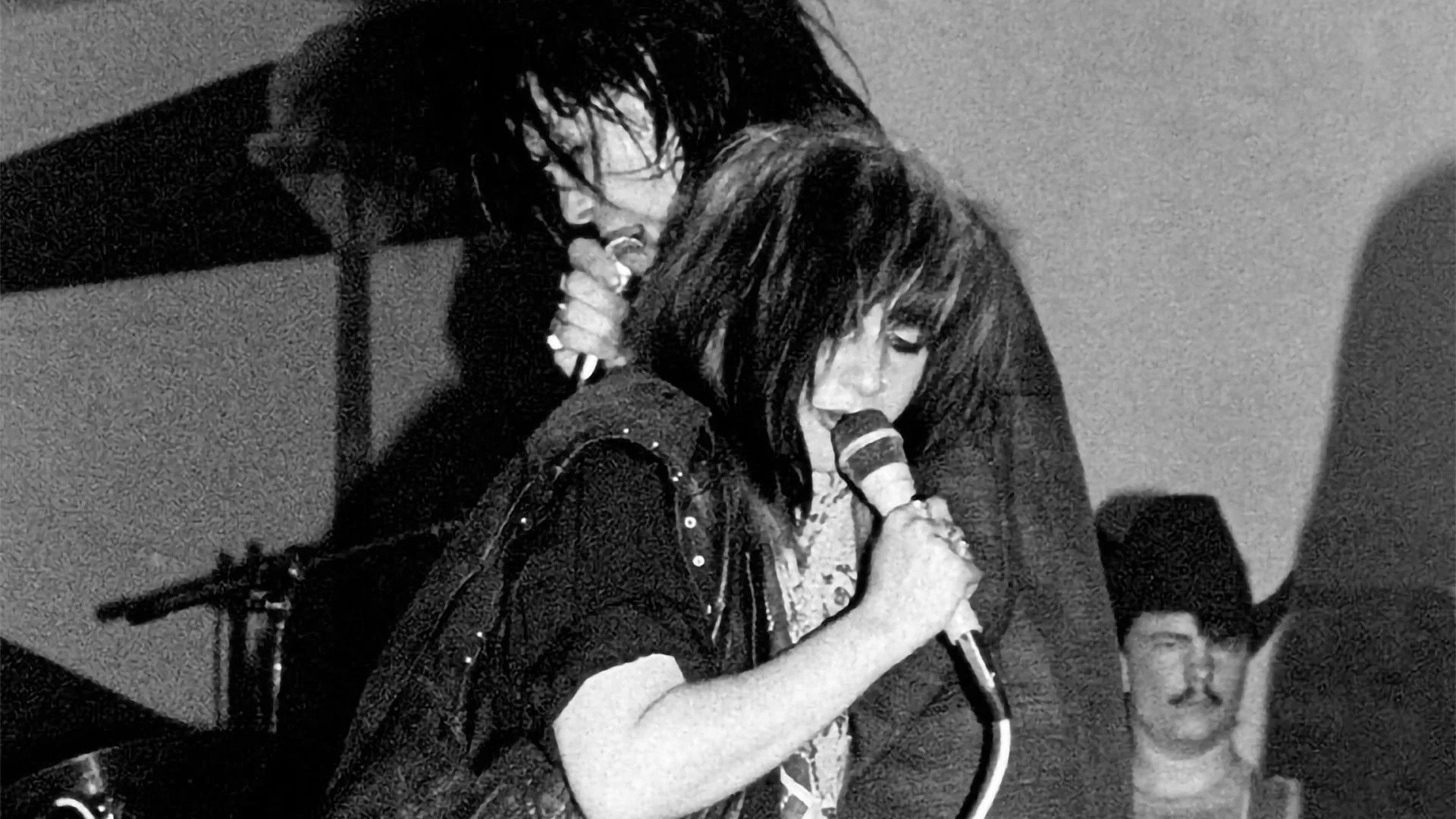
Lydia Lunch performing with Nick Cave and The Birthday Party
Lydia then went solo, continuing to explore mixes of post-punk and no wave. Her music is frustratingly hard to find on streaming services. Her debut LP, Queen of Siam (1980) featured the fun track, “Atomic Bongos”, and several other tracks with horror and sci-fi references. Her second LP, 13.13 (1982), channeled the post-punk sounds of the UK and was recorded with members of the LA punk band, The Weirdos.
Her next release was a split EP, with Lydia’s sixteen-minute track, “The Agony is the Ecstacy”, as the B-side. It featured Steve Severin from Siouxsie & the Banshees. The A-side featured four songs from The Birthday Party. This brought her into direct connection with the proto-goth scene. Out of this she also did a single with Rowland Howard from The Birthday Party, a cover of the 1967 Lee Hazlewood and Nancy Sinatra track, “Some Velvet Morning”. “I Fell in Love with a Ghost” was the B-side and provided a good example of her spoken word, sparse sound. Combined with her dark punk style, she was a natural fit for the goth scene.
"Dozen Girls" \ The Damned (Sep 1982) – As one of the first UK punk acts, The Damned stormed onto the scene in 1976 with the single, “New Rose”. Their early albums were among the finest of the first wave punk scene, providing additional excellent singles such as, “Neat Neat Neat” (1977), “Love Song” (1979), “Smash It Up” (1979), “I Just Can’t Be Happy Today” (1979), and a snarling cover of Jefferson Airplane’s, “White Rabbit” (1980). More melodic and theatrical than their counterparts, they easily fit into the post-punk mold. Singer Dave ‘Vanian’ Lett also fashioned himself in vampire-like styles to go with his lower-toned vocals.
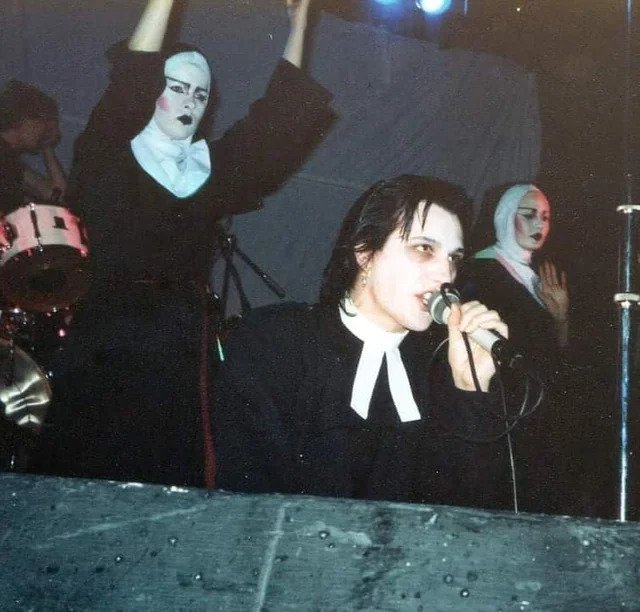
Dave Vanian and The Damned, performing on the tour for Strawberries
Therefore, it was not a stretch when the band started to settle into a goth vibe in 1982 with the fourth LP, Strawberries. “Dozen Girls” was the lead single and though it failed to click with audiences, the album still brought them their first UK top twenty.
In 1984, guitarist Raymond ‘Captain Sensible’ Burns left the band after solo success with tunes like, “Happy Talk” and “Wot.” However, his success buoyed attention to The Damned, who recorded the album, Phantasmagoria (1985), a full-on goth LP with Vanian’s vampire shtick now front and centre. Led by the singles, “Grimly Fiendish”, “The Shadow of Love”, and later, non-album single, “Eloise”, the band fully left behind their punk roots and provided one of the top LPs of the goth genre and the most successful release of their career.
"Fatman" \ Southern Death Cult (Dec 1982) – Southern Death Cult was formed in Bradford, England in 1981 and featured vocalist Ian Astbury. They recorded tracks and performed live around the UK up to 1983, touring with the likes of Theatre of Hate and Bauhaus. Their only release was a self-titled album issued by Beggars Banquet after they had disbanded. Astbury then joined with Billy Duffy of Theatre of Hate to form Death Cult, which eventually became The Cult, one of the leading alternative rock acts of the late ‘80s that drew inspiration from goth, native American culture, and ‘60s psych-rock.
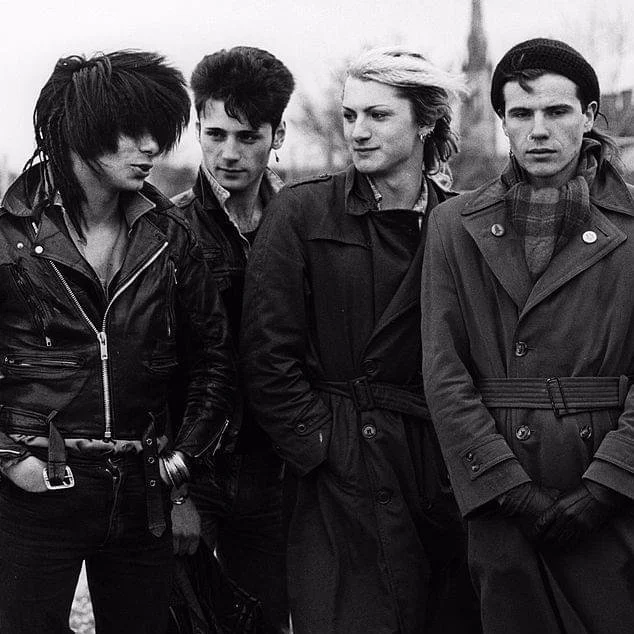
Southern Death Cult, in their hometown of Bradford
Astbury was prone to a style that was complimentary to goth, with his long black hair, native American references (drawn from a period when he’d lived in Canada), and somewhat flamboyant style of dress (think a cross between Jim Morrison of The Doors and Adam Ant). Southern Death Cult’s aggressive form of post-punk was a more rock style of goth. “Fatman” was a double A-side single along with, “Moya”. Both tracks were included on the subsequent LP.
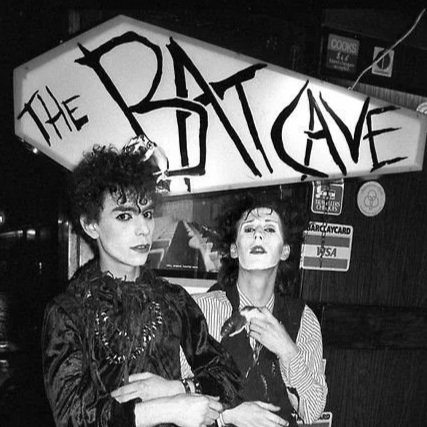
The Batcave
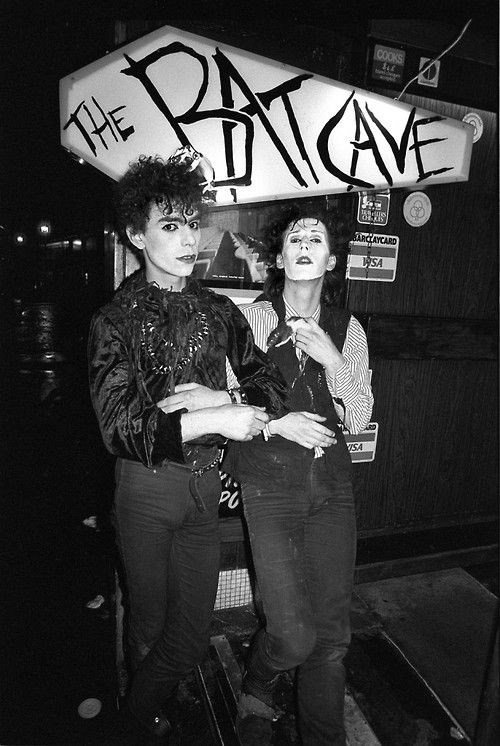
Olli Wisdom (left) and Jon Klein, the founders of The Batcave club nights
In July 1982, a club night called The Batcave was started by Olli Wisdom and Jon Klein of the band, Specimen. It was held every Wednesday at the Gargoyle Club on Dean St. in Soho, London, before moving to Leicester Square in February ’83 (it would change locations twice more in ’84 before ending in 1985). Starting with a focus on new wave and glam, it increasingly became the locus for the goth scene, drawing together the people that defined the culture. It sought to provide a counter to the Blitz Club and the new romantics, who had glammed up new wave and synth music in ’79 and ‘80. Regular performers were Specimen, Alien Sex Fiend, and Sex Gang Children, along with emerging industrial acts such as Test Dept and Executive Slacks. DJ Hamish MacDonald filled the gaps between the live performances.
The club was frequented by many people from the bands on this playlist. The Batcave showed old movies and held cabaret performances and mud wrestling events. It welcomed people who were society’s outsiders and coalesced around the exotic Victorian and Edwardian fashions of the gothic literature era, inspired by the likely parlours of Percy Bysse Shelley, Lord Byron, and Oscar Wilde.
As noted in the entry for UK Decay, the English music press initially dubbed the music associated with this scene as ‘positive punk’ but shifted to goth rock as the aesthetic came to the fore.
"Into the Abyss" \ Sex Gang Children (1982) – The provocatively named, Sex Gang Children, was a band formed in Brixton, London in 1982 and featured Andreas ‘Andi Sex Gang’ Crowder as lead singer. They were a regular act at the Batcave and helped to visually define the goth scene.
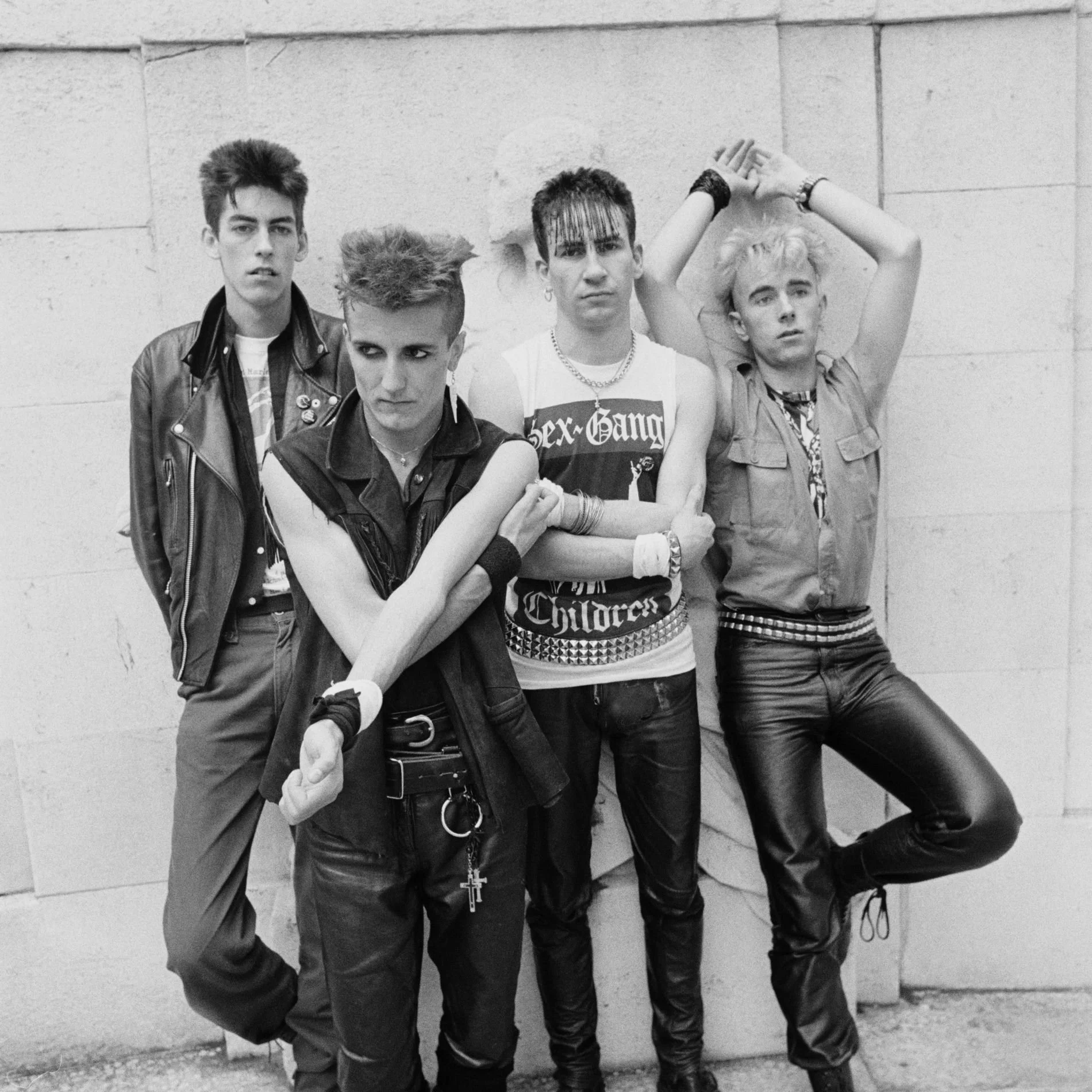
Sex Gang Children, led by Andi Sex Gang (in front)
The band name was first proposed by Malcolm McLaren for his new act which instead chose, Bow wow wow. Boy George, at the time known as Lieutenant Lush, was a member of Bow wow wow and considered Sex Gang Children when he left to set up his own band, ultimately going with Culture Club when drummer Jon Moss objected. Crowder initially called his band, Panic Button, but when everyone else passed on using Sex Gang Children, took it for himself and his act.
The common story is that McLaren lifted ‘sex gang children’ from William S. Burroughs. Most references cite it from a novel, but some suggest a poem. None specify the Burroughs source, and I can find no reference to that exact phrase within any of his works, which I found a nagging gap. I suspect it was McLaren’s incendiary reference to the 1971 novel, The Wild Boys: a Book of the Dead. The plot was about gangs of hedonistic, homoerotic boys battling police armies in a near-future (1988), dystopian police state. The book also inspired the styling for Bowie’s Ziggy Stardust character, the Patti Smith track “Land”, the name of the band The Soft Boys (combining two Burroughs’ novels, The Wild Boys and The Soft Machine), and the song, “The Wild Boys”, by Duran Duran. Ian Curtis of Joy Division also cited it as one of his favourite novels.
Sex Gang Children released their first single, “Beasts”, in 1982, followed by “Into the Abyss” the same year. Both were featured on a self-released, non-label issued album, Naked. Their debut label LP, Song and Legend, was released in 1985 and included the single, “Sebastiane”. Like most goth artists, they enjoyed success on the UK indie charts but could not break through to the main charts. After guitarist Terry MacLeay left in ’84, they were briefly known as Andi Sex Gang & the Quick Gas Gang before ultimately disbanding. SGC was then resurrected in the ‘90s by Andi.
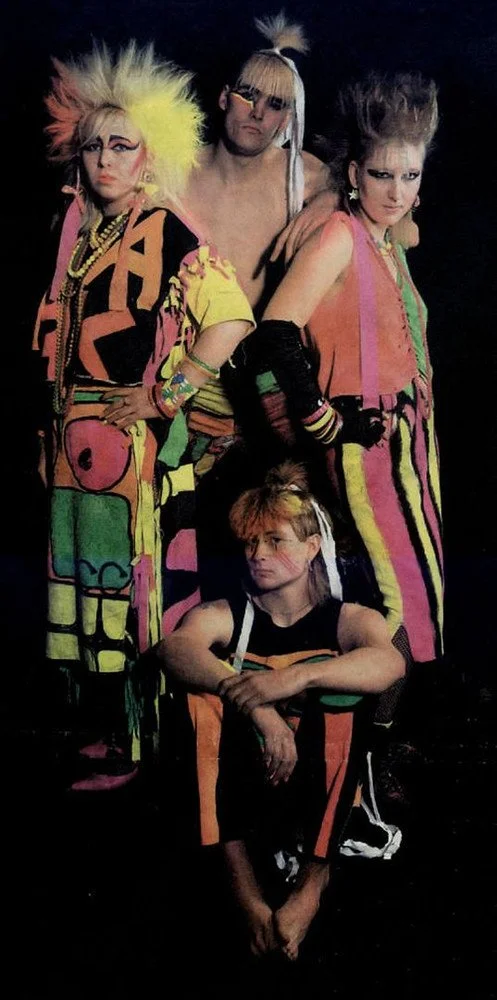
Rubella Ballet, injecting some rare colour into goth
"Slant + Slide" \ Rubella Ballet (1982) – There was a close connection between goth acts and ‘anarcho punk’, a variant that espoused anarchy as a form of protest. The artist collective, Crass, championed the brand and released music via their label. Bands such as Rubella Ballet and The Mob were part of this scene and occasionally played at the Batcave. Goths were not interested in politics, so any overlap with anarcho punk was in the music and mostly in the fashions.
Rubella Ballet was formed in London in 1979 and set themselves apart from the dark uniformity of the anarchos and goths with the use of dayglo fashions. Their music, though, aligned well with goth. As was the case with many anarcho bands, they were a collective of ever-changing members and were founded by members of the bands, Flux of Pink Indians and Fatal Microbes. Their first album was Ballet Bag, a cassette only release that included, “Slant + Slide”, a track quite akin to Siouxsie and the Banshees.
"The Beast" \ Super Heroines (1982) – In the US, the deathrock scene was growing in L.A. Super Heroines was formed in 1981 and was fronted by Eva ‘O’ Ortiz. “The Beast” was from their debut LP, Cry for Help, and revealed their mix of horror and punk. They released a second LP, Souls that Save, in 1983 and eventually broke up in 1988.
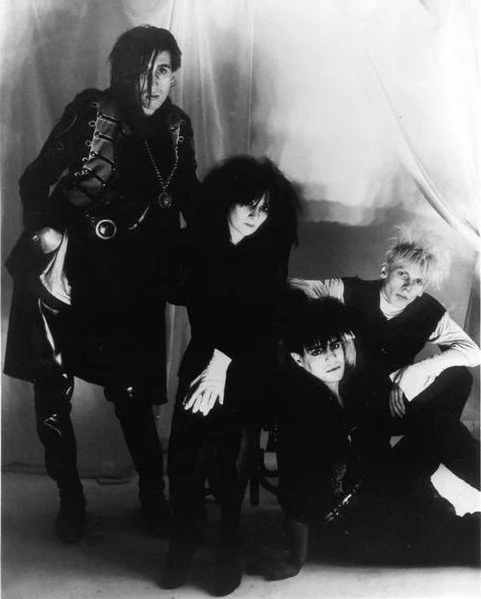
Blood and Roses
"Spit on Your Grave" \ Blood and Roses (Feb 1983) – Blood and Roses were a London band featuring Lisa Kirby on vocals. Their first release was a 1983 EP, Love Under Will, that included the title track along with others featuring goth friendly titles, such as “Spit on Your Grave” and “Necromantra”. An LP, Enough is Never Enough, was released in 1985 under a new line-up. The band was associated with the anarcho-punk scene and the frequent labelling of them as goth appeared to have faced some opposition. Of course, the band themselves would not have applied such a label.
"Ignore the Machine" \ Alien Sex Fiend (Aug 1983) – Not only was Alien Sex Fiend one of the artists that performed at the Batcave, but they also formed at the club. Centred on the couple, Nicholas and Christine Wade – aka Nik Fiend and Mrs. Fiend – the band was an early example of the mix of goth and industrial, leaning on electronics to develop their sound. Inspired by Alice Cooper, they embraced the use of shock and horror in their performances and imagery.
“Ignore the Machine” was their first single, released in August 1983 and which reached the UK indie top ten. It appeared on the debut LP, Who’s Been Sleeping in My Brain, which arrived in November. They are still going and have released over a dozen albums and several of their tracks are stalwarts of the goth genre: “Dead and Buried” (1984), “E.S.T. (Trip to the Moon)” (1984), and my personal favourite, “I Walk the Line” (1986).
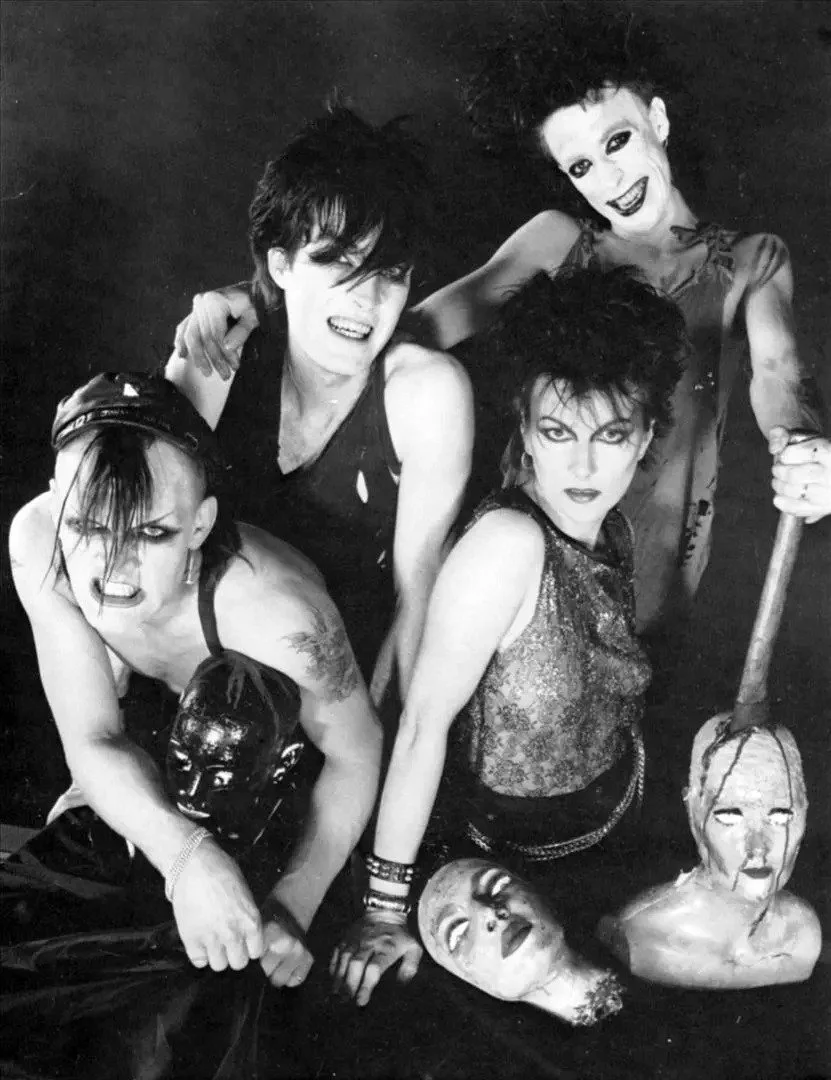
Alien Sex Fiend, led by Nik Fiend (upper right) and Mrs. Fiend (right)
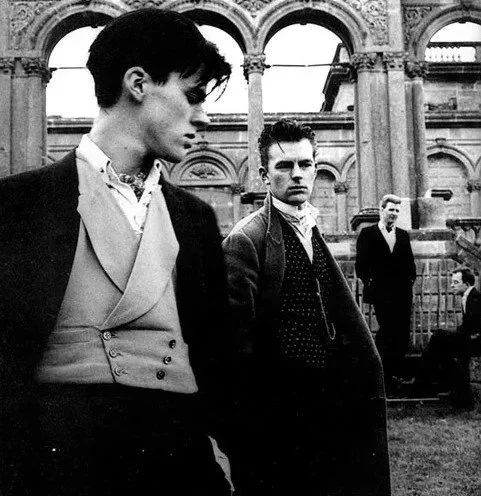
And Also the Trees
"Shantell" \ And Also the Trees (Nov 1983) – Formed in England in 1979, And Also the Trees got their break when The Cure took them under their wing. Formed around two pairs of brothers, Simon and Justin Jones and Graham and Nick Havas, the band released their first single, “Shantell”, in 1983. It, and the ensuing self-titled LP, were produced by Cure guitarist, Lol Tolhurst. Their music was lusher and dreamier than most other goth, reportedly inspired by their English countryside roots. They are still going, having released over twenty albums and EPs, though today only the Jones brothers are still in the line-up.
"The Beauty of Poison" \ Specimen (1983) – Formed in Bristol, England in 1981, the trio of Oliver ‘Olli’ Wisdom, Jon Klein, and Kevin Mills moved to Soho, London in 1982. Olli and Klein notably started the Batcave club night, forever entrenching the idea of goth as a scene and, ultimately, a culture. Mixing glam and post-punk, Specimen were poster boys for the goth scene. They are best known for their first single, “Kiss Kiss Bang Bang”, released in 1983. “Beauty of Poison” was their second single that same year. Their sound had a lighter, more pop-rock sound than most other goth artists. The singles were collected onto an EP, Batastrophe, and additional singles followed but they never released an album. Eventually, their releases were collected onto compilations in the 2000s.
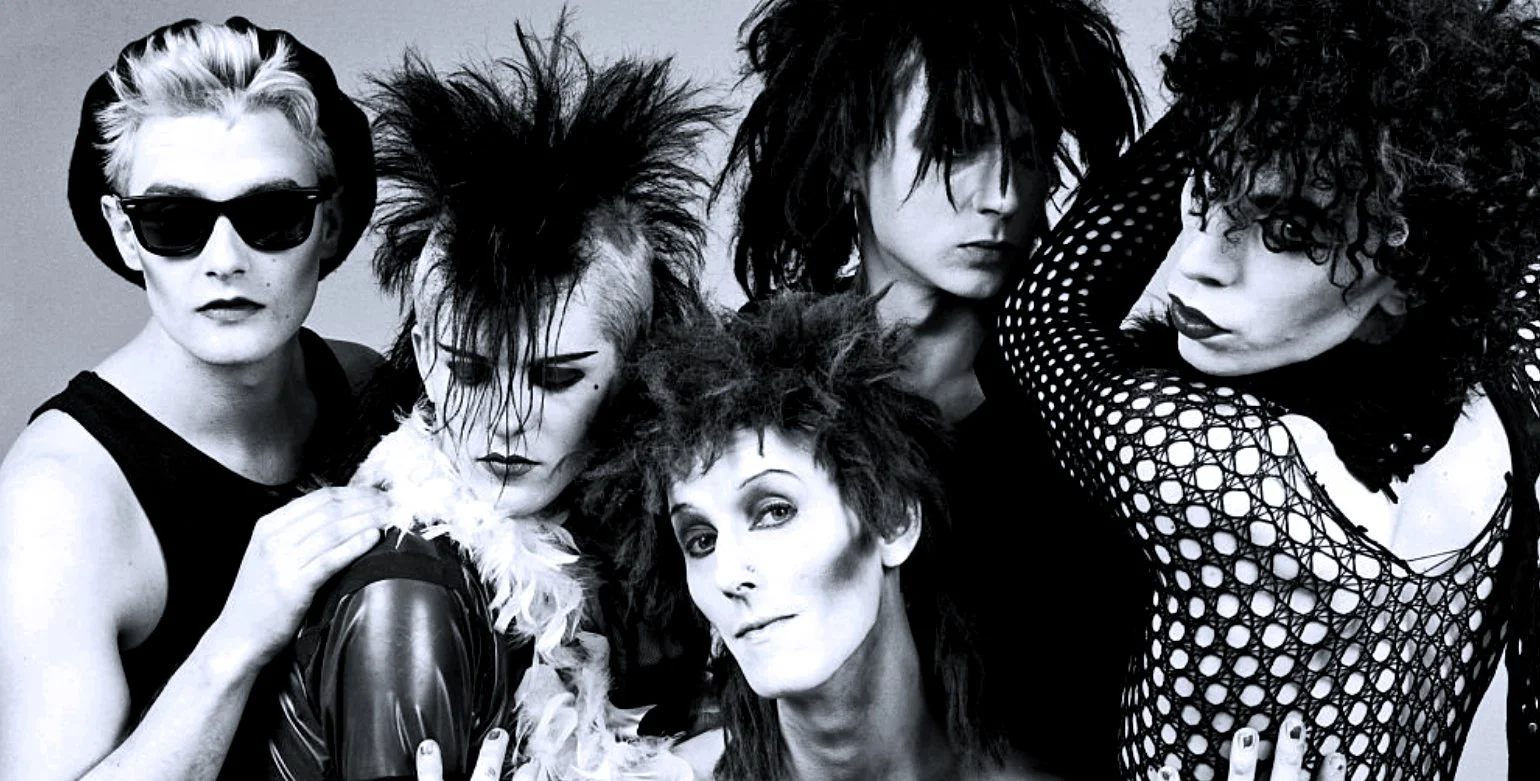
Specimen was the most prototypical goth band in terms of appearance, with a strong relation to classic glam.
“Sexbeat” \ Sexbeat (1983) – Hamish MacDonald was the resident DJ at the Batcave. He also issued some music under the name, Sexbeat, rounding out the line-up with Sophie Chéry, Linzi ‘Light’ Arundale, and Max Edie. Most of their recorded music was of live performances at the club. There are a few collections of Batcave performances that include a variety of artists, released on CD and now available on streaming.
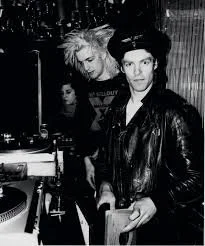
Hamish MacDonald, behind the turntables
“Sexbeat”, the song, did get a studio recording and was eventually remastered and released as a single in 2024. Illuminating his DJ skills, the track was an excellent combination of post-punk and industrial dance beats similar to Alien Sex Fiend. I particularly love the Bauhaus influences with a thick, rolling bassline against crisp drums. The track gained some success on the US west coast, leading to a signing with US label, ABC, and the recording of additional tracks, “Pump” and “Sweat”.
“Girlsoul” \ Salvation (1983) – This Leeds band arose from the same scene as The Sisters of Mercy and The March Violets, also employing electronics. They formed in ’83 and issued their first single, “Girlsoul”, the same year. Salvation was another act that appeared at the Batcave, and after additional singles in ’85 and ’86, released their first album, Diamonds Are Forever, in 1987. A second LP followed in 1990 after signing with I.R.S. Records. They are still going and released another LP in 2014.
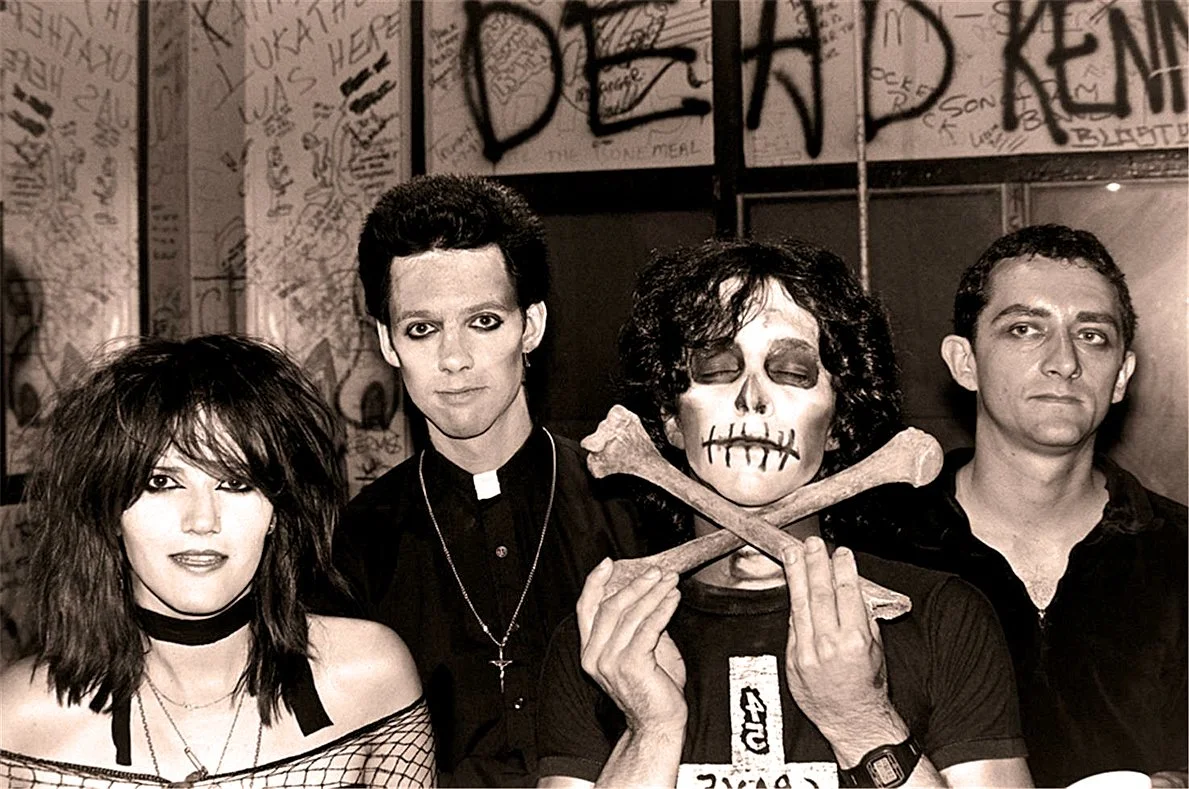
45 Grave, in 1981
"Evil"\ 45 Grave (1983) – This LA deathrock band was formed in 1979 by Paul Cutler. Like Super Heroines, they also had a female front person, Mary Sims, who performed as Dinah Cancer. After their first single, “Black Cross”, in 1981, they issued their first LP, Sleep in Safety, in 1983. The single was “Phantoms” and “Evil” also appeared on the LP. The band’s punk-centred sound was consistent with the west coast style.
"Abysmal Thoughts" \ Clan of Xymox (1983) – This is a Dutch band formed in 1981 and that is still going today, having released over twenty albums and EPs. Another goth act that blended in electronics, they wove their sound between murky post-punk and club friendly dance tracks.
Initially known as Xymox – taken from zymotic, a nineteenth century medical term (how goth of them!) – the band released its debut EP in 1983, Subsequent Pleasures. The standout song was “Muscovite Musquito”, a new wave influenced track, but the tune, “Abysmal Thoughts”, revealed the darker, goth flavoured aspects of their music. After accompanying Dead Can Dance on a tour, they were picked up by 4AD Records, a label we’ll discuss shortly.
Naming their 1985 debut LP, Clan of Xymox, they adopted that name, though have alternated with just, Xymox, for later releases. The singles, “A Day” (1986) and “Obsession” (1989) leaned more fully into a mix of new wave and industrial dance.
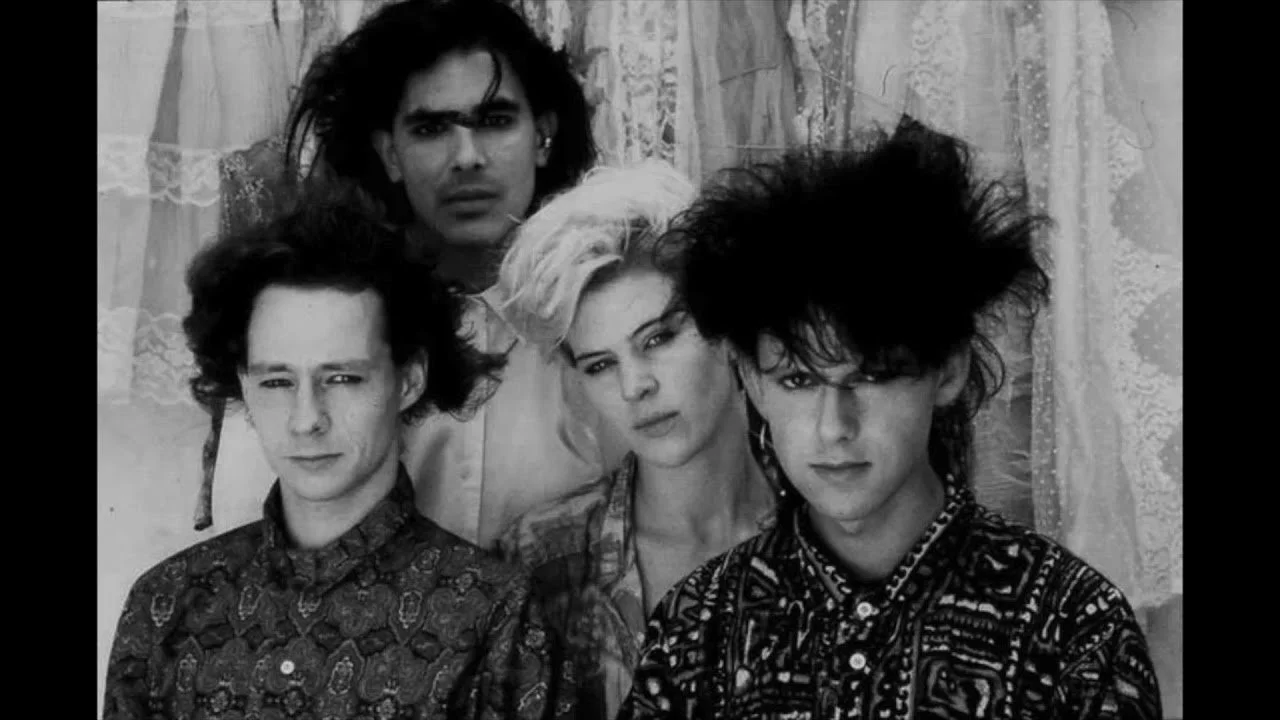
Clan of Xymox
"He's Red" \ Red Lorry Yellow Lorry (1983) – Yet another Leeds act employing a drum machine, Red Lorry Yellow Lorry (or ‘The Lorries’) was formed in 1981. They are an uncomfortable fit with goth, not having adopted the fashion to much degree and themselves eschewing the label. The UK press, however, seemed determined to put them in the goth envelope. Certainly, their sound fit. The band released a series of singles and an EP between 1982 and 1984, which included, “He’s Red”. Their debut LP, Talk About the Weather, arrived in 1985. The Lorries released five albums up to 1992, including a UK indie #1, Paint Your Wagon (1986).
Skeletal Family, performing in ‘83
"The Night" \ Skeletal Family (1983) – Formed in 1982, this band took their name from the David Bowie Diamond Dogs track, “Chant of the Ever Circling Skeletal Family”. Fronted by female vocalist, Anne-Marie Hurst, “Trees” was the first single in 1983 which led to a signing with Red Rhino Records. “The Night” was then issued also in ’83 and was included on the debut LP, Burning Oil, in 1984. Another LP followed in ’85 before Hurst left to form Ghost Dance with Gary Marx from The Sisters of Mercy. Katrina Phillips replaced Hurst and the band issued two more singles before disbanding. Variations of Skeletal Family have reformed in the 2000s.
"The Trial" \ Dead Can Dance (Feb 1984) – Dead Can Dance was formed in Melbourne, Australia in 1981 by Brendan Perry and Lisa Gerrard. Relocating to London in 1982, they signed with 4AD Records and released their self-titled debut LP in 1984. That first album hewed closely to the post-punk formula, but the band’s penchant for echoey, chanting vocals, ethereal compositions, and employment of medieval style sounds and instrumentation were already present. These sounds moved to the fore on their next album, 1985’s Spleen and Ideal. The linkages to goth in the sound seemed reasonable, but as the band grew their audience and built an impressive library of albums over the next thirty years, the goth label was less of a fit. Indeed, Dead Can Dance is a band very hard to categorize.
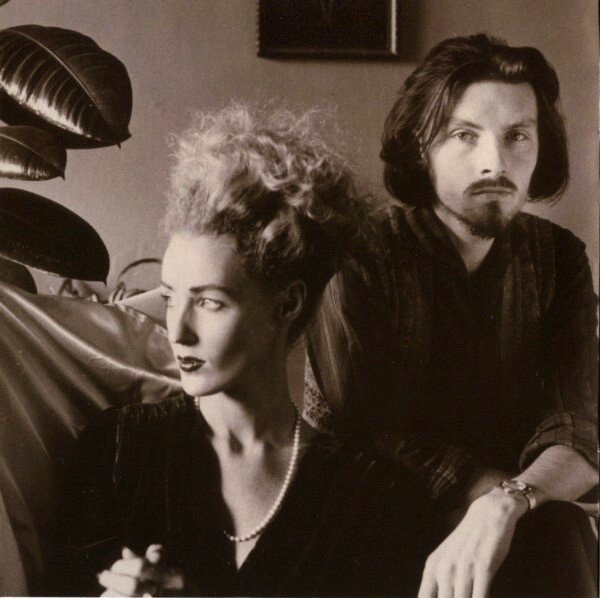
Lisa Gerrard and Brendan Perry of Dead Can Dance
4AD had a roster of bands that similarly correlated to goth in sound, but less so in appearance. While Clan of Xymox, Tones on Tail, Cindytalk, and Xmal Deutschland were comfortable fits, Cocteau Twins, Modern English, Colourbox, and The Wolfgang Press were ostensibly labelled goth at times, though were more purely within the post-punk realm. Usually, their fashions did not lean into goth, though any post-punker wearing black and teasing up their hair could easily be labelled as such, so the lines were murky.
And then there was 4AD’s project, This Mortal Coil, which brought the label’s artists together (including Dead Can Dance) to perform cover songs. The three LPs, It’ll End in Tears (1984), Filigree & Shadow (1986), and Blood (1991) featured many standout tracks that dwelt in the mist-strewn landscapes of goth but which drew on the artists such as Modern English and Cocteau Twins that did not fit the goth label. Therefore, in the interests of purity and a leaner playlist, much of the 4AD roster, including This Mortal Coil, will be left off this playlist.
Given the challenge of ascribing a hard boundary to goth music, many acts will appear on goth lists that you will not find in this retrospective. In my opinion, usually down to their general sense of style and sound, I did not feel they as purely fit. But to satisfy any curiosity, here is a list of bands considered and ultimately set aside:
All About Eve
Kate Bush
The Chameleons
Cocteau Twins
Coil
Depeche Mode
The Gun Club
Japan
Kino
Kommunity FK
Legendary Pink Dots
Modern English
The Nuns
Piknik
Public Image Ltd
Shriekback
Skinny Puppy
Suicide
This Mortal Coil
TSOL
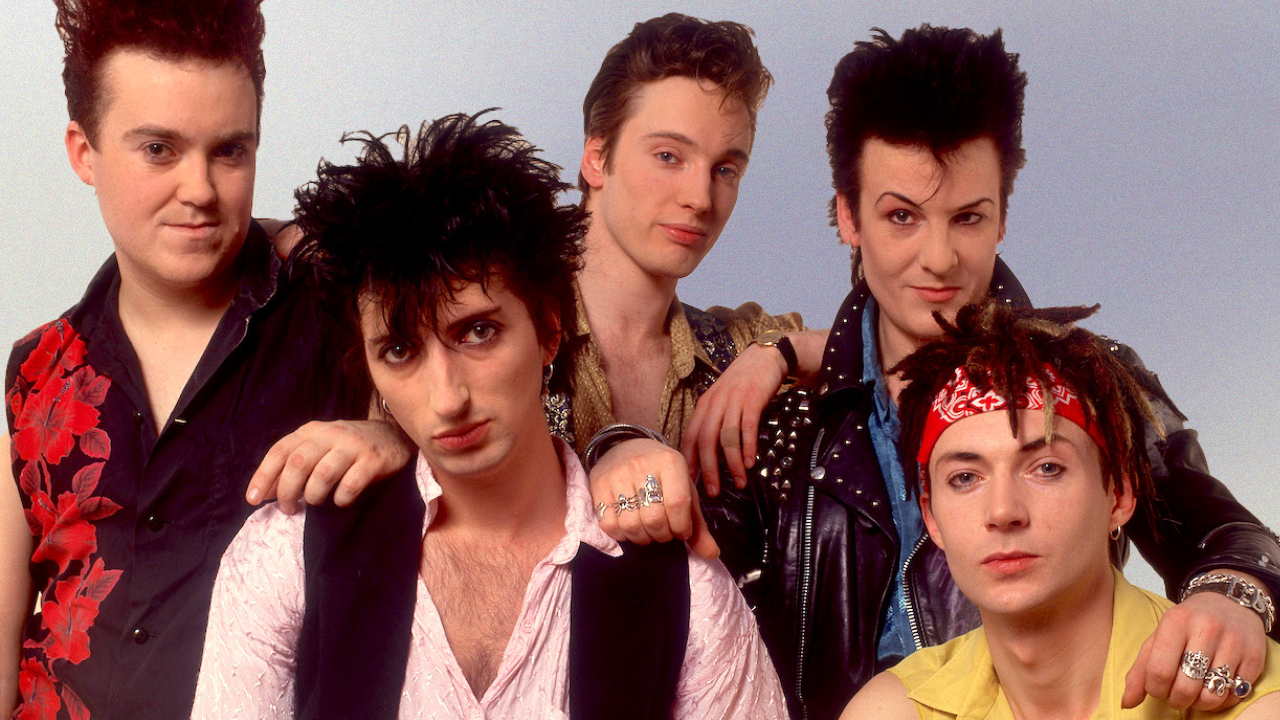
Flesh for Lulu
"Subterraneans" \ Flesh for Lulu (May 1984) - Another band from the Batcave was Flesh for Lulu, the name of which was derived from the 1973 film, Flesh for Frankenstein (which in North America was known as Andy Warhol’s Frankenstein), They adjusted their name inspired by James Mitchell’s roommate at the time, Lulu. Mitchell, transplanted to Brixton, London from Scotland, joined with Nick Marsh to form the band in 1982. Rocco Barker and Glen Bishop soon filled out the line-up as they signed to Polydor and released their first single in November 1983, “Roman Candle.”
The self-titled debut LP was released in 1984. “Subterraneans” was the second single and revealed a snarling, punkier version of the band than would be heard later. Flesh for Lulu did not garner much attention over their four ‘80s LPs as they evolved into more of a pop sound. There was some minor success in North America thanks to their single, “I Go Crazy,” which appeared in the 1987 film, Some Kind of Wonderful.
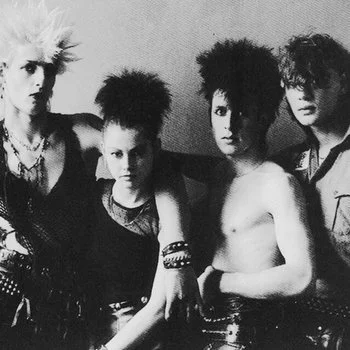
Ausgang
"This Lady is for Burning" \ Ausgang (1984) – Arising out of members of the bands, Kabuki and Solicitors, Ausgang (‘exit’ in German) came together in Birmingham, England in 1983. The Teachings of Web was their debut EP in 1984, on which “This Lady is for Burning” appeared. Angular and anguished, the song tracked well to their goth style. Another EP in ’84, Head On!, was produced by Andi Sex Gang. Only one LP was released, 1985’s Manipulate, and the band changed their name to Ausgang-a-Go-Go for the 1987 mini-LP, Los Descamisados, as they tried to shake their goth image.
"It's Luxury" \ Cindytalk (1984) – Cindytalk was a band from Edinburgh, Scotland. Fronted by Cindy Sharp, (known as Gordon Sharp at the time and subsequently as Cinder in the 2000s), the band was formed in 1982 along with David Clancy, a former bandmate in the punk act, The Freeze. Moving to London, they brought John Byrne into the line-up. Sharp gained attention after providing vocals on three tracks from the debut album by This Mortal Coil, though Cindytalk was not a 4AD act.
Signing with Midnight Music, they released the debut LP, Camouflage Heart, in 1984. Mick Harvey from The Birthday Party also played on the LP. “It’s Luxury” was the opening track, a mix of caustic noise underpinning sparse, echoey guitars and vocals. Clancy left the band and was replaced by the siblings, Alex and Debbie Wright. Further line-up changes followed as Sharp and Byrne were the mainstays. Cindytalk has released over a dozen LPs as of 2022, with the sound moving through experimental and expansive transitions from the post-punk origins.
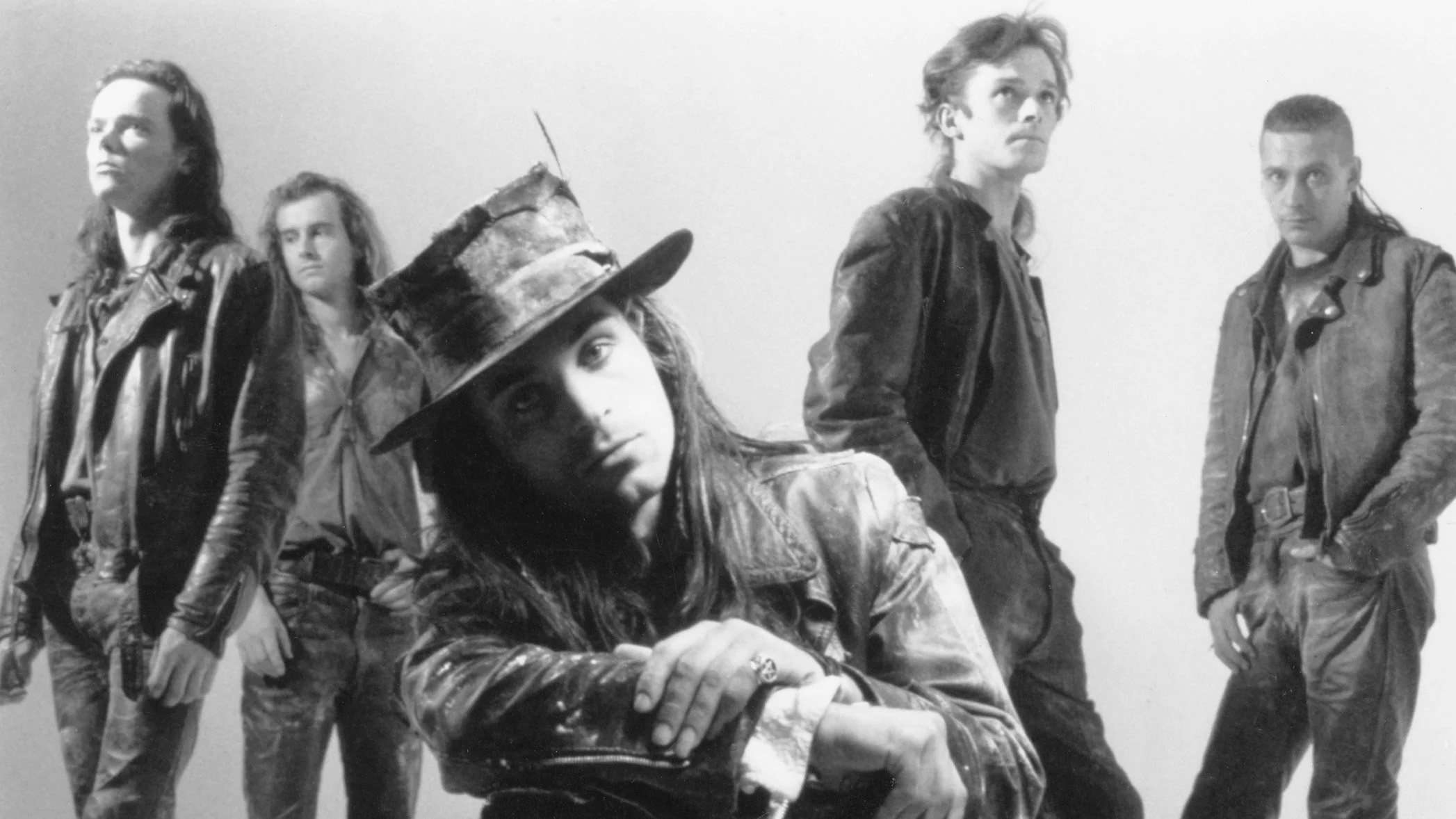
Fields of the Nephilim
"Laura" \ Fields of the Nephilim (Jun 1985) – Hailing from Stevenage, England and choosing their name from a biblical race of hybrid angels and humans, Fields of the Nephilim was quintessentially goth. Formed in 1984, their debut release was a 1985 EP, Burning the Fields. “Laura” displayed the band’s propulsive energy and post-punk moodiness. The EP reached #2 on the UK indie chart. Another EP, Returning to Gehenna, followed in 1986 and led to the debut LP, Dawnrazor, in 1987, which scored them a UK indie #1. The follow-up, The Nephilim, was an indie #2 but also a UK top twenty LP, making the band a rare goth breakthrough. Singles such as, “Blue Water” and “Moonchild” propelled that success, also both UK indie #1s. The band split in 1991 after their fourth LP but reunited in the 2000s to release two more albums. Vocalist, Carl McCoy, has been the only constant member since the band’s founding.
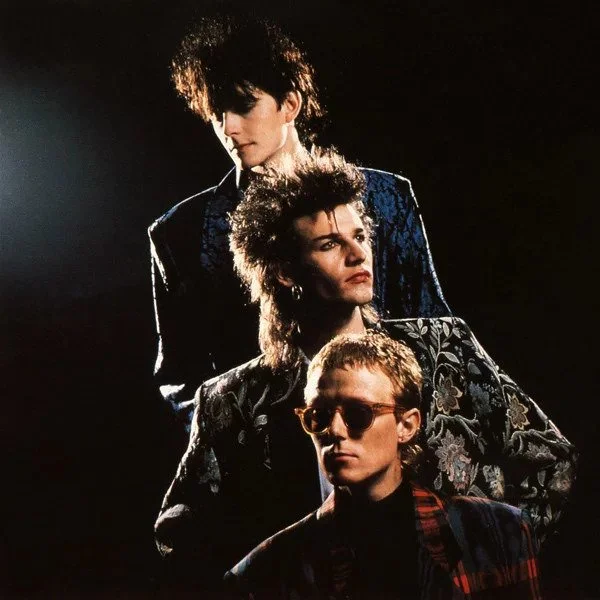
Love and Rockets, from top to bottom: Kevin Haskins, Daniel Ash, and David J
"Haunted When the Minutes Drag" \ Love & Rockets (Oct 1985) – As Daniel Ash and Kevin Haskins moved from Bauhaus to Tones and Tail and then to Love and Rockets, in which they were reunited with Bauhaus bassist, David J, their sound moved to a more accessible variant of their post-punk experimentalism. After debuting with their goth take on The Temptations funk classic, “Ball of Confusion”, they issued their excellent first LP in 1985, Seventh Dream of Teenage Heaven, an album filled with several post-punk classics: “If There’s A Heaven Above”, “The Dog-End of a Day Gone By”, and “Haunted When the Minutes Drag”. It was the start of a heady run of LPs, Express (1986), Earth, Sun, Moon (1987), and Love and Rockets (1989) that made Love and Rockets the leading act out of the goth world. Their success culminated in the single, “So Alive” (1989), that reached the US top ten, an incredibly rare feat for a goth band. Not surprisingly, that feat likely was enabled by the song being about as accessible and pop styled as goth could get.
"Everyday is Halloween" \ Ministry (1985) – Al Jourgensen, and his band, Ministry, was formed in Chicago in 1981. The first album, With Sympathy (1983), was synth-pop, though “Cold Life”, the B-side to their first single, showed an aptitude for dark wave. As the band evolved towards an electro-industrial-metal sound, they issued a trio of non-album singles in 1985 that straddled the line between new wave, goth, and industrial-dance. The first two were “All Day” and “Nature of Love”.
The third ’85 single was “Everyday is Halloween.” It was a hit in clubs and has become a goth anthem of celebration, revolt, and acceptance: “Well, I live with snakes and lizards / And other things that go bump in the night / 'Cause to me every day is Halloween / I have given up hiding and started to fight.” And, “Oh, why can't I live a life for me? / Why should I take the abuse that's served? / Why can't they see they're just like me? / It's the same, it's the same in the whole wide world.”
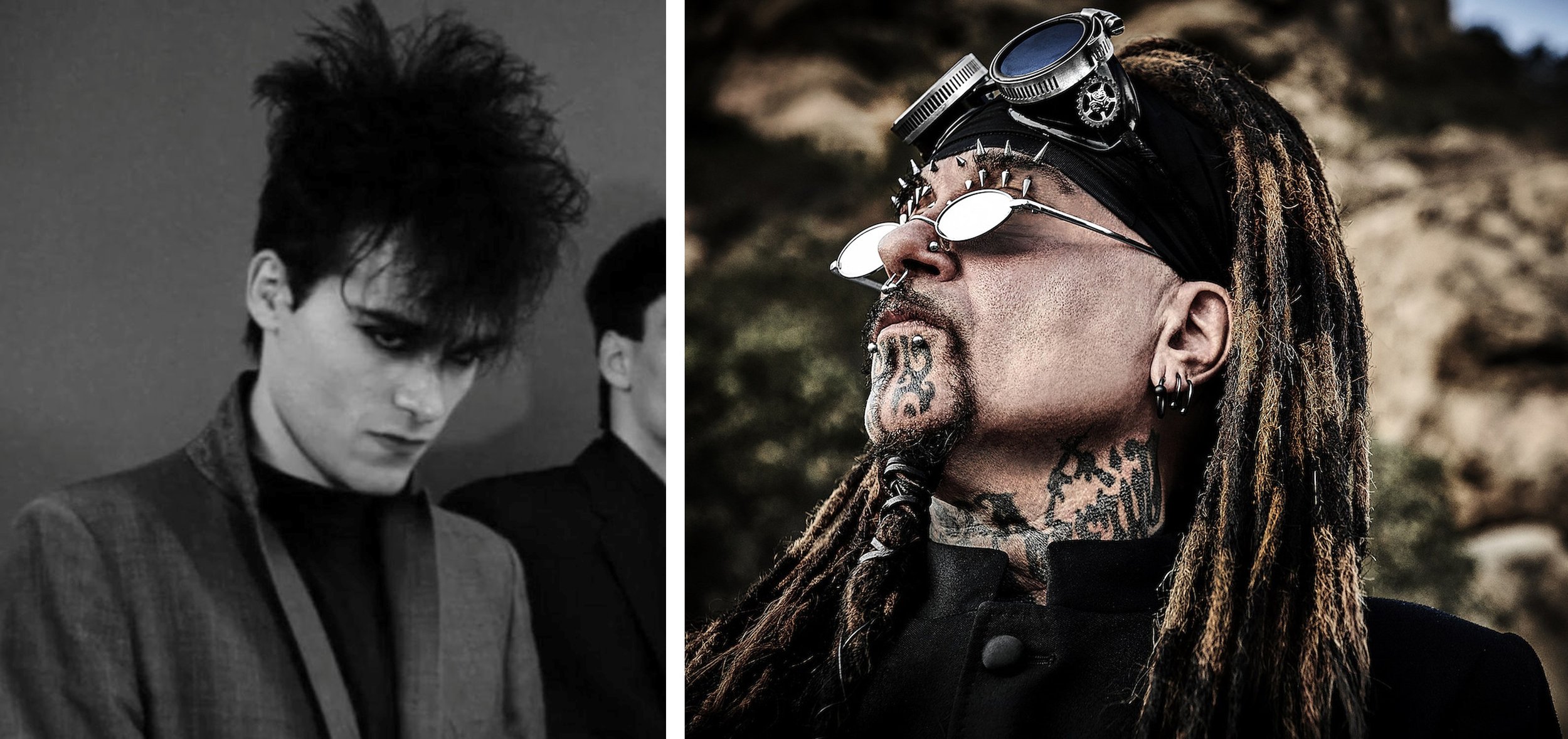
Al Jourgensen, like his music, has evolved his appearance from a youthful new waver (left, in the early ‘80s ) to a more goth adjacent, industrial-metal look (right, in more recent times)
Ministry’s next LP, Twitch (1986), further explored a mix of industrial-dance that featured the excellent, “Over the Shoulder”. The 1988 follow-up, The Land of Rape and Honey (1988), witnessed the band’s move into industrial-metal, to which they became a leading act. Al Jourgensen has remained a thoroughly enigmatic and menacing presence out front, less goth than a post-apocalyptic-demonic-rasta-cowboy.
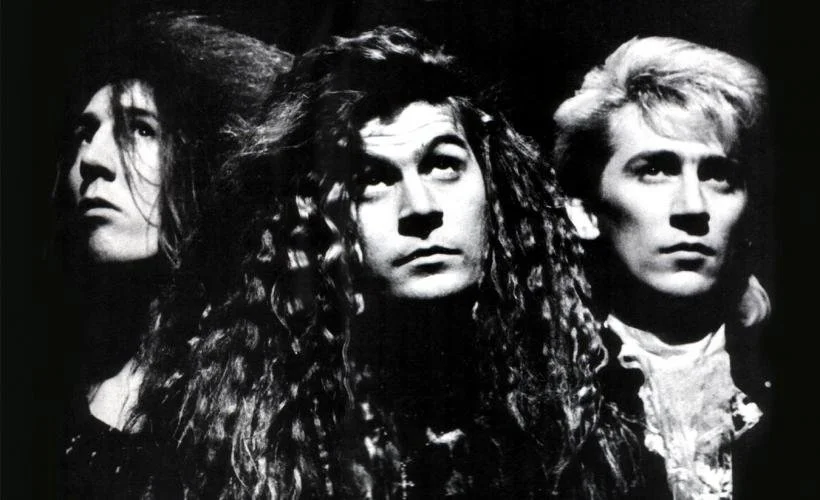
Balaam and the Angel
"Two into One" \ Balaam and the Angel (Mar 1986) – Though raised in Motherwell, Scotland, the brothers, Mark, Jim, and Des Morris formed Balaam and the Angel in 1984 in Cannock, England. Leveraging their cabaret background, they leaned into the dramatic soundscapes of dark wave, issuing a trio of EPs, World of Light (1984), Love Me (1985), and Day and Night (1985) – compiled into an album in 1986, Sun Family. The LP release, The Greatest Story Ever Told, came out in 1986 and was accompanied by a single, “She Knows”, that included three additional non-album tracks. “Two into One” was one of those tracks and was the best example of the band’s darker version of their pop and post-punk mix. Not surprisingly, they shifted to a less goth sound in later releases.
“Serpent’s Kiss” \ The Mission (May 1986) – Let’s close this list with another electro-goth act from Leeds that not only came out of the scene that gave us The Sisters of Mercy, Red Lorry Yellow Lorry, and The March Violets, but was built from members of those bands. Wayne Hussey and Craig Adams (both of Sisters of Mercy) joined with Mick Brown (the Lorries), and Simon Hinkler, first calling themselves Sisterhood before changing it to The Mission (in North America, the ‘UK’ suffix had to be added to avoid conflict with another act of the same name).
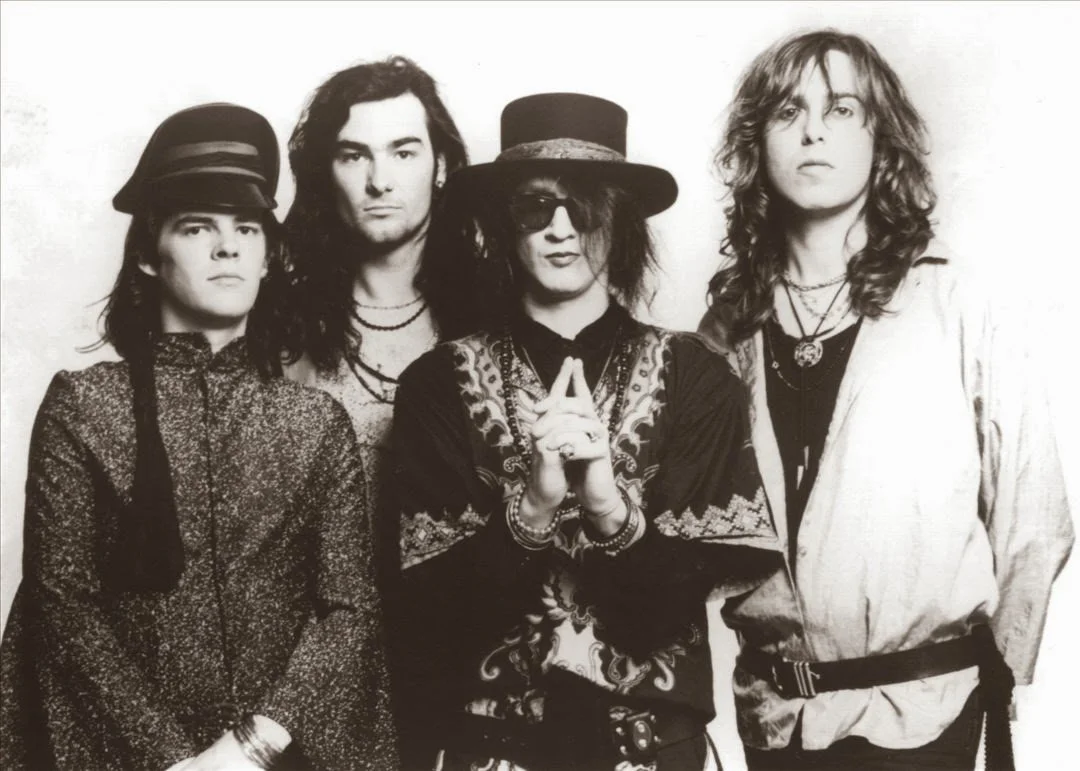
The Mission
They did not use a drum machine and built a lighter, more expansive and expressive sound than their counterparts. Their first single was, “Serpent’s Kiss”, released in 1986. After another single, their first album, God’s Own Medicine, was issued in late ’86 which reached the UK top twenty. The next two albums reached the UK top ten, making The Mission one of the more successful acts out of the goth scene. They provided several notable tracks to the goth library: “Wasteland” (1987), “Severina” (1987), “Tower of Strength” (1988), “Butterfly on a Wheel” (1990), and “Deliverance” (1990).
The Mission’s lighter, more epic style made them pariahs for many hardcore goths, as the music didn’t offer the appropriate level of gloom. However, they often appear on lists of top goth bands and built a sizeable, loyal following of fans both within and outside the goth realm.
The late 1980s saw alternative music shift away from new wave and post-punk into harder sounds. It was a change many of the acts on this list also pursued, most notably The Cult and Ministry. However, many also broke through to some of their greatest success in that time as North America finally embraced new wave and post-punk. The Cure, Siouxsie and the Banshees, Love and Rockets, The Damned, and The Mission all enjoyed more international success in the back half of the ‘80s and early ‘90s.
Goth acts, however, were rarely commercially successful, especially those with a look and sound imbued in the deepest corners of the genre. But wasn’t that the point? The imagery and music were, by intent, in opposition to conventional tastes. As Ministry sang, the make-up, clothing, hair, and music were not just for show, they were representations of the alienation goths felt towards society. The fashions and music revelled in morbidity, horror, and the romantic themes of gothic literature. While the music was largely indistinguishable from much of the rest of post-punk and early industrial, it was the dark textures of the sound combined with the glammed up, theatrical stylings of the artists that made it its own.
Goths didn’t just create a genre of music; they established a culture that grew much larger than the music world. It is a global phenomenon that has persisted through successive generations. Every school has had that goth kid lurking in the hallways – ironically, but somewhat fittingly, often in the suburbs. Ally Sheedy’s odd, black-garbed, and misanthropic character in the 1985 film, The Breakfast Club, was representative of the stereotype, which made her colourful makeover at the end of the film an unforgiveable betrayal of the goth ethos.
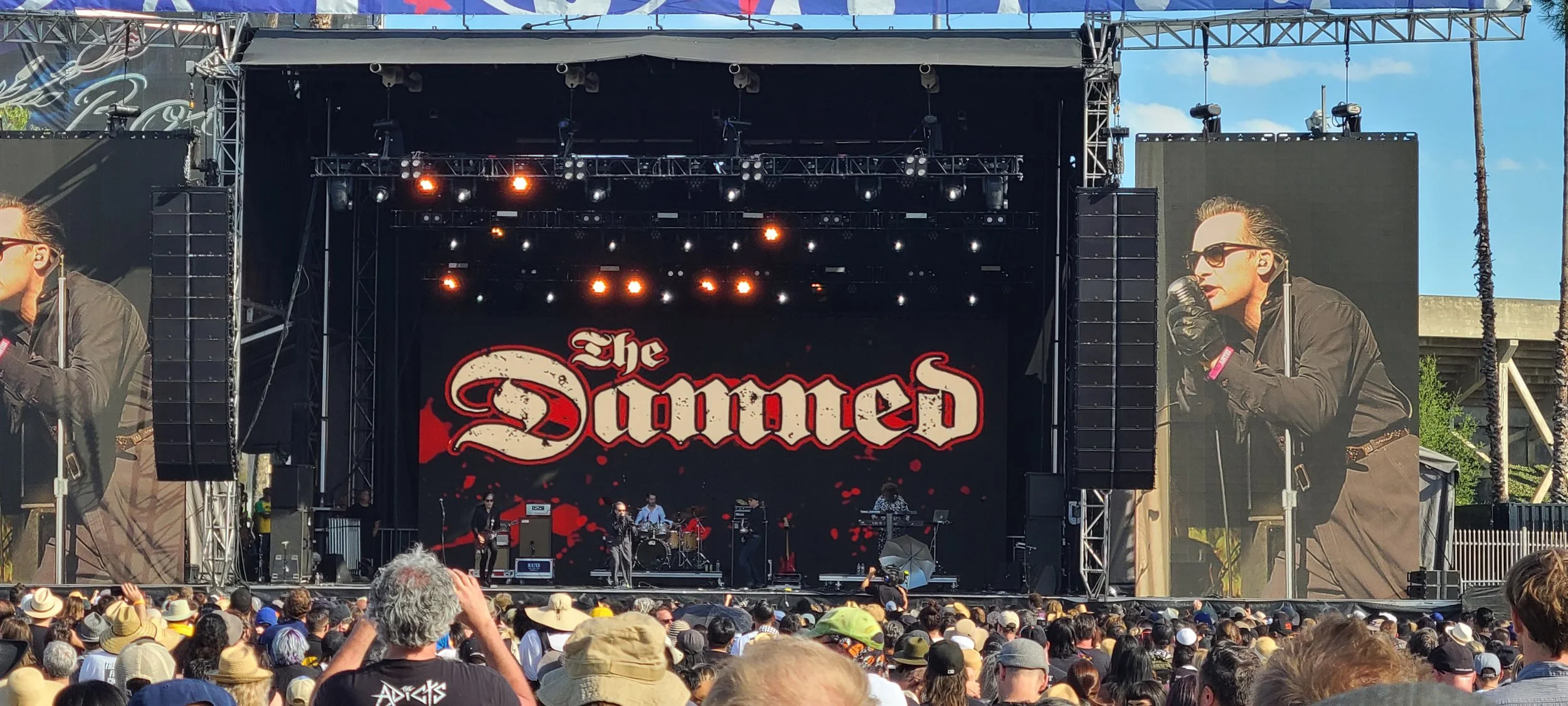
My pic of Dave Vanian and The Damned performing at the Cruel World festival in 2022
In 2022, I attended the first Cruel World festival in Pasadena. It had a fantastic line-up and was a celebration of goth, even if it was a bit amusing to see all that pale skin and black lipstick under the blaring California sun – but at least many had black lace parasols! The festival was testament to the enduring and widespread appreciation for goth.
Indeed, there is a legion of bands – new and old – keeping the genre alive. The sounds have evolved and are generally more electronic for contemporary goth bands, often referred to as dark wave or cold wave. I don’t see goth going away any time soon. There will always be a need for artists and fans alike to dwell within the doom and gloom of our world, using music as that critical expression of release.
Should you wish to explore later goth music, here is a sampling of notable goth bands that came after the period of this retrospective:
All Living Fear
ASP
Cranes
Drab Majesty
Dream Disciples
Feeding Fingers
Human Drama
Ikon
Inkubus Sukkubus
Lebanon Hanover
Libitina
Miranda Sex Garden
Nosferatu
Rosetta Stone
Suspiria
The Awakening
The Wake
Type O-Negative