
21st Century Music: Sjowgren
21st Century Music are playlists and profiles that focus on artists that have released their music since 2000. These highlight new(er) acts that continue the sound and spirit of the older acts that are the focus of Ceremony. Click on the streaming service of your choice below to listen to the playlist as you read along.


Sjowgren (show-grin) is a catchy, modern sounding pop band which has achieved reasonable success while remaining relatively obscure. If that seems contradictory and counterintuitive, that is also reflective of the modern music world. This band’s career offers an opportunity to not just reflect on them and their music, but to examine them against modern music as a form and a business. Therefore, let’s first review some relevant details on distribution, discovery, and genre.
Music Distribution
The modern music world is different in many ways, such that the way music is distributed, released, and promoted are very different than the traditional approaches that prevailed for many decades. Debates rage both about whether these changes have been better or not – for listeners and artists alike - and how acts should respond. Regardless, the following realities exist and everyone has to navigate these dynamics.
First, the audience is more varied in composition and tastes than ever before, such that there is no dominant genre. Everything is niche, even if some are rather large.
Second, the dominance of streaming services to access music has changed how it is consumed, providing a volume and variety unparalleled to any time in history. Not only are thousands of new songs and artists coming online every day, but they also compete alongside nearly the entire history of recorded music. This makes getting discovered very challenging for new artists.
Third, the ability for listeners to organize and randomize how they consume music has challenged the commercial and artistic value of the album. Since the focus is on songs, and users can easily skip any one they don’t like, the value of the album, if not as an artistic concept, but certainly as a manner of delivery, is undermined.
Finally, in the era of social media, ubiquitous content, and a lightning-fast media cycle, the ability of artists to sustain the attention of an audience is hampered if music is only released every few years. Why wait until many songs are ready to be packaged into an album? Why not release songs as they are finished? Shouldn’t every song be a single? And if so, every song should be worthy of that status.
Succeeding against these underlying forces requires a modern approach to an artistic career, from musical development, to release, to audience engagement and promotion.

The image used by Sjowgren for their Spotify page and social media
Discovering new music
Younger generations who have grown up in the age of streaming likely don’t appreciate how easy it is to discover new music. Once, we relied on DJs, magazines, recommendations from friends or that slightly intense guy in the record store.
Today, fire up a streaming service and play something you like, and get fed a never-ending list of similar music. Or turn to packaged playlists structured around genres. For finding new music, it’s fantastic. But such ease and volume blurs the music, commoditizing it such that the songs and artists become secondary. It’s hard for songs and artists to grab your attention. A unique sound helps, though.
What is pop music?
Pop music, as a name and genre, arose to identify what is popular. While the types of music that have prevailed have shifted from one era to another, there have been consistent enough aspects to consider the idea of ‘pop’ as a musical format itself. Given the music covered at Ceremony is rarely popular, at least not usually to chart topping status, I prefer to refer to pop as a structure. This provides a more foundational use of the term than having to consider which genre is in vogue at any given point, especially when none is foremost.
What is pop music, then, as a style? It is short in duration, usually four minutes or less. It is melodic and catchy, making it accessible. This means it has a pleasing sound and does not challenge or alienate the ear and mind. In short, it is a format that engenders popularity. This format has sustained from the arrival of rock music in the 1950s and has prevailed through every era of music since.
Within this structure there can be a high degree of sound variability. And of course, only so much music can break through to commercial success and widespread awareness, so a lot of pop structured music is not popular, setting aside other factors, such as quality.
I explore this context because I love pop music, despite rarely sharing an interest in what has been popular. For me, the sweet spot is when acts utilize the pop format while integrating more interesting and intriguing elements that set it apart. Of course, this often leads to less popularity. In contemporary times, however, taking a pop adjacent approach can create interest while helping to stand out.
Who is Sjowgren?
So, what does music distribution, discoverability, and pop classification have to do with Sjowgren?
Well, in a career now more than a decade old, they have never released an album, just two EPs and now twenty-one singles and counting. I discovered them via a streamer recommendation, which is how everyone has discovered them. Sjowgren has not issued physical music (until recently), played live shows, or done traditional media (with one exception). And they are a pop band, with a sound perfectly in the groove of catchy, melodic, accessible music, but with a little something that sets it apart.
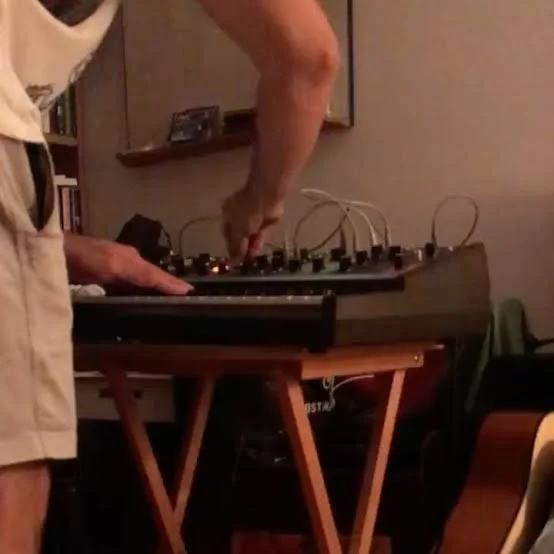
A typical still from a Sjowgren Instagram\Facebook Reel, showing a person but not their face
Any perfunctory search of Sjowgren reveals a focus more on their anonymity than their music. So, let’s get that out of the way. As noted, they don’t tour or do media. But, over the past year details have come to light that allow us to sketch out who they are and where they’ve come from. This is mostly down to them doing a rare interview for the Hyperfixed Podcast in February 2026. The podcast chased them down via their label, Cutcraft Music Group, after a fan of the band asked them to find out more about them.
Sjowgren is the trio of Maija Sjowgren (vocals), Sam Ahrendt (drums, keys, guitar, bass), and Don Steele (guitar, programming, production). While the podcast only offered their first names, a Reddit post mentioned their full names, taken from a 2017 interview for 1063 Radio Lafeyette (the interview is no longer online). Their full names are also listed in Muso, the music industry’s version of IMDB. We can also assume Maija is of Scandinavian background (Sjögren is a common surname in Sweden and Finland, while Maija is a traditional Finnish name as a variant on Maria), but otherwise the band has no affiliation with that part of the world.
Maija, Sam, and Don knew each other in high school in Fremont, California, just north of San Jose and on the west side of San Francisco Bay. Sam and Don were in bands together, eventually going to Los Angeles to pursue a career writing and producing music. Maija was a singer and songwriter, who went to Nashville in pursuit of work. Neither found much success, and when Maija returned to California, a mutual friend reconnected her with Don and Sam. She sent them voice memos of her singing, and they became interested in working with her.
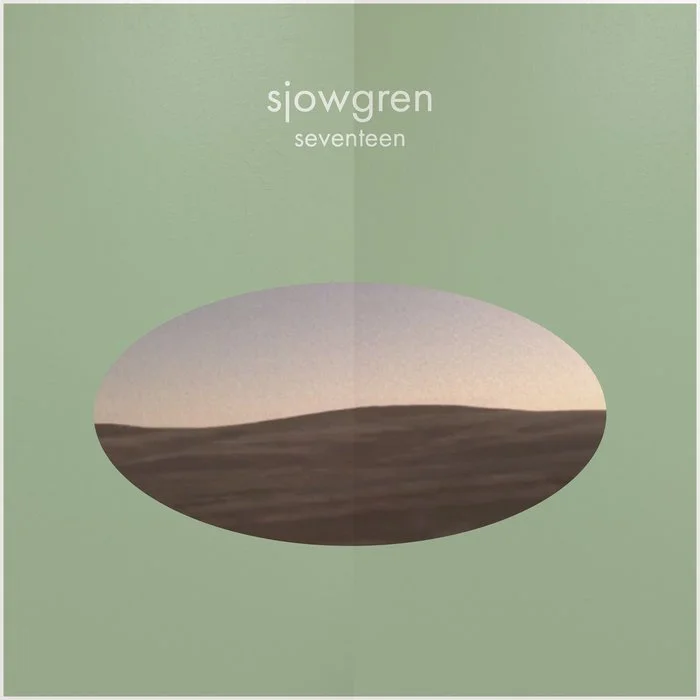
The trio started as an experiment to see if anything was there. None had designs on becoming a band, but they recorded some demo songs and put them on Soundcloud and sent them around to music blogs to see if there was any interest. The feedback was encouraging enough that they recorded a proper single, “Seventeen”, and released it on Spotify. It took off, getting picked up on Spotify's New Music Friday playlist in July 2015. It went on to be played on radio stations nationally, in an Auto-Trader commercial, and be included in TV shows (e.g. Younger) and a movie. The song has over 126 million streams on Spotify, by far their most played track.
Naturally, media came calling, looking for interviews and pictures. Labels wanted to sign and promote them. The trio was unprepared and overwhelmed, not yet decided if they were even a proper band. They weren’t comfortable with the idea of doing shows, feeling their complex, computer-driven compositions weren’t easy to replicate live or would be audience friendly if too canned. I also suspect none of them were interested in getting on a stage in front of people. Their reticence towards the usual game of artist development and promotion led to them going the other way and remaining inaccessible – except for their music – which in the end was all they needed.
As I noted, I’m a sucker for pop music with a distinct flavour, a thing that separates it from the ocean of standard fare. Sjowgren is the consummate example this. They may be a bit too much pop for me at times but are usually idiosyncratic enough to please my desire for the element of surprise and interest. Much of their music draws from my favourite styles, from ‘80s new wave to ‘90s alt-rock to tantalizing dashes of shoegaze\dream pop.
The 2015 EP of demos had songs that were very organic, with Maija’s vocals belying her Nashville days with a country-blues lilt over light guitar and subtle synth backgrounds. “Seventeen” opened them into a polished, fuller sound with driving beats, layered vocals, and an electro-pop foundation that made the music modern and catchy.
This began a string of singles, with four in 2017 and two more in 2018 before a four-song EP, win’20, in 2020. Since then, there have been only singles, all released digitally. In 2025, they did their first collaboration on the song, “Cool Over Kind”, with Los Angeles singer, Charlie Havenick.

The album cover for Singles Collection 2015-2021
Sjowgren has not felt their approach lent itself to vinyl release, but the desire to offer it along with the demand for it (which led to their Hyperfixed interview) has finally seen it arrive. Their bandcamp page (which also lists their first names) has a pink vinyl single for “Human Condition” (2021) and an album, Singles Collection 2015-2021, available for order.
The songs, “Now & Then”, “High Beam”, “I Don’t Know”, and “Change” have been regulars in my playlists for years, making Sjowgren one of the more notable acts I’ve latched onto over the past decade. I’ve been especially taken with their newer singles, especially “lavender & grey”.
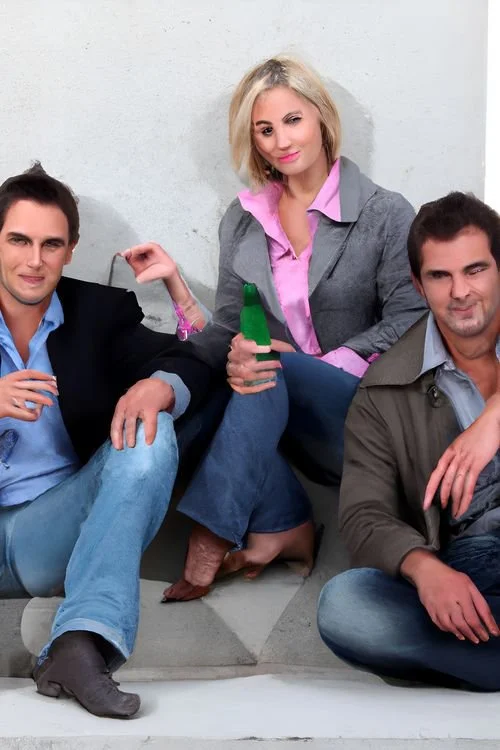
The band’s AI styled profile picture at Cutcraft
The band’s anonymity has counterintuitively added to their allure and success. Sjowgren’s Instagram feed shows people but never their faces. Their mysteriousness has also invited suspicion they are an AI act, despite their discography extending well back to the pre-AI era. Their profile at Cutcraft has an AI styled, distorted picture of a trio. Is it them? We don’t know. And for a time, there were persistent rumours they were a secret project of the band, Bad Bad Hats, due to them being contemporary indie acts and both playfully teasing the idea via social media.
Sjowgren has exemplified the modern ways in which acts must cut through to succeed, with a wonderfully accessible, engaging, and hypnotizing brand of pop music, a vague and intriguing profile, a DIY approach, and a purely digital and frequent distribution of songs that have utilized the modern benefits of streaming services.
One wonders how much bigger they would be if they showed their faces and toured? I don’t think that would work for an act that never planned to be and seems to revel in the protection of obscurity and home-style composition and production. Sjowgren is truly a 21st Century artist, and worth your attention all the same.
The Playlist
“Mend” \ Demos EP (2015)
“Seventeen” (2015)
“Now & Then” (2017)
“High Beam” (2017)
“Dreams” \ win’20 EP (2020)
“I Don’t Know” (2020)
“Change” (2021)
“Human Condition” (2021)
“newrules” (2023)
“twenty” (2024)
“Cool Over Kind” (2025)
“lavender & grey” (2026)
“baritone” (2026)