


The Hardest Walk: A Retrospective of Jesus and Mary Chain
Click below on the streaming service of your choice to listen to the playlist as your read along.


In early 1986, on a dark and cold winter evening, I was at the Northern District Library in Toronto. In typical teenage fashion, instead of researching my school paper, I discovered that not only did the library have music albums to borrow, but the small collection also included some surprising and eclectic choices. In the bin was Psychocandy by Jesus and Mary Chain. I had probably heard the band on CFNY, Toronto’s alternative radio station, but only knew the intriguing band name more than the music. So, I checked the record out of the library, took it home, and listened to it for a week, and thus was properly introduced to the Jesus and Mary Chain.
The Playlist
“Upside Down”
“Just Like Honey”
“The Hardest Walk”
“Taste of Cindy”
“Never Understand”
“Some Candy Talking”
“Happy When It Rains”
“April Skies”
“Sidewalking”
“Here Comes Alice”
“Between Planets”
“Head On”
“Half Way to Crazy”
“Reverance”
“Far Gone and Out”
“Sugar Ray”
“Good for My Soul”
“Snakedriver”
“Sometimes Always”
“I Hate Rock and Roll”
“Perfume”
“Commercial”
“Amputation”
“All Things Pass”
“The Two of Us”
“Mediterranean X Film”
“Discotheque”
“Silver Strings”
1983 to 1985 were the peak years of the new wave era and I was deeply immersed in that sound. Psychocandy was, therefore, a new and different vibe. Dark and distant vocals delivered catchy melodies over fuzzy tones laid on mossy beds of feedback. Sharp guitars hit the ear likes shards of glass and songs ranged from exhausting sprints to reflective ballads. Not one song sounded like anything I had heard before, and while I think I liked it, I returned the album to the library unconvinced whether I was a fan. Needless to say, over time, and once my sonic palate expanded to embrace more aggressive and experimental music, I came around to enjoy and appreciate Psychocandy as a landmark release of the 1980s.
In the annals of modern rock, Jesus and Mary Chain holds an esteemed place. Like most modern rock artists, their success was mostly limited to their native UK, but their influence was outsized, and they have been one of the few artists of the 1980s to sustain to modern times. Their distinct sound helped launch shoegaze and industrial rock while driving solidly down the middle lane of modern rock with a mix of beats, layered guitar, and gauzy vocals.
“Upside Down” \ non-album single (1984)
William and Jim Reid were born in Glasgow in 1958 and 1961, respectively. By their early twenties, the brothers were broke in East Kilbride, a community south of the city. Attempts to follow the working class life choices of their families and friends proved dispiriting, and they sought a different path. After separately pursuing to start bands, they decided it wouldn’t be such a bad idea to try it together.
After a few aborted names, one of which was Daisy Chain, they settled on Jesus and Mary Chain. Its origin was uncertain as the brothers long offered fictional stories about being lifted from a Bing Crosby film or a cereal box advert, before eventually admitting it was just something they liked, chosen from random word selection. They adopted a decidedly anti-new wave look of black leather outfits and dark glasses, so a name that seemed to mix religion and industrialism must have been appealing.
Both shy and socially awkward, the siblings were reluctant to play the front man, so a coin toss won by William resulted in Jim becoming the vocalist. He grew into it eventually, overcoming his performance anxiety with the unsurprising mix of alcohol and drugs. William worked on his unconventional, white noise guitar sound. Much the same as the early punks, they drew inspiration from 1960s rock ‘n’ roll acts and garage and psychedelic rockers, but also added contemporary touches from the emerging industrial sounds to differentiate themselves from other post-punk acts. They didn’t understand why no one else was combining ‘60s Beach Boys and girl group melodies with modern, guitar heavy sounds, so they sought to fill the gap. As they recorded demos and pitched to labels in 1984, they also brought on Doug Hart on bass and Murray Dalglish on drums.
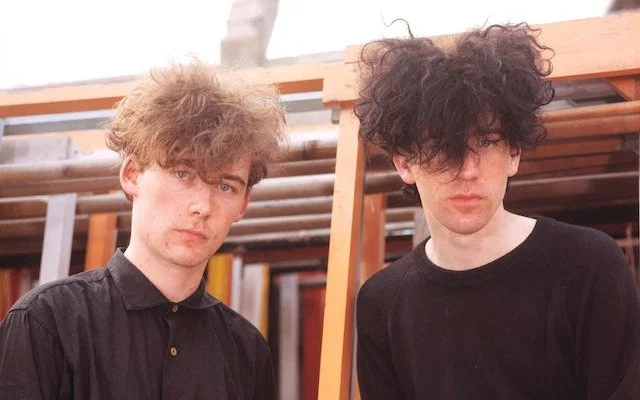
Jim and William Reid in the early days
Not making headway around Glasgow in finding a label or gigs, they decamped to London where they connected with Bobby Gillespie, a fellow Scot and a friend of Doug Hart’s. Bobby connected them to another Scot, Alan McGee, who had started Creation Records in 1983. McGee became their manager and released their first single, “Upside Down”, in November 1984. Despite the track’s noisiness and the thundering drums, the catchy underlying melody had enough pop hook to find an audience. The single gained them positive press from the New Musical Express and topped the UK Indie Charts in early 1985.
“Just Like Honey”; “The Hardest Walk”; “Taste of Cindy”; “Never Understand” \ Psychocandy (1985)
The debut single’s success gained the Mary Chain attention. The brothers had ambition and didn’t want to follow the usual path of artistic struggle. McGee and Creation were a bare bones outfit, so they were not against signing with a larger label with the means to promote them. They met Geoff Travis, founder of the Rough Trade record shop and associated indie record label. He had also started up Blanco y Negro, a sub of the major label Warner, intended to be an outlet for indie styled bands, and gave them the choice of going with Rough Trade or with Blanco\Warner. The Reids chose the major, a decision they came to regret since there was no universe in which a major label and the sound of Jesus and Mary Chain would be copacetic. Yet, despite chronic battles and disaffection, they would manage to last over a decade with Blanco y Negro, releasing five albums with the label while staying true to their artistic drives.
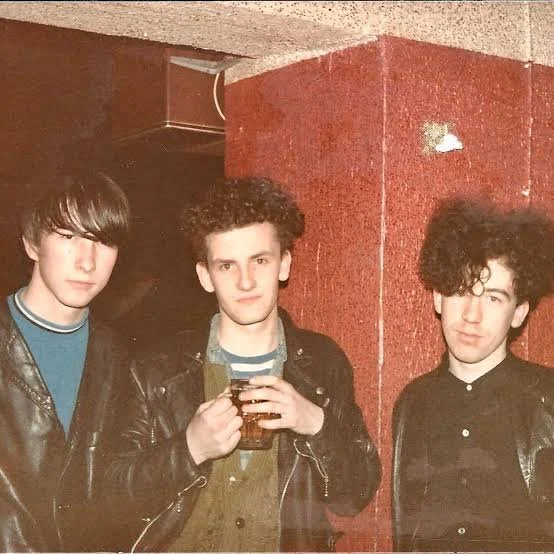
Bobby Gillespie, Doug Hart, and William Reid
The drummer, Murray Dalglish, was a goth and didn’t fit with the Mary Chain very well, so chose to leave in November ’84. The band turned to Bobby Gillespie. He was raised in the Glasgow music scene, having been a roadie for Altered Images and with a stint playing bass in The Wake. For the past couple years he had been developing a noise rock act with Jim Beattie, called Primal Scream. Bobby but wasn’t much of a drummer and played just two drums while standing, akin to Moe Tucker of the Velvet Underground. Therefore, Jesus and Mary Chain’s sound relied on a steady, uncomplicated beat which suited their wall of guitar sound and Jim’s understated, echoey vocals. The brothers loved the band’s stripped-down appearance onstage, lacking the usual hulking kit behind them and forsaking pretense for a raw look and sound.
The Mary Chain’s live shows were building a reputation for their noise and chaos. Usually short in duration and lacking engagement with the audience, things could get testy between the band and the crowd. Audiences were not often prepared for the feedback and loose arrangements of Mary Chain performances and were prone to take out their antipathy towards the band with insults, projectiles, and fights, which the band returned in kind. Regardless, with the updated line-up, a new label, and growing notoriety, they were poised to make their assault on the UK music world over the course of 1985.
This started with the next single, “Never Understand”, released in February. The fast-paced track strewn with feedback and screeching guitars seemed just as unlikely as their debut to gain acceptance, yet it almost made the UK top forty. They invited more controversy when they wanted their next single, “You Trip Me Up”, to include the song, “Jesus Fuck”, on the B-side. This resulted in the pressing factory employees refusing to print it, even when the name was changed to, “Jesus Suck”. The track was replaced by the song, “Just Out of Reach”, and the single reached #55 on the UK singles chart.
The profile of Jesus and Mary Chain increased over the spring with a recording for the BBC Radio show with John Peel, and then TV performances on The Old Grey Whistle Test and The Tube. Their fourth single, “Just Like Honey”, arrived in October and again put them just short of the UK top forty. The single revealed a slightly softer, more melodic version of the band’s acerbic sound. It was a beautiful song that channeled ‘60s pop, moving between quiet reflection and a mid-tempo flow on a gauzy sheet of distorted guitars and an echoey drum beat. It was a sound that helped launch the coming wave of shoegaze bands.
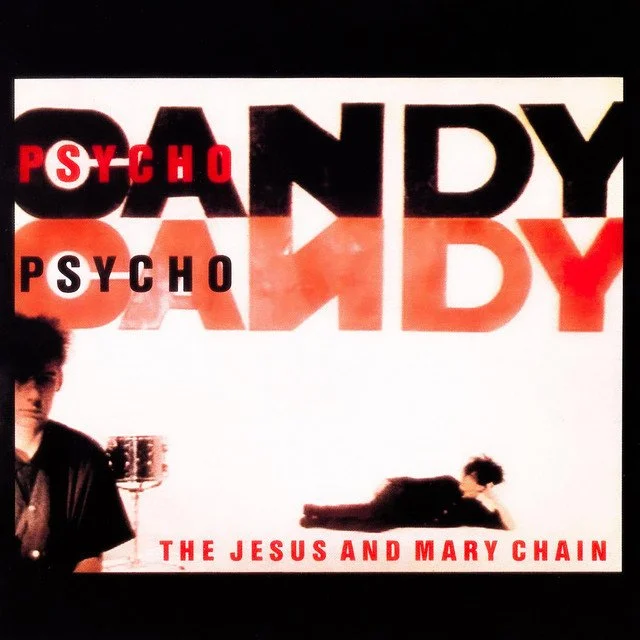
November saw the arrival of the first LP, Psychocandy, which included the three prior singles. Coming in just under forty minutes over fourteen songs, the album harkened back to the band’s roots of ‘60s garage rock and ‘70s punk – short, direct, catchy, and raw. There wasn’t a single bad tune on the LP, each offering a different approach to their unifying elements of high-pitched guitars, pounding drums, driving basslines, and Jim’s vocals buried in the mix. And though it only reached #31 on the UK album chart, its influence cannot be understated. It was one of the most distinct releases of its era, helping mark a change from the lighter sounds of new wave towards the darker, more guitar-driven sounds of the late ‘80s and into the ‘90s. The album now regularly appears on lists of all-time greatest albums and ranks highly among 1980s releases.
“Some Candy Talking” \ non-album single (1986)
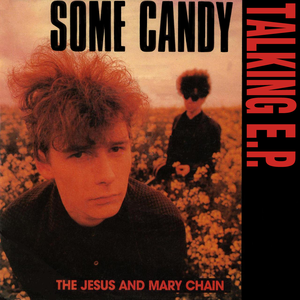
Jesus and Mary Chain rode the success of Psychocandy with tours of North America and Japan over 1985 and into early ‘86. Looking to shift their sound and performance style from the violent and strident scenes of their shows, they recorded an acoustic set for John Peel and then released a single and EP, “Some Candy Talking”, in July. It gave them their first top twenty UK single. Though not acoustic, its mellow vibe fed off the same melodic, haunting structure established by, “Just Like Honey”. And while still a bit noisy, there was a little less grit, making the sound more accessible. It was a sign of what was to come.
William and Jim saw the destructive path their tours were taking, for them and their audiences. They pursued a three-point strategy, the first step of which was to take a break on touring the UK, hoping the hooligan element of their fan base would move on. They did, mostly. Next was to shift Alan McGee out of his role in promoting the band, removing his penchant for mischief as a PR tool (this reduced role only lasted awhile, eventually resulting in his ouster as manager). Finally, they refined their sound to a less abrasive and confronting style and toned down their boastful, obnoxious rhetoric, making the band less strident and allowing the music to be the focus more than themselves. These changes started moving the Mary Chain towards a more classically styled dark wave band.
John Moore had first joined as a drummer to replace Bobby, but guitar was his main instrument, so the band added him as rhythm guitarist to support William. As for Gillespie, his focus was always going to be on Primal Scream, and therefore left Jesus and Mary Chain, starting what would be a rotating door of drummers over the rest of the band’s career. Actually, the band existed mainly for touring and showed little interest in the studio, leaving the brothers to record mostly on their own.
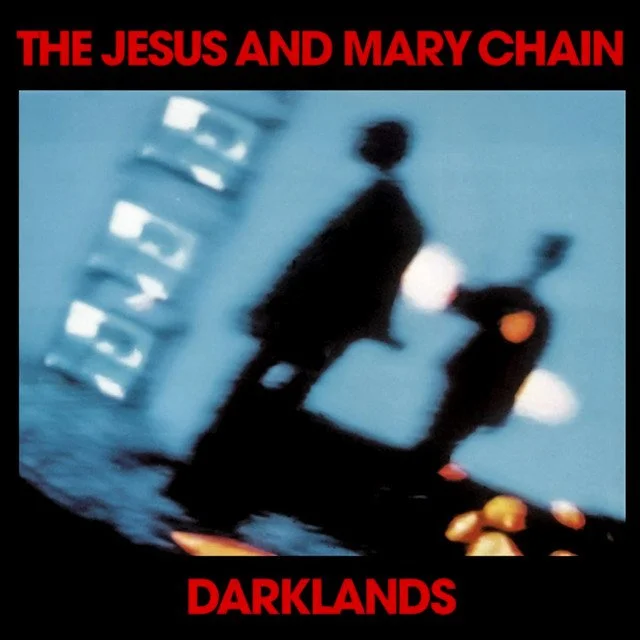
“Happy When It Rains”; “April Skies” \ Darklands (1987)
Therefore, in studio, drum machines and synths came to the fore to fill out their sound as they recorded the next album, suitably titled, Darklands. Its more approachable, driving rock sound became evident with the release of the first two singles, “April Skies” in April 1987 and “Happy When It Rains” in August. The first delivered Mary Chain its first top ten UK single, while the second reached the top forty. This spurred the album, released at the end of August, to a #5 spot in the UK album chart.
Darklands was solid and a highly listenable and enjoyable album. It was also evident of a band trying to find its way after the success of the first LP yet striving to move away from the din of its sound. It lacked a true standout track and, in stark contrast to the debut, struggled to establish a defining personality and style.
While the Mary Chain had mostly subdued their wilder instincts, they could not entirely stay clear of trouble. Jim ended up spending a night in jail in Toronto after hitting an audience member in the head with the mic stand, in response to the fan(?) heckling the singer during the show.
“Sidewalking” \ non-album single & Barbed Wire Kisses (1988)
Consistent with UK habits of the 1980s, Jesus and Mary Chain released many non-album B-sides and special releases for magazines or fan clubs and of course had a trove of unreleased tracks. In April 1988, they assembled these into the compilation album, Barbed Wire Kisses. It was a wonderful batch of sixteen songs that blended their Psychocandy and Darklands recording sessions. It reached the UK top ten.
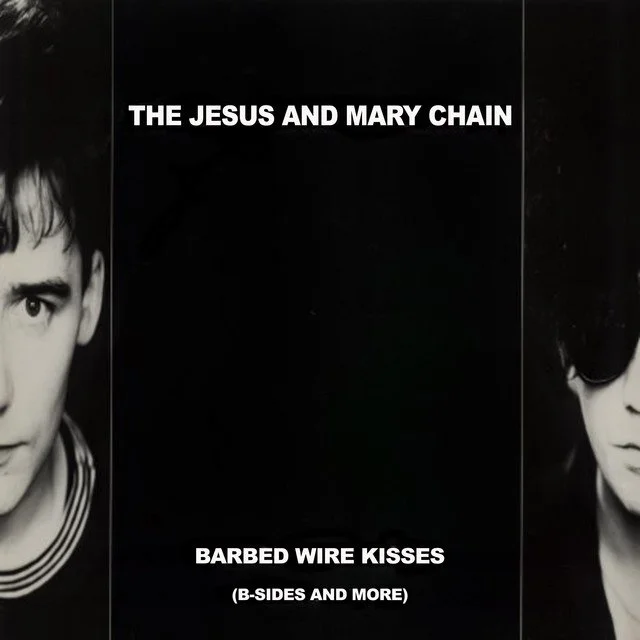
The compilation was full of intriguing tunes, including, “Kill Surf City”, the B-side to “April Skies” and a reworking of the Jan and Dean (and co-written with Brian Wilson) tune, “Surf City”. They went direct to the Beach Boys with a cover of, “Surfin U.S.A.”, and further afield to Bo Diddley for their take on, “Who Do You Love?”. The title track to Psychocandy, which ironically did not make it onto the album, was also included, along with the acoustic version of, “Taste of Cindy”.
“Sidewalking” was released as a single and reached the UK top forty. It was a new song recorded only by the brothers. It featured a looped drum sample from the song, “Roxanne’s Revenge”, by American rapper, Roxanne Shanté. The danceable beat introduced a new angle to the Mary Chain sound that would become more prominent going forward. “Sidewalking” is one of my favourite tracks by the band and an example of the emerging experimentation between hip hop and alternative rock at the time.
“Here Comes Alice”; “Between Planets”; “Head On”; “Half Way to Crazy” \ Automatic (1989)
The third album, Automatic, was released in 1989 and continued the evolution away from the noise rock of the Mary Chain’s genesis. It was still a guitar heavy sound, but structured around a more straightforward pop-rock style. It opened with the mid-tempo and catchy rocker, “Here Comes Alice”, rich with synth bass and sharp beats, with the guitar held back in an almost background role.
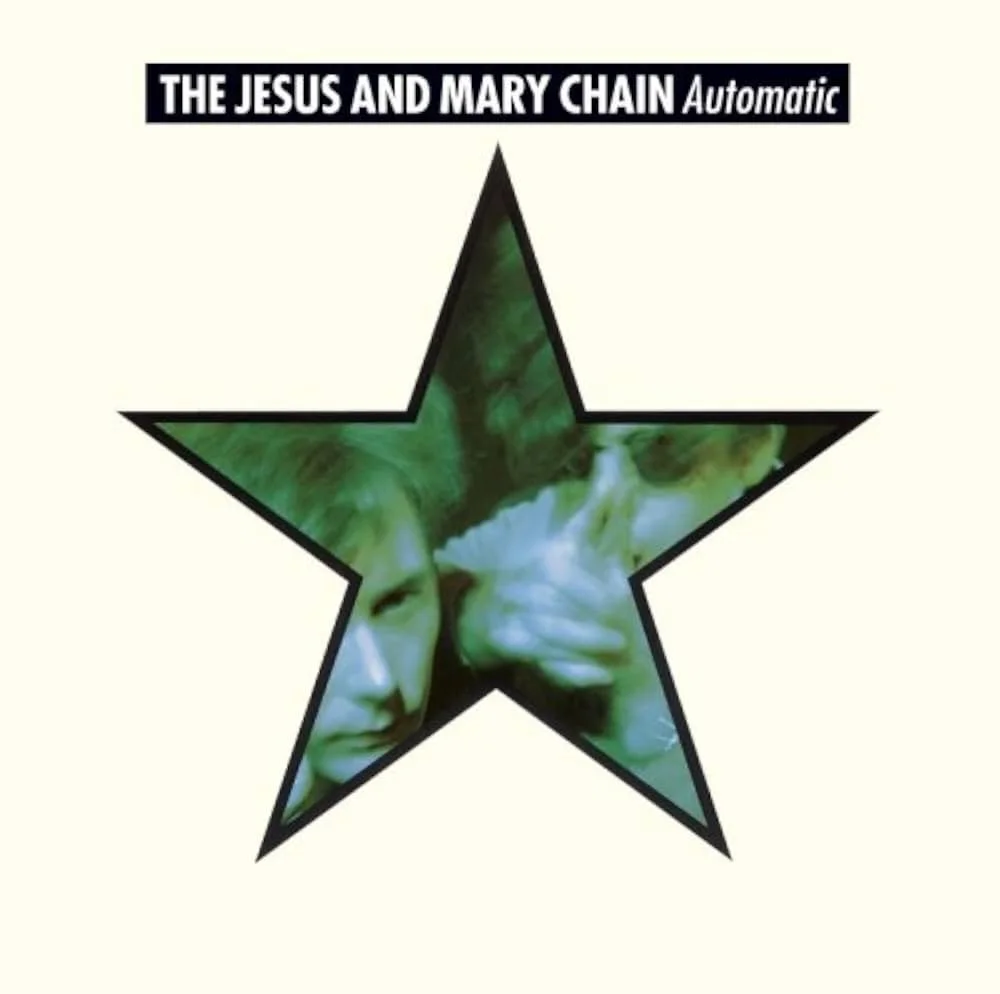
The first single, “Blues from a Gun” was a disjointed tune built on frenetic beats. The lack of a melody made it hard to latch onto, though a snarling guitar line provided some redemption. It reached #32 on the UK chart. The second single, “Head On”, was a genuinely infectious, pop-rock tune, though it failed to reach the UK top forty. It did receive some love and attention when The Pixies covered it on their 1991 LP, Trompe Le Monde, also releasing it as a single. “Head On” has since become a feature track for Jesus and Mary Chain.
Automatic fell just short of the UK top ten and received lukewarm responses from critics. As the new decade dawned, they were having to compete with the rising acid house and Madchester scenes. The US had come around to embracing the early ‘80s new wave bands, as Depeche Mode, New Order, The Cure, and OMD all had their best years stateside. The Mary Chain, as would always seem to be the case, did not fit with any zeitgeist. The Automatic singles reached the recently created US Modern Rock chart, but otherwise Jesus and Mary Chain had not charted in the main US chart for singles, while the LPs tended to languish in the bottom ranks of the top 200.
“Reverance”; “Far Gone and Out”; “Sugar Ray”; “Good for My Soul” \ Honey’s Dead (1992)
By 1992 and the arrival of their fourth LP, Honey’s Dead, grunge and shoegaze were at their zenith and Britpop was poised to dominate the UK for the rest of the decade. This provided the best environment yet for the Mary Chain to achieve commercial success.
The Reids put their best foot forward with, in my opinion, the most enjoyable LP of their career. I suspect most would argue Psychocandy reigns supreme in their discography, and artistically there is much to support that, but Honey’s Dead was a fantastic collection of tunes. The title’s reference of was intended to show the band’s full departure from their original sound and the likes of, “Just Like Honey”. Many instead thought it was a crass bit of self-reference. Of course, despite its excellence, the album continued the Mary Chain’s waning stature, reaching #14 in the UK chart and being their first to not reach BPI certification. Critics also didn’t think much of it. This maintained my personal record of loving records others seemed to find unremarkable.
The first sign of the album’s new sound arrived with the 1990 EP, Rollercoaster. The title track would be the first single off the new album and was a rollicking, rocking tune. It fell short of the UK top forty.
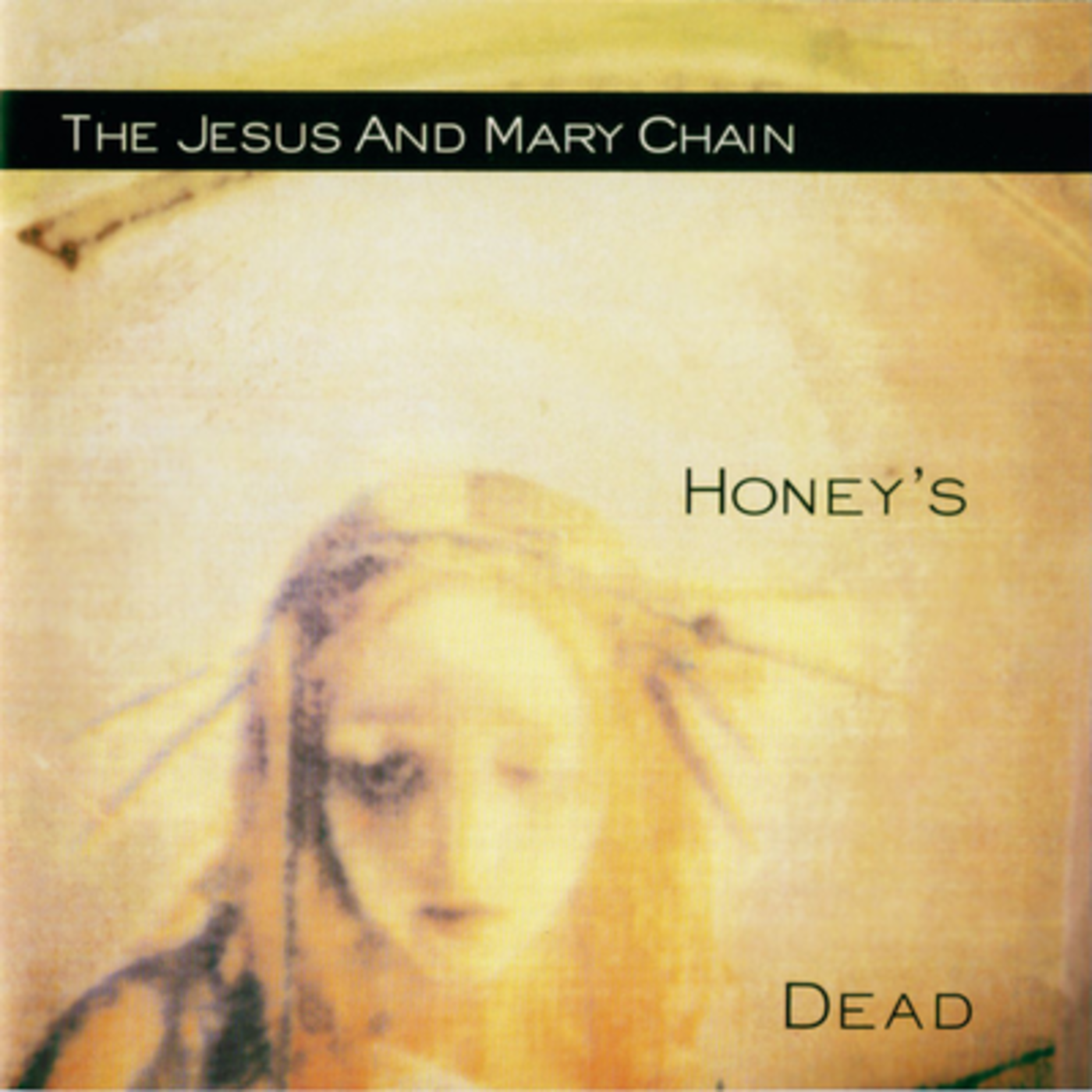
Honey’s Dead brought the electronic beats and danceable elements of Automatic to the fore, creating a wonderful mix of snarling guitars and infectious rhythms. Jim was still able to court a bit of controversy. The album’s opening track and first single, “Reverence”, had the lyrics, “I wanna die just like Jesus Christ \ I wanna die just like JFK”. This led to it being banned by BBC TV. With its club beats, fans liked it, giving the Mary Chain its first UK top ten single since “April Skies” five years prior. Unfortunately, it was also their last single to reach that pinnacle.
Aside from the catchy beats, the album was rife with fantastic hooks and melodies. “Teenage Lust”, “Sugar Ray”, and “Catchfire” were built on mid-tempo melodies, while “Far Gone and Out”, “Rollercoaster”, and “I Can’t Get Enough” provided fast-packed rockers. “Almost Gold” and “Sundown” provided the more downtempo moments on the LP.
In 1992, I was twenty-two and working, creating my peak era for record buying and clubbing. Entertaining a possible foray into DJ’ing, I made tapes with a mixing board each night for my work commutes the next day, and tracks from Honey’s Dead were always included. It was one of my favourite albums of the period and brought Jesus and Mary Chain to my fuller attention. I saw them in concert twice that year, first in August as part of the Lollapalooza festival tour (an unpleasant experience for the band, having to play down the bill, often in blazing sunny afternoons), and then on Halloween when they brought their ‘Rollercoaster’ tour into town, joined by Curve, Spiritualized, and Pure.
“Snakedriver” \ Sound of Speed EP (1993) & The Crow soundtrack (1994)
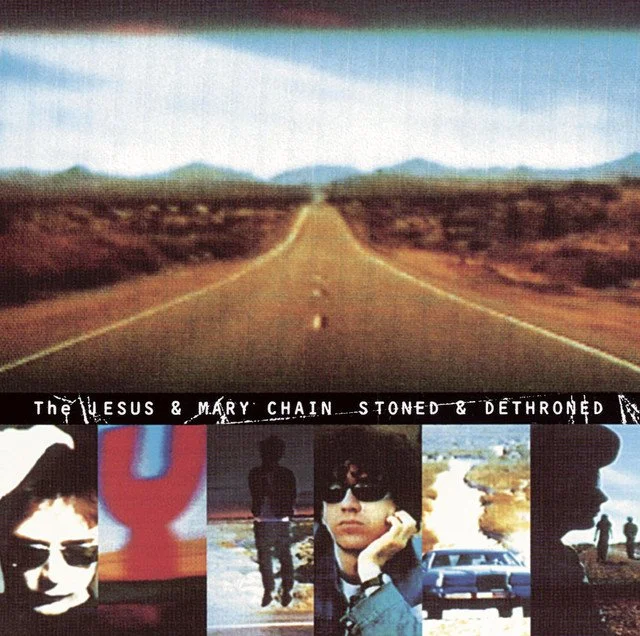
“Sometimes Always” \ Stoned & Dethroned (1994)
Another collection of B-sides and rarities arrived in 1993, The Sound of Speed. Remixes and alternative takes on their songs were abundant, revealing that the quality of the songs lent themselves to many different approaches.
The Crow was a 1994 film with a gothic, supernatural spin on the superhero theme. The soundtrack, released in March, was far more satisfying than the movie, featuring an impressive list of contributing artists, including the Mary Chain with the tune, “Snakedriver”. It reminded of “Sidewalking” as a modern alt-rock take on a 1950s rock ‘n’ roll tune. It was a song that had been issued on both The Sound of Speed compilation and the Sound of Speed EP the prior year.
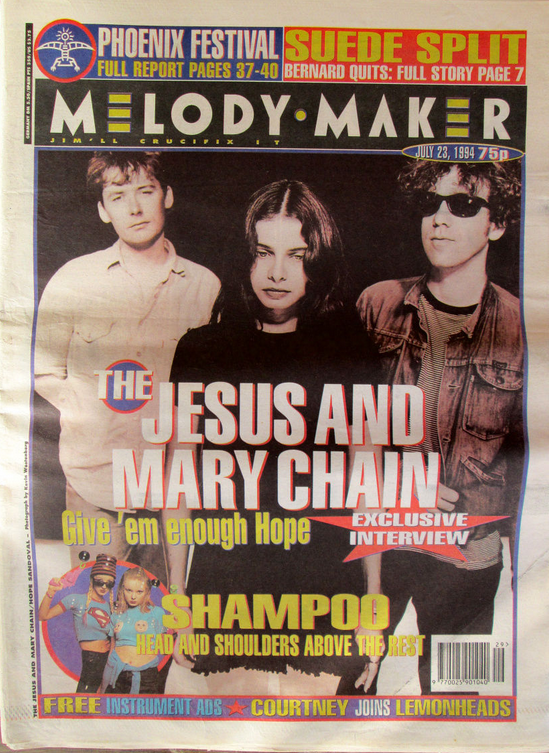
Jesus and Mary Chain with Hope Sandoval on the cover of Melody Maker magazine in 1994
August saw the arrival of the fifth album, Stoned and Dethroned, a title that reflected their state of affairs both personally and professionally. It featured guests for the first time, with Shane McGown of The Pogues contributing vocals on, “God Help Me”, and Hope Sandoval from Mazzy Star (and William’s girlfriend), on “Sometimes Always”. It was also recorded with a full band for the first time since their debut LP.
Originally planned as an acoustic endeavour, the band found that approach too limiting and reverted to their electronic guitar focused sound, though the songs were notably more subdued. Indeed, only a couple, “She” and “Girlfriend” approached anything one would consider up tempo. Much of the album felt like variations on the slower tracks from Honey’s Dead. The songs were solid, but there was nothing attention grabbing. There were some more pop-styled songs, perhaps seeing the Reids bend an ear towards the Britpop wave (Blur released their third LP in the spring and Oasis’ debut was issued six days after the Mary Chain album).
After my reverie for Honey’s Dead, the album surprisingly came and went with nary a notice from me. Stoned and Dethroned reached #13 in the UK album chart, continuing their trend of living just outside the top ten. “Sometimes Always” reached the top forty in the singles chart and the US Modern Rock top ten, likely thanks to the help from Sandoval, given Mazzy Star had broken through with the single, “Fade Into You”, earlier in the year.
“I Hate Rock and Roll” \ non-album single & Hate Rock ‘n’ Roll & Munki (1995)
“Perfume”; “Commercial” \ Munki (1998)
Despite it being only two years since the prior B-side compilation, another was issued in 1995, Hate Rock ‘n’ Roll. It was driven by a new single and EP, I Hate Rock ‘n’ Roll, a raw, driving screed on the rock lifestyle and business. It was a rougher sound than the band had delved into for some time. The single fell well short of the top forty.
For the next LP, the goal was to try and capture the Mary Chain’s tougher live sound in studio. They began recording songs, again with a full line-up, but Geoff Travis didn’t like the material. It led to an impasse, and they agreed to part ways, leaving Jesus and Mary Chain without a label for the first time in their career. Further, the recording process witnessed increasing friction, both between the brothers and with their guitarist, Ben Lurie, who was approaching a decade having worked with the band both on tour and in studio. Ben and Jim were hanging out more together, and William was feeling put aside.
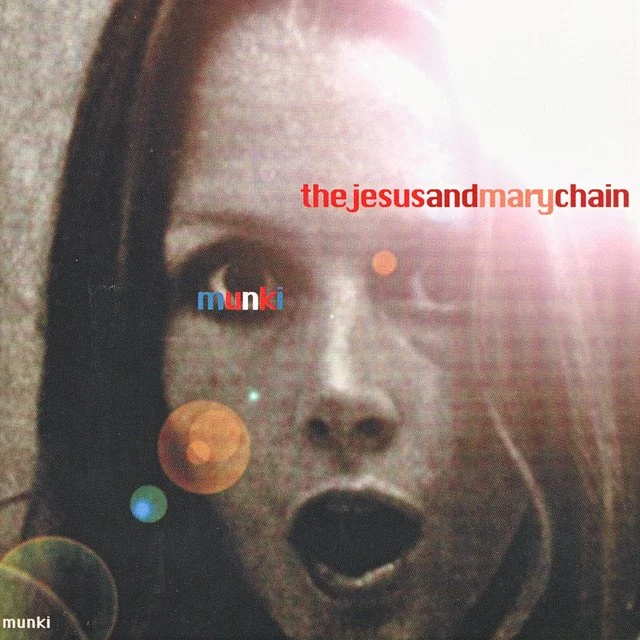
The Reids reconnected with their old manager and friend, Alan McGee, who offered to issue their album on his Creation label, seeing Jesus and Mary Chain return to their first home. They also signed with the legendary Sub Pop label for North American distribution. Munki, their sixth LP, was released in June 1998.
Hope Sandoval, still with William, returned as a guest on the song, “Perfume”. William and Jim’s younger sister, Linda, who performed as Sister Vanilla (from their childhood nickname for her based on her pale skin), also guested on, “Moe Tucker”. And while the album was a bust for the Mary Chain, failing for the first time to reach the UK top forty, musically it saw more experimentation and breadth than anything issued before. “Perfume” was a haunting, electro-industrial tune and “Commercial” veered and spun on a tilted axis of off-key guitars. These were refreshingly different for the Mary Chain, even if only slightly distanced from their usual vibe.
Munki failed to reach the UK top forty, the first of their LPs to fall short of that threshold. “Cracking Up” and “I Love Rock ‘n’ Roll,” the album’s singles, both just cleared the top forty. The band, now fourteen years removed from their debut, was losing purchase in the music world, much the same as the rest of alt-rock over the waning years of the 1990s.
During the subsequent tour, the friction in the band came to a head. Years of sibling arguments and insults took its toll, and William and Jim could no longer shrug them off. Even their addictions were opposite, with Jim on cocaine and William on weed. When Ben inserted himself between the brothers during a row, it led to William fighting with Ben and then quitting the band. Jim was so intoxicated he couldn’t complete their subsequent show in Los Angeles, though finished the tour without his brother. Add to that their label problems and declining commercial success, and it became apparent Jesus and Mary Chain had run its course. In October 1999, it was announced the band had split up.
“Amputation”; “All Things Pass”; “The Two of Us” \ Damage and Joy (2017)
The Reids each went their own way, with Jim forming Freeheat along with Ben and releasing a couple EPs and an album between 2000 and 2006. William went solo, recording under the name, Lazycame, issuing albums in 2000 and 2001, along with a batch of EPs and singles. Neither achieved success and only received attention because of the involvement of the Reids.
Both brothers married and had children, and William moved to California. The distance from both the Jesus and Mary Chain and each other allowed tensions to thaw, and when Linda asked for their help in recording an album, they worked together remotely to write and record songs for their sister. Sister Vanilla released an album in 2007. Family occasions back in Scotland and the death of their father provided additional opportunities for the brothers to slowly restore their relationship.
The Coachella festival rose in prominence in the early 2000s by frequently featuring high-profile reunions of alternative acts from the 1980s and 1990s. Many acts who had been relatively obscure in their day were now more popular as subsequent generations championed their legacies. When the festival came calling for a reunion, William and Jim realized they were ready to work together again, also appreciative that people had not forgotten about Jesus and Mary Chain. They played the festival in 2007, on the heels of having worked together with their sister. This was followed by a new song, the first in ten years, “All Things Must Pass”, used in the American TV show, Heroes. The band toured in 2012 and compilations were issued to keep their music in circulation.
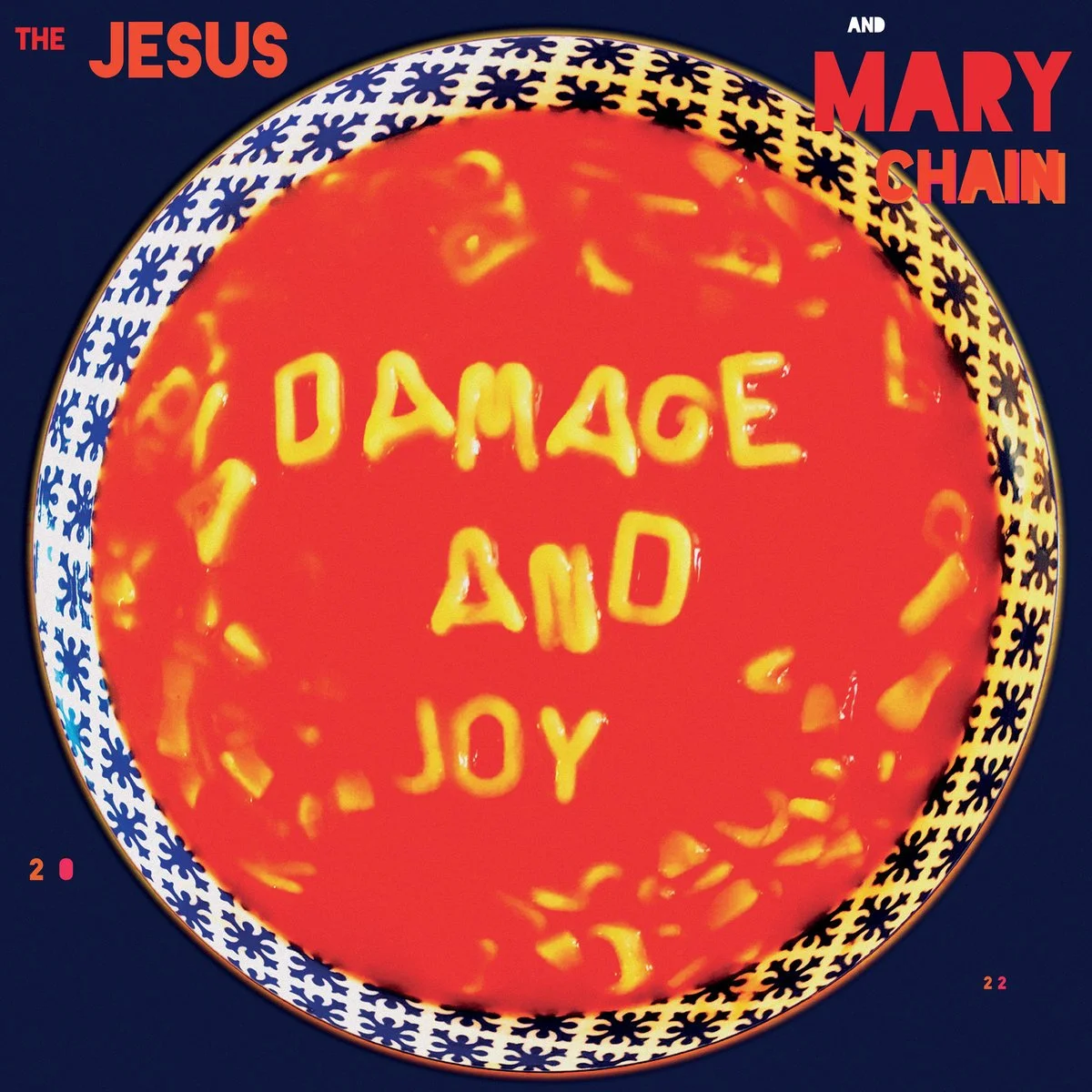
Finally, in 2017, nineteen years on from their last release, Jesus and Mary Chain released a new album, again suitably titled, Damage and Joy. I saw them on tour at Massey Hall in Toronto and it was fantastic to see them again, not the least of which was because the new songs sounded great.
Damage and Joy was one of the most listenable albums of their career. Sure, the noisier and raw edge elements were gone, but the songs were hooky and polished. Most of the tracks were refreshed versions of songs they’d done during the Mary Chain’s interregnum. The Heroes song was now titled, “All Things Pass”, and was easily one of their best songs since their heyday. Solo work from Jim as well as those from Freeheat appeared, as did a couple Sister Vanilla tracks. She was credited as Linda Fox and guested on two tracks, along with Isobel Campbell and Sky Ferreira on other tunes. The album was also produced by famed producer and Killing Joke bassist, Youth. It was a celebratory return for Jesus and Mary Chain, now veterans of the indie sound they had helped pioneer.
“Mediterranean X Film”; “Discotheque”; “Silver Strings” \ Glasgow Eyes (2024)
It took another seven years to issue the eighth LP, Glasgow Eyes. With a surprising lean into electronics, the album broke new ground for the Mary Chain musically, though still relied on their signature wash of guitars. An additional, non-album single followed the LP, “Pop Seeds”. After carrying a consistent sound for most of their career, their later work has seen more experimentation and variation, to its benefit.
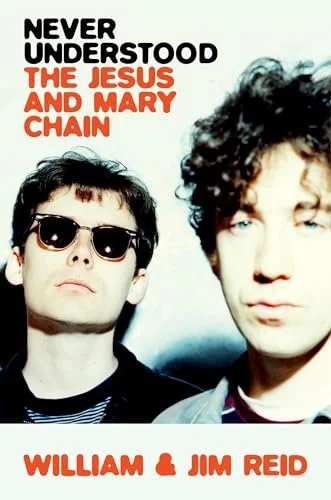
The brothers also issued in 2024 a joint autobiography (of course), Never Understood: The Jesus and Mary Chain. The verbal history they told together revealed the longstanding insecurity, shyness, alienation, and addiction that fueled their music and personal demons. It closed with a refreshing outlook, now supported by sobriety, brotherly love and support, gratitude, and hope. It was not the elixir most affiliated with Jesus and Mary Chain but gave hope for a lasting and fruitful future William and Jim Reid and their band.
Jesus and Mary Chain has had an interesting and irregular musical career. They arrived in the mid-1980s just as new wave was giving way to darker and heavier sounds. Pscyhocandy was a landmark album that helped spur those changes and even launched new musical genres, combining elements of goth, punk, industrial, and ‘60s pop. Their sound was also born of rebellion that engendered a chaotic scene that they quickly and wisely sought to abandon, for both their personal and professional careers. What resulted was a more refined, distinctive sound that they have maintained, for better or worse, over seven more albums and four more decades. Through adversity and the core of a tumultuous relationship of William and Jim Reid, Jesus and Mary Chain has been an unlikely survivor, building a discography worth your time and appreciation.

Seeking to be understood: William and Jim Reid